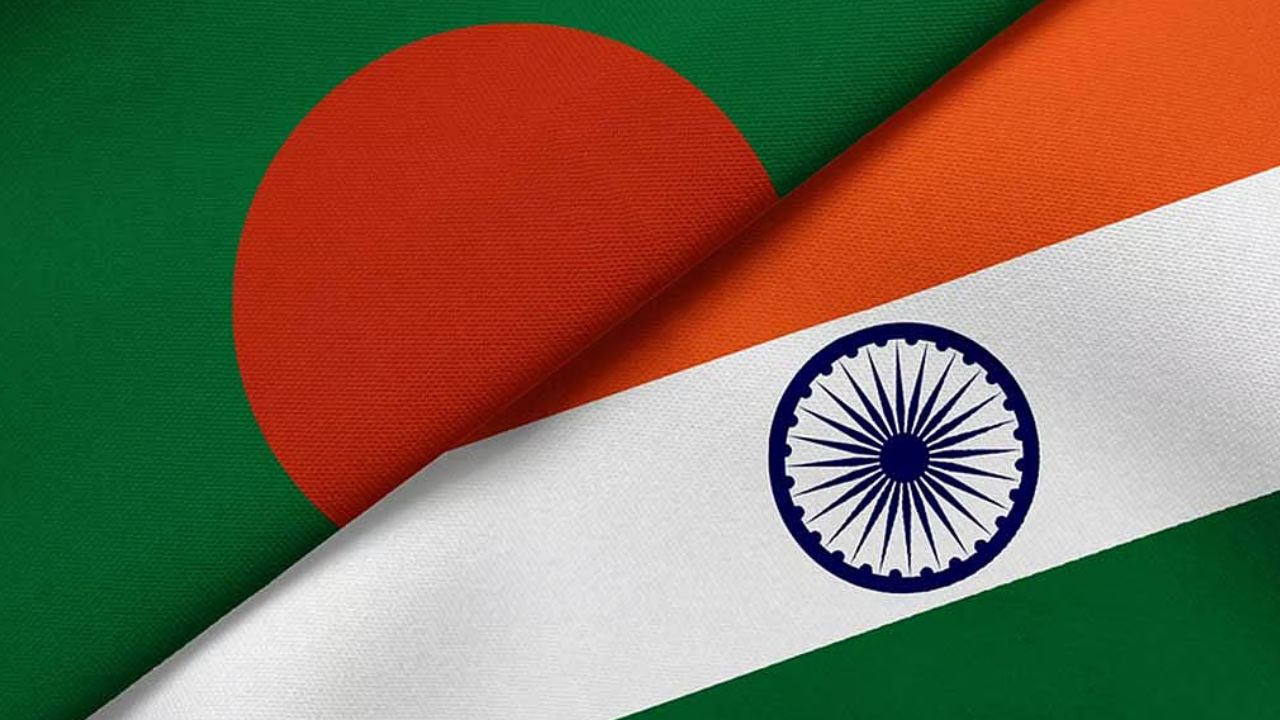
The government has postponed Prime Minister Tarique Rahman’s bilateral visit to New Delhi over the fallout from deposed prime minister Sheikh Hasina’s 5 August media event.
Dhaka has clarified its position on the trip, which was being prepared after weeks of talks, saying that a conducive environment needs to be created before the visit can take place.
Former diplomats have welcomed the decision, saying a prime ministerial visit should produce concrete outcomes rather than merely serve as a symbolic engagement.
They identified the extradition of Hasina and other convicted fugitives, water-sharing disputes and border tensions as some of the major bilateral issues that need to be addressed through meaningful negotiations.
Foreign ministry spokesperson AKM Shahidul Karim shared the development with journalists at the foreign ministry on Sunday.
“Officials of Bangladesh and India have been in touch with each other for several weeks for the possibility of a bilateral visit by Prime Minister Tarique Rahman to India. However, this process was vitiated by the open press interaction in New Delhi on 5 August by Sheikh Hasina, who has been convicted by the International Crimes Tribunal of committing crimes against humanity,” he said.
The spokesperson said Bangladesh had asked India to expedite action on its extradition requests.

“We have requested the Indian authorities to expeditiously act on our requests to extradite Sheikh Hasina and other fugitive criminals and hand over to Bangladesh the accused killers of Osman Hadi in compliance with our bilateral extradition treaty,” he said.
“We are awaiting their response,” he added.
The spokesperson also reiterated the government’s “Bangladesh First” policy and its commitment to maintaining friendly relations with other countries, including neighbouring states, based on sovereignty, equality, national dignity, non-interference in each other’s internal affairs and mutual benefit.
Former ambassador Mahbub Hassan Saleh said he preferred a bilateral visit where the two sides could focus on issues important to both countries, but stressed that such a visit should deliver tangible results.




“I prefer a bilateral visit where the parties can focus on issues that are important for both countries. From Bangladesh’s perspective, there must be some concrete outcomes from the visit to Delhi,” he said.
Saleh said India sent some positive messages since the new government had taken office in Dhaka but their words and actions didn’t match. Saleh said India’s messages now needed to be translated into actions. “The ball is now in India’s court,” he said.
Former ambassador Mehdi Hasan supported the government’s decision, noting that public sentiment is a vital factor in shaping foreign policy.
“Foreign policy is deeply influenced by public opinion, and it is clear that the government has a strong grasp of the national pulse in Bangladesh,” Hasan stated. He observed that while foreign ministry statements often receive limited public attention, the government’s recent, more assertive stance has resonated significantly with the people. “Typically, such press statements go unnoticed, but these last two bold declarations have been widely welcomed.”
Hasina: major irritant
The presence and political activities of Sheikh Hasina in India have emerged as a major irritant in Bangladesh-India relations.
Hasina has been living in New Delhi since fleeing Bangladesh in August 2024 following the fall of her government. Dhaka believes the Indian authorities allowed her to participate virtually in an event on August 5, where she made critical remarks about Bangladesh and its government.
Bangladesh has repeatedly requested her extradition, but there has so far been little visible movement from New Delhi. India has maintained that the matter is under consideration and is primarily a legal issue, while no formal request has yet been placed before an Indian court for a decision.
Ambassador Saleh said the 5 August event had severely damaged bilateral relations despite Bangladesh’s repeated requests to India beforehand not to allow Hasina to participate.
“The 5 August event has had a hugely negative impact on bilateral relations. Prior to the event, Dhaka repeatedly requested Delhi not to allow Hasina to take part in it,” he said.
He argued that Hasina and other political figures should not be allowed to conduct political activities from Indian soil.
“Political activities of Hasina and others must not be allowed from Indian soil, and this needs to be stopped right now,” Saleh said.
He also urged India to respond to Bangladesh’s extradition requests rather than allowing the issue to remain unresolved indefinitely.
“The issue cannot be left pending for years,” he said.
Saleh said the extradition issue needed to be resolved comprehensively, covering not only Hasina but also other convicted fugitives wanted by Bangladesh under the bilateral extradition treaty.
Regarding bilateral ties, ambassador Hasan noted that while India had initially shown interest in hosting the prime minister, the current climate requires further effort to ensure a mutually comfortable environment.
“India expressed interest in the visit, but now they must create conditions where both nations feel at ease,” he said, adding, “The current status of former prime minister Sheikh Hasina has remained a significant challenge in normalisation of bilateral relations, and India needs to take steps to address this.”