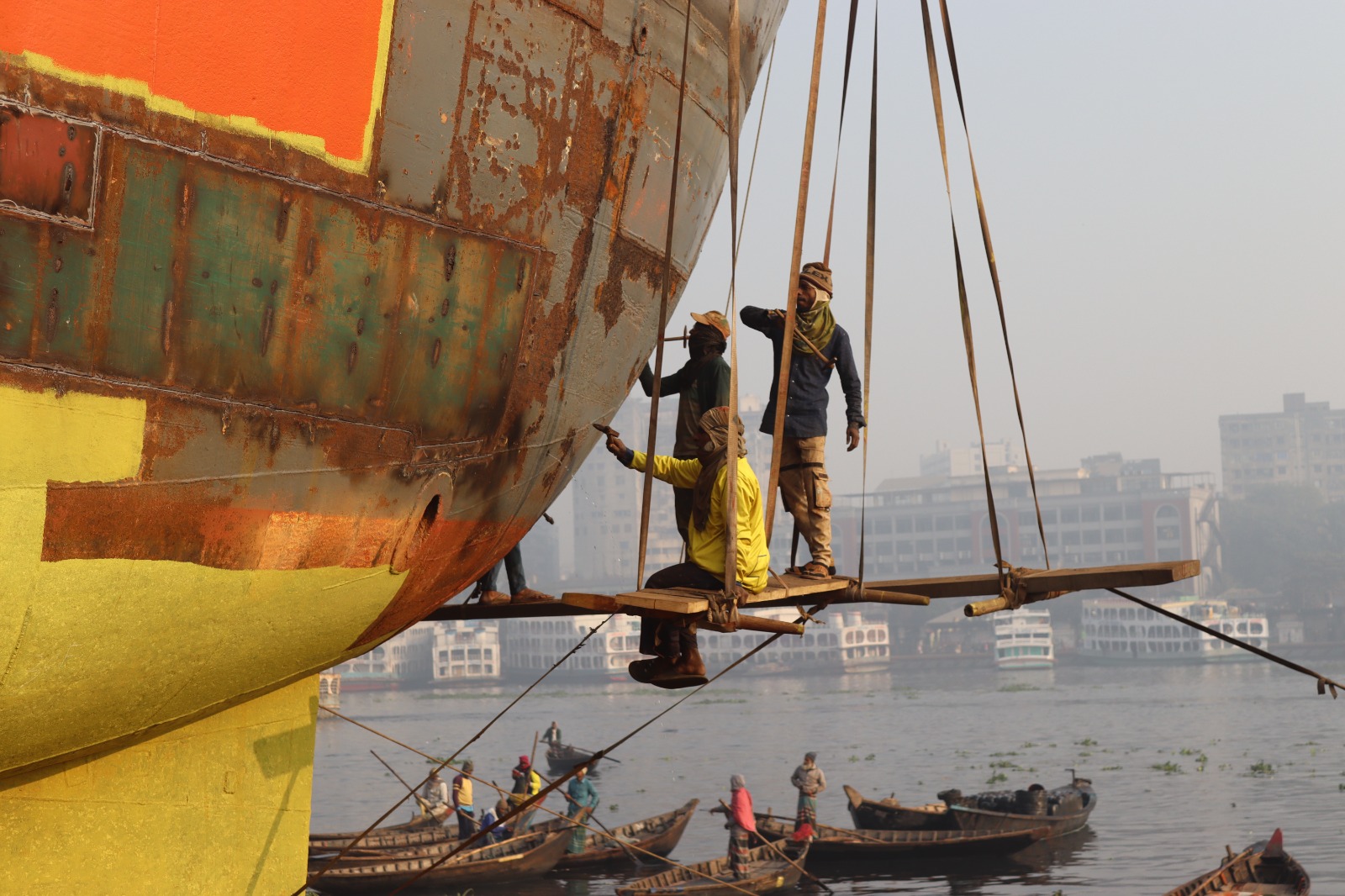
As dawn slowly breaks over Sadarghat, the Buriganga River wakes to a familiar rhythm. The sound of metal clinking, hammers striking iron and ropes creaking in the morning air signals the beginning of another day at the dockyard.
While the city is still stretching into consciousness, hundreds of workers are already suspended between steel and sky, risking their lives to keep the country’s waterways moving.
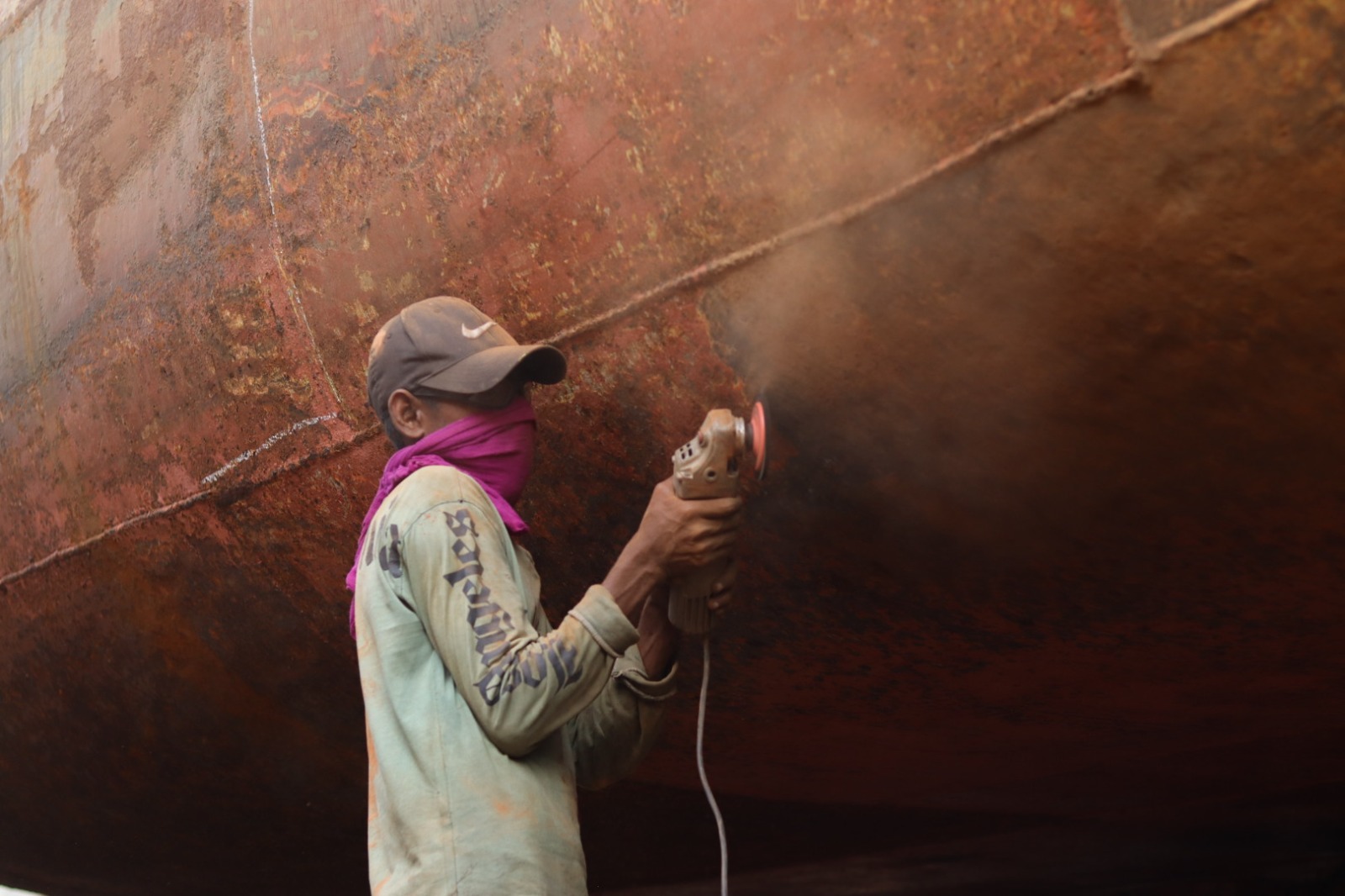
The dockyard is a place where old ships are reborn and new ones take shape. Rusted hulls are scraped clean, broken structures are welded back together, and layers of fresh paint slowly replace years of decay. It is demanding work that requires precision, strength and courage.

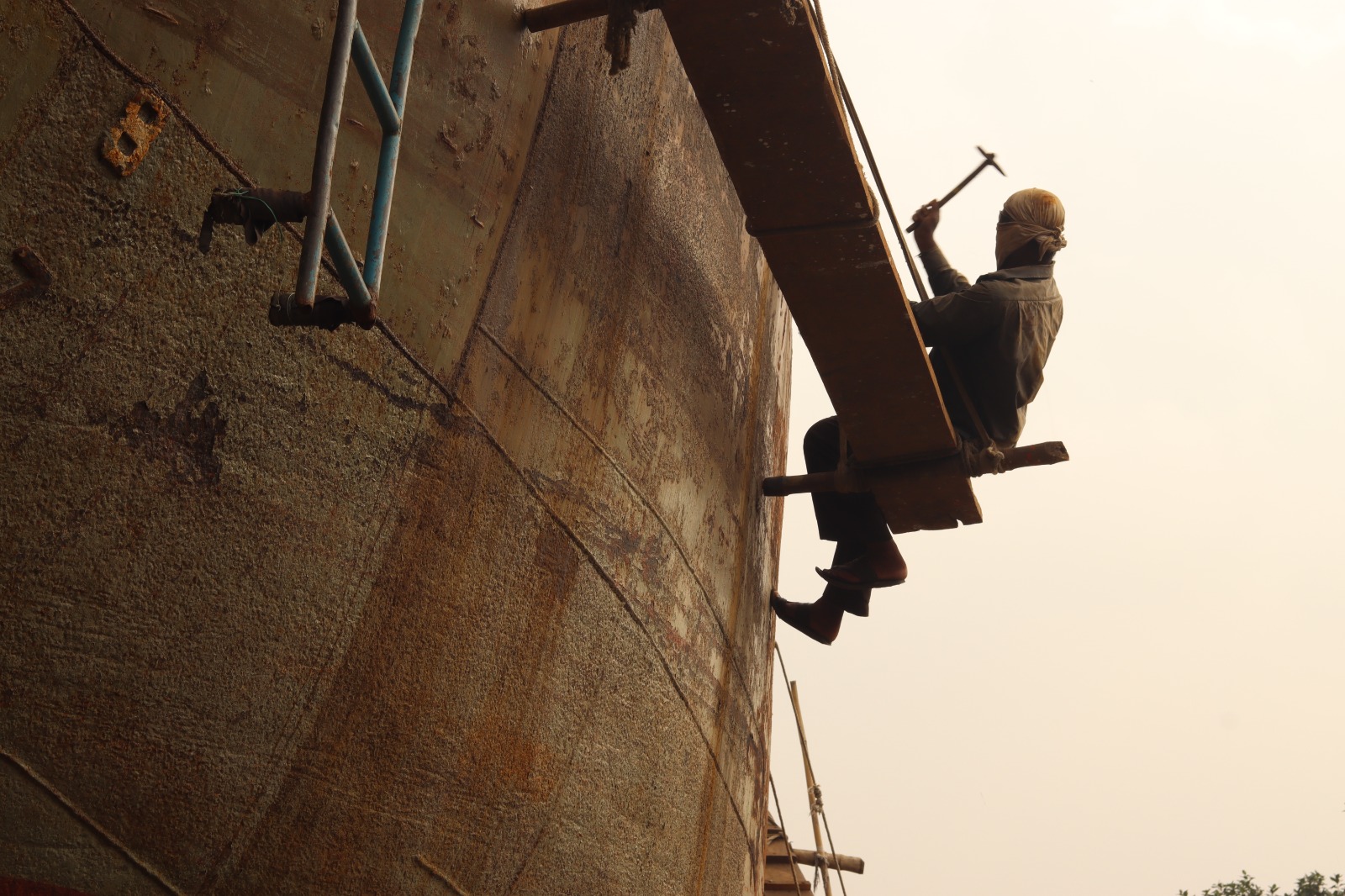
Workers climb narrow ladders, balance on fragile bamboo scaffolding, and hang from ropes tied to massive ship bodies. One wrong step, one loose knot or one moment of distraction can lead to disaster.




Danger is a constant companion here. Tangled electrical wires run across the dockyard, increasing the risk of sudden shocks. Sparks from welding torches fly in every direction, while the smell of burning metal and paint fills the air.
When old paint is scraped off, rusted iron dust spreads like smoke, entering their eyes and lungs. Many workers suffer from constant coughing, eye irritation and breathing problems, yet they return every morning because this is the only way they can earn a living.
Perched high above the ground, they paint and varnish ships while the river flows quietly below them. From a distance, they appear like shadows hanging on giant walls of steel, silently working against gravity and fear. There are no safety harnesses, no protective gear and little assurance of medical support if something goes wrong.
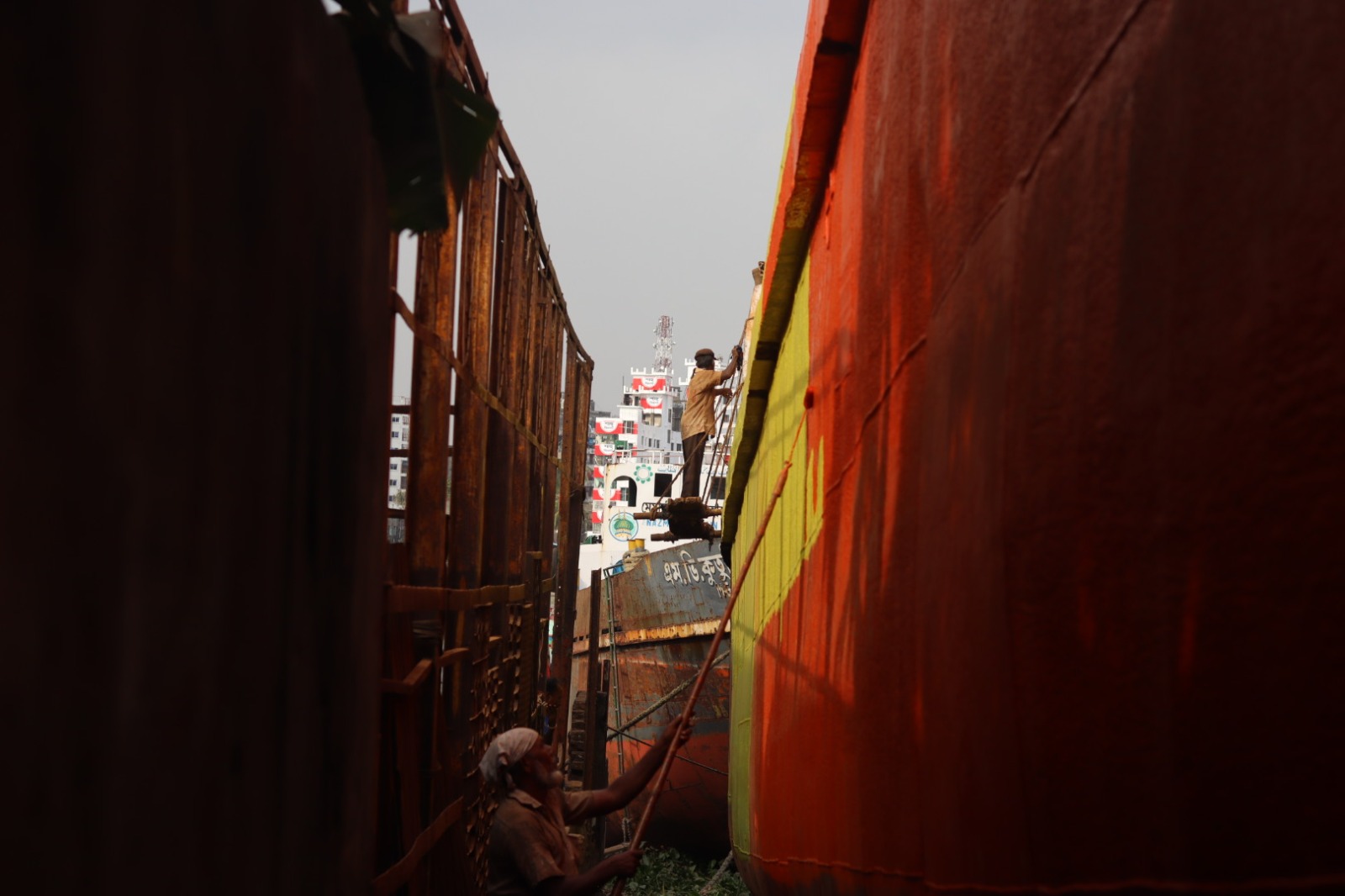
For these dockyard workers, life is not lived on solid ground. It hangs on ropes, bamboo poles and fragile hope. Every stroke of paint and every welded joint tells a story of survival, resilience and the relentless struggle to keep life afloat in the heart of the river.