
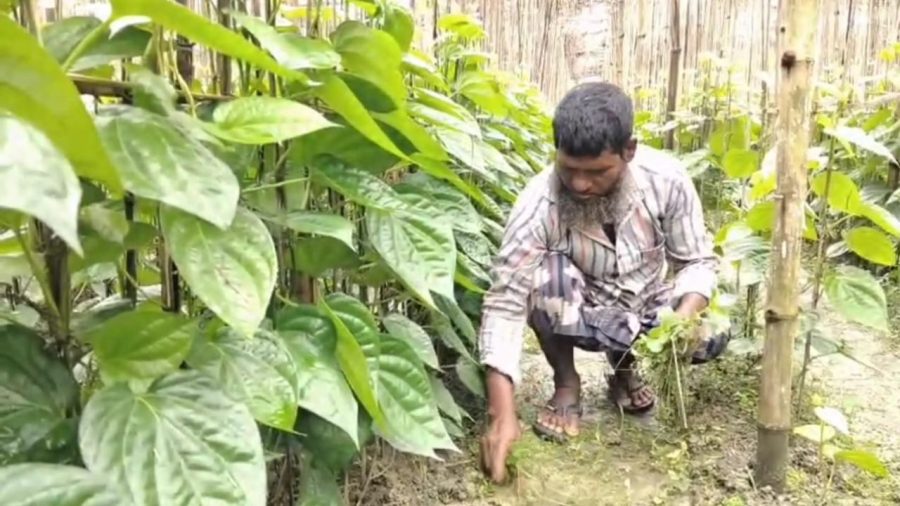

Farmer Rabiul Islam has found success through betel leaf cultivation in the Barind region of Chapainawabganj, encouraging other farmers to explore the alternative crop.
Rabiul became interested in betel leaf farming while working as a mason in Rajshahi’s Mohonpur, where he met local betel leaf growers and learned about their farming methods.
With their advice and support, he set up a trial betel leaf garden on one katha of land last year. After receiving good yields and profits, he expanded the size of his betel leaf plantation to 10 kathas this year.
Rabiul said establishing a betel leaf garden requires initial investment and hard work, but it can provide returns for several years once developed.

“Betel leaf cultivation requires proper care, but if managed well, it can be more profitable than many other crops,” he said.
Inspired by Rabiul’s success, several local farmers have shown interest in betel leaf cultivation.




Farmer Abdul Malek said farmers in the area usually grow rice and other traditional crops, but Rabiul’s betel leaf garden has encouraged them to consider the new option.
“Betel leaf farming appears promising. If it becomes profitable, we will also think about starting it,” he said.
Farmer Setaur Rahman said the initial cost of building a betel leaf garden is high, but farmers can benefit for years if market prices remain favourable.
Another farmer, Md Tariqul Islam, said support from government could encourage wider adoption.
Nachol Upazila Agriculture Officer Saleh Akram said there is potential for betel leaf cultivation in the Barind region.
“Farmers interested in betel leaf farming are being provided with necessary advice. Such initiatives are important for increasing crop diversification,” he said.
Local farmers said although betel leaf cultivation involves risks, including pest attacks, irrigation challenges and market price fluctuations, proper management and fair prices could help expand the practice in the Barind area.