Commerce Minister Khandakar Abdul Muktadir on Thursday said the objective behind seeking an extension of the preparatory period for Bangladesh’s graduation from the Least Developed Country (LDC) category is to ensure a sustainable and orderly transition, rather than to delay the process.
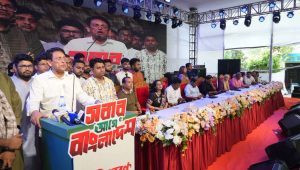
“We do not seek this additional time for the purpose of delay; rather, we want it for a sustainable, stable, and effective economic transformation,” Muktadir said while chairing a seminar titled “Bangladesh’s Preparedness for LDC Graduation and the Rationale for Extension of the Preparatory Period” held at the NEC Conference Room in Agargaon.
The seminar was organised by Economic Relations Division (ERD) of the Ministry of Finance, in collaboration with Ministry of Commerce and Ministry of Foreign Affairs.
It was noted during the event that government officially requested the United Nations Committee for Development Policy (UNCDP) for a three-year extension of the preparatory period.
Following consultations and an analysis of the current situation, the UNCDP responded positively to the request and submitted its assessment report to the UN Economic and Social Council (ECOSOC).

ECOSOC is now expected to consider the extended preparatory period and forward the final proposal to the UN General Assembly for approval.
Minister Muktadir explained that the government, immediately upon taking office, applied for the extension, citing various global and domestic challenges.
These include global trade volatility, geo-political instability, high inflationary pressures, and disruptions in supply chains, all of which have strained the country’s macroeconomy and institutional capacity.
He cited a graduation readiness assessment by the UN OHRLLS, which suggests current conditions are not sufficiently favourable for graduation within the original timeframe.




To address these hurdles, the government has adopted a roadmap consisting of 25 priority reforms. These reforms focus on macroeconomic stability, trade and investment reforms, deregulation, increasing competitive capacity, institutional strengthening, and human resource development.
“We are working to reduce the time required to start a business from one year to just 14 days, so that an organisation can open an LC for importing machinery on the 15th day,” the commerce minister added.
He also noted that initiatives are underway to eliminate complexities and overlaps in business registration and licensing to significantly reduce the time and cost of doing business.
State Minister for Planning Md Zonayed Abdur Rahim Saki addressed the seminar, noting that the current government is working to recover the economy and rebuild institutions despite facing a fragile economy and a weak financial sector.
He emphasised the necessity of extending international cooperation and continued support from development partners to overcome these crises.
In his keynote presentation, ERD Secretary Md Shahriar Kader Siddiky highlighted the primary economic and structural risks Bangladesh faces internationally. He outlined the government’s strategic priorities and a time-bound roadmap designed to effectively utilise the proposed extension period.
European Union Ambassador to Bangladesh Michael Miller described the international trade environment as highly dynamic and stressed that it is crucial for Bangladesh not to lose its momentum in reforms.
He mentioned that the EU is seriously considering closer trade relations with Bangladesh but emphasised the importance of further market opening and ensuring a level playing field.
The seminar saw participation from a wide range of stakeholders, including Foreign Secretary Asad Alam Siam, Finance Secretary Md Khairuzzaman Mozumder, Commerce Secretary Md Ataur Rahman Khan, and Bangladesh Association of Pharmaceutical Industries (BAPI) President Abdul Muktadir.
Also in attendance were the Acting UN Resident Coordinator Gitanjali Singh, CPD Distinguished Fellow Professor Mustafizur Rahman, SANEM Executive Director Selim Raihan, and Syed Nasim Manzur, president of Leathergoods and Footwear Manufacturers & Exporters Association of Bangladesh (LFMEAB).
Representatives from Bangladesh Garment Manufacturers and Exporters Association (BGMEA) and Dhaka Chamber of Commerce and Industry (DCCI) were also present, along with Executive Chairman of Bangladesh Investment Development Authority (BIDA), Chowdhury Ashik Mahmud Bin Harun, and National Board of Revenue (NBR) Chairman Ahsan Habib.
Ambassadors and High Commissioners from Sweden, Norway, Indonesia, Switzerland, Thailand, Nepal, and Vietnam also addressed the seminar, stressing the importance of export diversification, financial sector reforms, and expanding the tax net to ensure a sustainable LDC graduation.