


The government has prepared necessary legal and administrative frameworks to launch “Invest Bangladesh,” a major one-stop service designed to simplify business operations and bring all investment processes under a single umbrella.
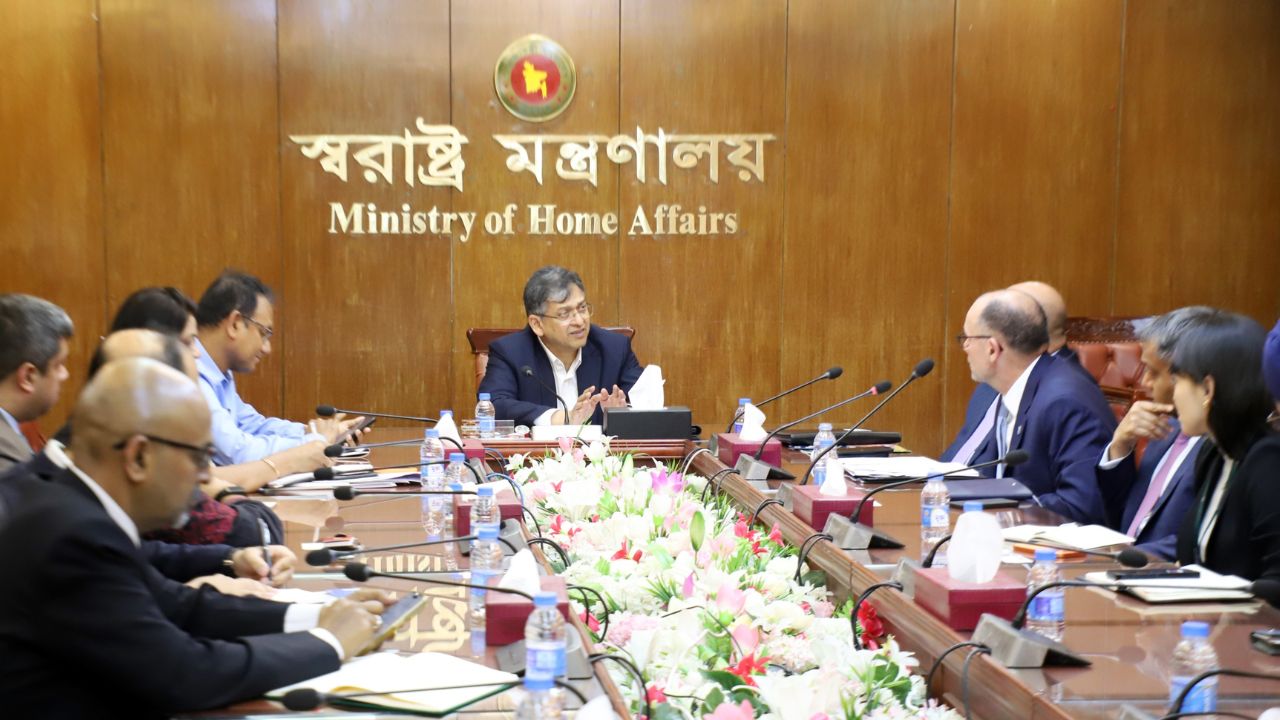
Home Minister Salahuddin Ahmed made the announcement on Tuesday with a high-level 16-member delegation from US-Bangladesh Business Council (USBBC) at Secretariat.
Salahuddin welcomed the growth of US investment and positioned the new service as key to ensuring a secure and tariff-friendly environment for foreign capital.
The bilateral discussions, held in the conference room of Home Affairs Ministry, covered trade expansion, investment growth, and cooperation in energy and security.

Systematic reforms to ease business
Salahuddin disclosed that legal and administrative structures backing “Invest Bangladesh” have been systematically organised over the past five to six months to guarantee a seamless transition for investors.
He reaffirmed the government’s absolute commitment to establishing an investment-friendly climate and ensuring complete safety and security for foreign companies looking to tap into the country’s vast direct investment opportunities.



The business leaders, led by Atul Keshap, president of USBBC and senior vice president (South Asia) of US Chamber of Commerce, praised Bangladesh’s immense economic potential.
With major US corporations already successfully operating as leading investors in the country for decades, Keshap projected that Bangladesh’s economy is on track to reach $1 trillion by 2034.
To sustain this trajectory, he emphasised that developing technical and managerial capacity, alongside raising GDP growth and tax productivity, remains vital.
He also discussed how US firms can act as key development partners by providing comprehensive support to the government.
Sectoral partnerships, tech-driven security
To complement the regulatory ease of “Invest Bangladesh,” Salahuddin outlined expanding opportunities across critical sectors, noting that the government is opening extensive avenues for both government-to-government (G2G) and private sector investments in food grains and energy supplies.
The government is currently evaluating several proposals to install LNG terminals at strategic locations, aimed at diversifying the nation’s energy sector and boosting national security.
Salahuddin also highlighted a series of technological and national security initiatives designed to protect foreign assets, including comprehensive digital security protocols, a smart policing “Safe City” project, an “Integrated Border Management” framework, and the rollout of e-visas.
Senior officials of the ministry were also in attendance at the high-level meeting.