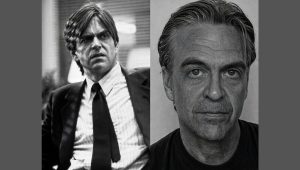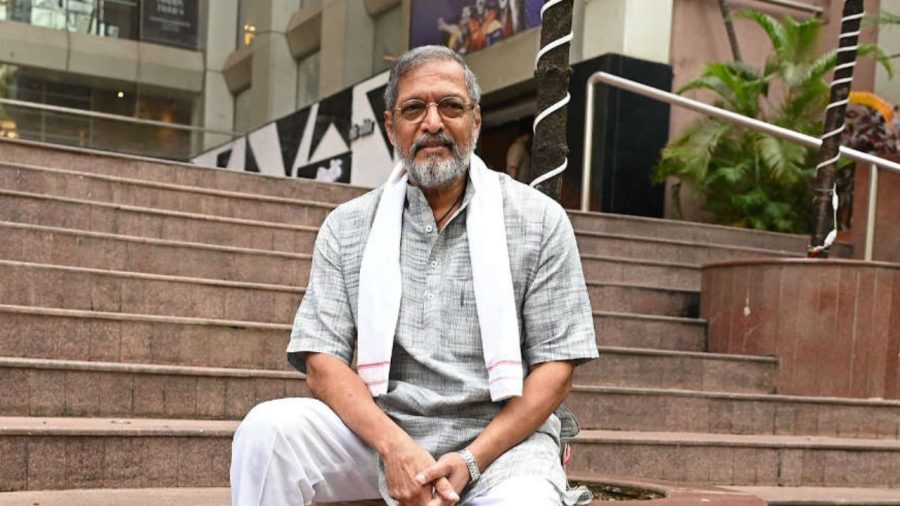



Nana Patekar was never an actor who needed to raise his voice to command a room. Sometimes, a pause, a glance or a few quietly delivered words were enough. With his unmistakable baritone and intense eyes, he built a career that made him one of Indian cinema’s most formidable performers.
Patekar, who died on Thursday aged 75, leaves behind a body of work that crossed heroes, villains, complex characters and comedy with equal conviction.
He reached a wider audience with Vidhu Vinod Chopra’s ‘Parinda’ in 1989, where his ruthless portrayal established him as a force to watch.

But Patekar never allowed himself to be defined by one kind of performance. In ‘Khamoshi: The Musical’, he played a deaf and mute father, stripping away the very dialogue-driven strength for which he was known.
In ‘Ab Tak Chhappan’, his portrayal of a policeman torn apart by his wife’s death revealed a deeply vulnerable side beneath his hardened exterior.




He held his own opposite stars such as Amitabh Bachchan and Rajinikanth, including in ‘Kohram’ and ‘Kaala’. His performances in ‘Diksha’, ‘Raju Ban Gaya Gentleman’ and several other films further reflected his extraordinary range.
Beyond cinema, however, Patekar built another legacy. After witnessing the suffering of families affected by farmer suicides in Maharashtra, he joined actor Makrand Anaspure to establish the Naam Foundation.
What began as a personal act of compassion grew into a major humanitarian effort supporting farmers, disaster-hit families and widows.
Patekar once said the happiness Naam Foundation gave him was greater than all the awards and money he received from cinema.
That perhaps captures the man best. Cinema gave Nana Patekar fame. But he used that fame to reach people who needed hope. His voice may now be silent, but the characters he created and the lives he touched will continue to speak for him.