The interim government has dismantled entrenched corruption in the power and energy sectors and restored transparency, said Muhammad Fouzul Kabir Khan, adviser to the Ministry Power, Energy and Mineral Resources and the Ministry of Railways.
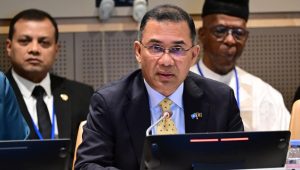
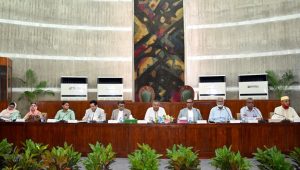
Speaking at a discussion titled “Democratic Reconstruction”, organised by the Centre for Governance Studies on Thursday at CIRDAP in Dhaka, the adviser outlined a series of reforms and anti-corruption measures undertaken by the interim government.

Fouzul criticised the Special Speedy Electricity and Energy Supply Act of 2010, stating, “This law was used to eliminate competition and legalise corruption in the name of fast-tracking energy projects. One of our first decisions was to discontinue its use.”
He pointed to past governance practices where secretaries of ministries were placed as chairmen of power and energy companies, calling it “a systemic part of the corruption structure.” That system, he said, has now been dismantled, with competition reintroduced—resulting in significant cost savings in procurement.



Highlighting progress in stabilising fuel supply, Fouzul revealed that the sector was burdened with $3.2 billion in unpaid dues, out of which $1.2 billion has already been paid off. “This has brought back stability to fuel supply,” he said.
Fouzul said that simply opening up oil import tenders to competition has saved the government around Tk 1,500 crore. Similarly, competitive LNG procurement has brought prices down from $16–17 per MMBtu to $11–12.
Turning to the Ministry of Railways, Fouzul claimed that thousands of crores in public funds were wasted under the guise of building guest houses, conference centres, and even helipads. “In just three weeks, we were able to prevent wastage worth around Tk 2,000 crore,” he added.
So far, the Ministry of Power, Energy, and Railways has achieved savings of Tk 45,000 crore, Fouzul claimed. “The government is using this money to clear outstanding dues.”
“An interim government cannot undertake large development projects,” he noted. “Our goal is to leave a stable foundation so that the next elected government can begin its work effectively.”