
For thousands of years, it waited beneath a lonely hill in southeastern Türkiye, keeping one of humanity’s greatest secrets.
No towering walls announced its presence. No legends accurately described what lay underneath. Shepherds walked across the mound without realising that beneath their feet rested enormous stone pillars carved by people who lived nearly 12,000 years ago.
Long before the pyramids of Egypt pierced the sky, before Stonehenge rose from the English plains and before writing, metal tools, or the wheel existed in what we assumed to be our shared history, someone had already built a monument so sophisticated that it would force archaeologists to rethink the story of civilisation itself.
That forgotten hill is Göbekli Tepe. Standing tall among its ancient stones today feels less like visiting an archaeological site than stepping into the opening chapter of human history.
Located about 18 kilometres northeast of the city of Sanliurfa, Göbekli Tepe has transformed our understanding of the prehistoric world. Dating back to around 9600 BCE, it is widely regarded as the world’s oldest known monumental ritual complex, predating the earliest Egyptian pyramids by more than 7,000 years.

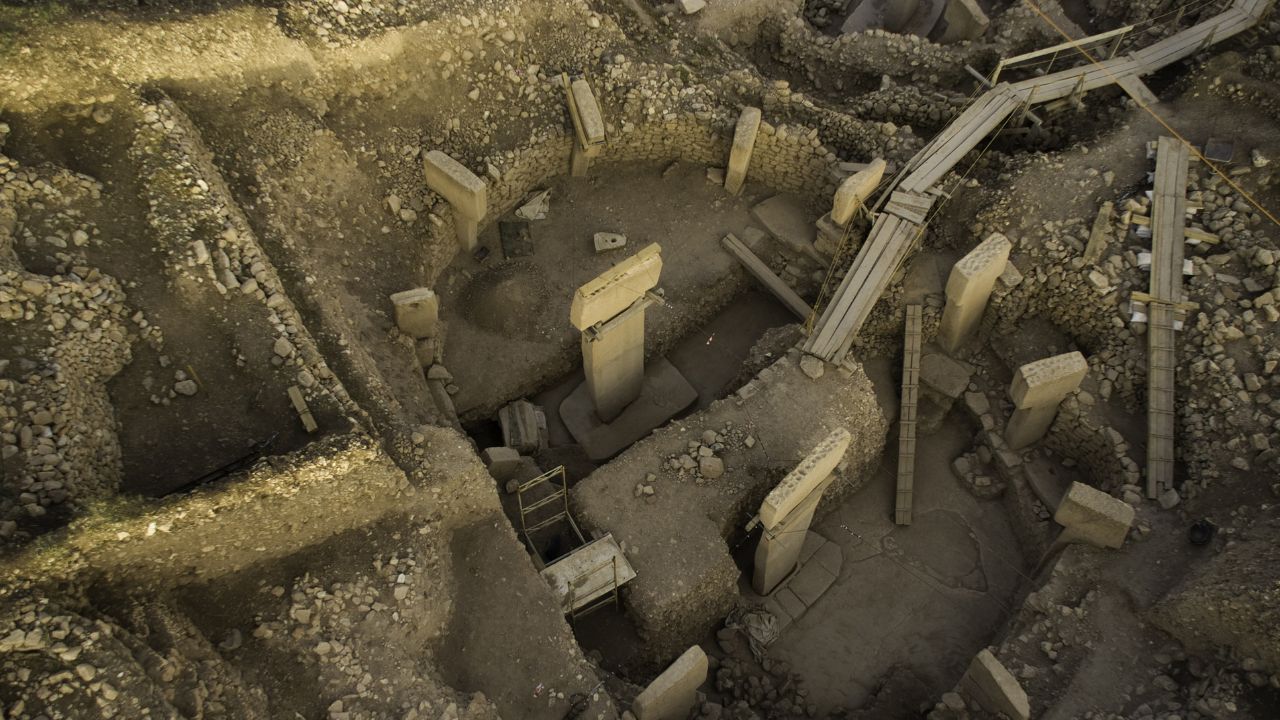
What makes the site extraordinary is not simply its age but its ambition. Massive T-shaped limestone pillars, some weighing up to 20 tonnes, stand arranged in carefully planned circular enclosures.
Many are decorated with remarkably detailed carvings of foxes, snakes, boars, vultures, wild cattle and scorpions. Even after nearly 12 millennia, the craftsmanship remains astonishing.
Perhaps the greatest mystery is who built it. The builders were not farmers living in permanent settlements. Archaeological evidence suggests they were hunter-gatherers, people once believed incapable of organising such large-scale construction. Göbekli Tepe challenged that assumption almost overnight.



Some archaeologists now argue that communal religious gatherings may have inspired people to settle together, reversing the long-held belief that agriculture came first and organised religion followed.
Unlike many ancient cities, Göbekli Tepe offers no royal palaces, marketplaces, or houses. Visitors instead encounter a ceremonial landscape whose original purpose remains uncertain. Every stone seems to raise more questions than it answers.
Walking through the protected excavation area, elevated pathways allow visitors to observe the circles without disturbing ongoing research. A vast canopy shelters the exposed structures from the weather while preserving excellent views of the carved pillars below.
Do not expect towering ruins like those of Greece or Rome. Göbekli Tepe is subtle. Much of its magic lies in understanding what you are looking at. Hiring a local guide or reading the interpretive displays greatly enriches the experience, revealing the symbolism hidden within each carving and explaining why this modest-looking hill changed archaeology forever.
Many travellers combine their visit with the Sanliurfa Archaeology Museum, home to some of the most significant discoveries from the excavation. The museum also houses the famous “Urfa Man”, one of the world’s oldest life-sized human sculptures, believed to be around 11,000 years old.
Together, the museum and Göbekli Tepe provide a fuller picture of humanity’s earliest communities.
For travellers from Bangladesh, the easiest route is to fly to Istanbul, followed by a domestic flight to Sanliurfa. From Sanliurfa Airport, the archaeological site is about a 30 to 40-minute drive. Taxis, organised tours and rental cars are all readily available.
If you have extra time, spend a day exploring Sanliurfa itself. Often called the “City of Prophets”, it is famous for its historic bazaars, traditional stone architecture and the sacred Balikligöl, where thousands of fish swim in tranquil pools surrounded by centuries-old religious landmarks.
Spring (April-May) and autumn (September-November) offer the most pleasant weather. Summers in southeastern Türkiye can be extremely hot, with temperatures frequently exceeding 40 degrees Celsius, making morning visits the most comfortable.
Wear comfortable walking shoes, carry water and allow at least two to three hours for both Göbekli Tepe and its visitor centre. Photography is encouraged, particularly during the softer morning or late afternoon light when the limestone pillars take on a warm golden hue.
Göbekli Tepe is not the kind of destination that overwhelms with grandeur. Instead, it quietly unsettles everything we thought we knew about our ancestors. Standing before stones carved nearly 12,000 years ago, it becomes impossible not to wonder.
If people could imagine and build something this extraordinary at the dawn of civilisation, how many more forgotten chapters of human history still lie buried beneath the earth, waiting for someone to uncover them?