Bangladesh’s telecommunications network faces disruption unless the sector is brought under priority energy allocation during the ongoing fuel crisis, the Bangladesh TowerCo Association (BTA) said in a press release on Tuesday.
The association called for immediate government intervention, including dedicated fuel supply and structured energy rationing for telecom infrastructure, adding that volatility in global energy supply is directly affecting the country’s telecom backbone that supports the expanding digital economy.
More than 45,000 telecom towers across the country rely on grid electricity supported by fuel-powered backup systems, and any prolonged shortage could destabilise operations, turning local outages into wider connectivity failures affecting millions of users and essential services, according to the association.

“Bangladesh’s connectivity ecosystem is facing a real and immediate threat. If the telecom sector is not prioritised within national energy allocation and fuel access frameworks, we risk a cascading failure that will impact businesses, essential services and everyday life,” said EDOTCO Bangladesh Country Managing Director and Interim President of BTA Sunil Issac.
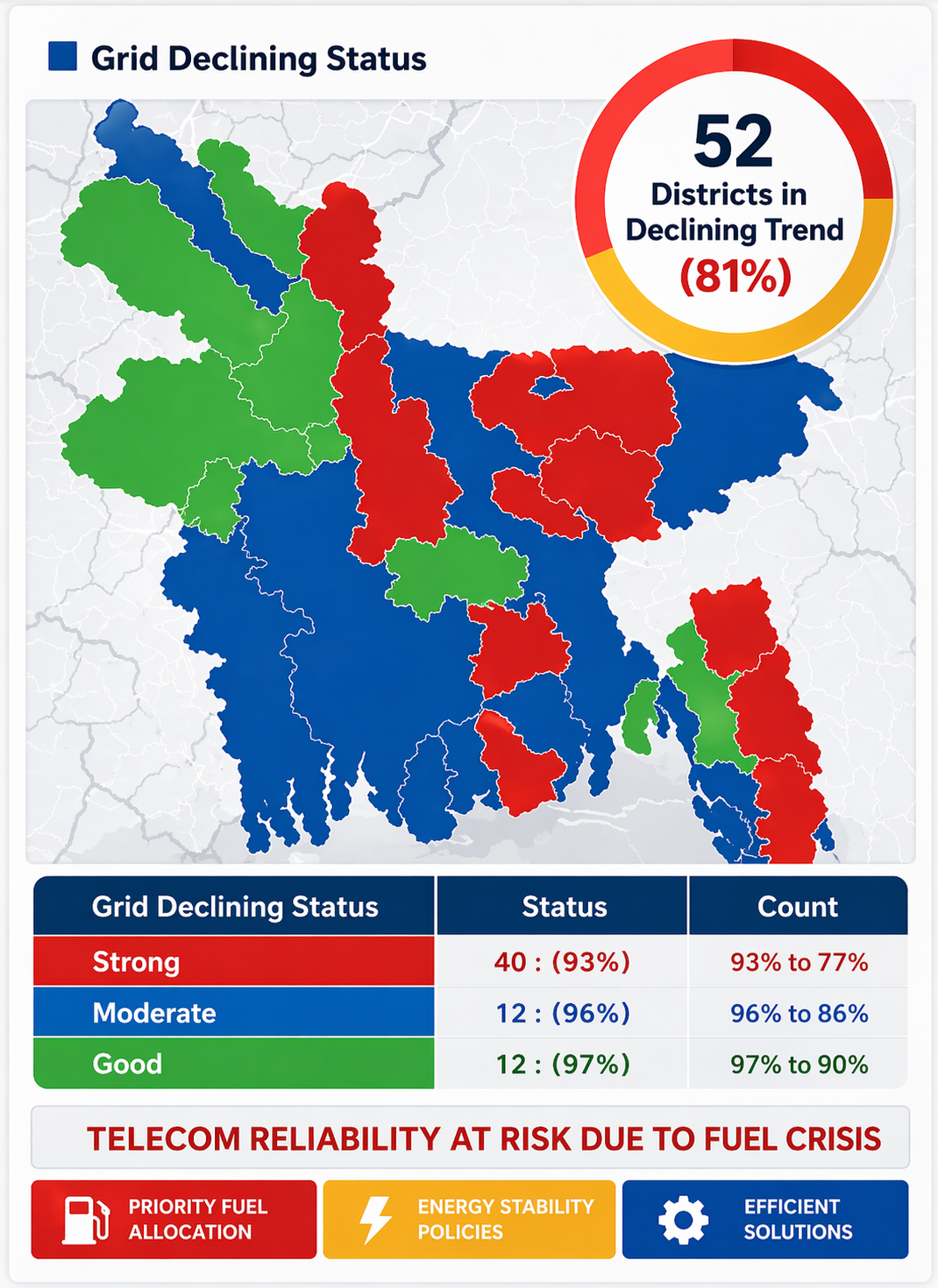
The association said it has engaged with Bangladesh Telecommunication Regulatory Commission (BTRC) and the Ministry of Power, Energy and Mineral Resources, seeking coordinated action to address the situation.




It proposed priority fuel allocation and policy support to maintain uninterrupted telecom operations during the crisis.
Any major disruption could have immediate spillover effects across banking and financial services, ready-made garment exports, e-commerce, ICT services, and small and medium enterprises, the association said.
A prolonged outage could disrupt business continuity, lead to financial losses, and weaken global confidence in Bangladesh’s digital infrastructure.
“Telecommunications is the first domino in the digital economy. Failure to act promptly could affect financial transactions, export coordination, emergency communications and public services,” said Issac.
The association urged the government to formally recognise telecommunications as a priority sector within national energy distribution frameworks and to implement targeted measures to safeguard network continuity during the crisis.