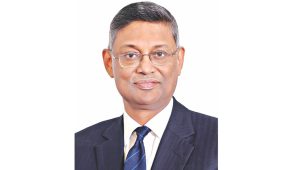
A transnational corruption scheme involving tens of millions of euros in bribes tied to Bangladesh’s national identity card project has finally brought into the public eye the long-shrouded figure known only as “Mr. G” — now identified as Major General (retired) Tarique Ahmed Siddique, the former prime minister’s powerful defence and security adviser and a close family relative.
Mr. G, so named in internal records of Oberthur Technologies and later in a World Bank investigation and French settlement documents, was allegedly introduced to Oberthur executives during a meeting in London in September 2015, months after the French firm had won the lucrative contract to supply biometric NID cards in partnership with Bangladeshi subcontractor Tiger IT.
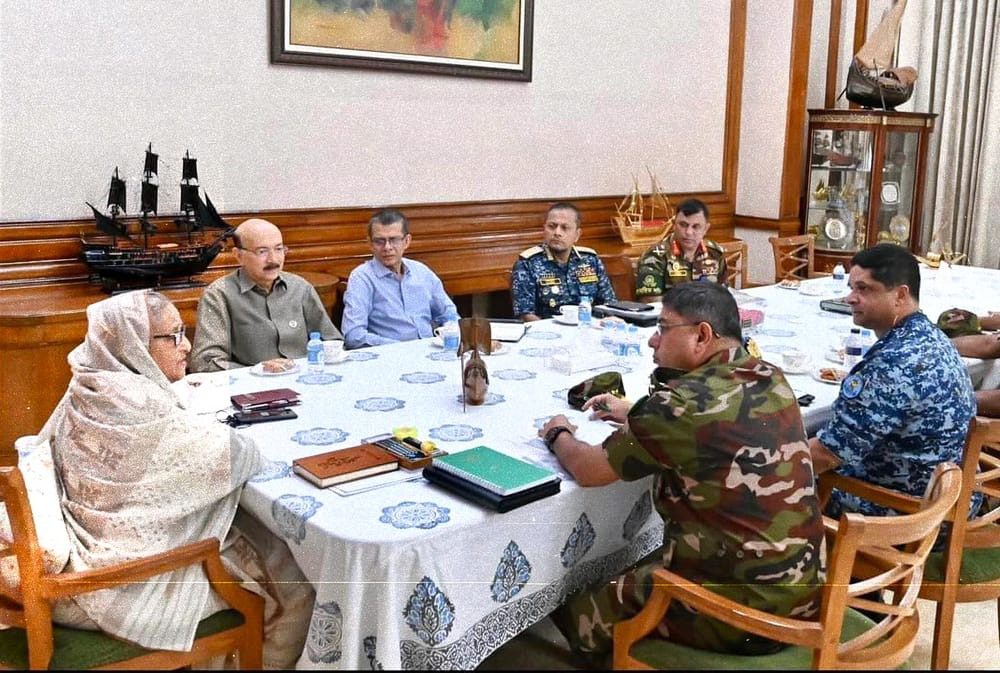
Although Siddique was never publicly named until now, Netra News traced his identity by reviewing thousands of pages of court filings, financial records, emails, and internal memos, as well as interviews with sources in Dhaka, Paris, London, Geneva, and Washington. A former military officer involved in the NID contract confirmed that “G” was indeed Siddique, a moustached former general and the only military figure among Sheikh Hasina’s formal advisers during her 15-year tenure.
The case, first flagged by the World Bank in 2015, exposes a network of collusion that involved rigging tenders, funnelling bribes through fake invoices and inflated contracts, and leveraging state machinery — particularly the army-backed project unit of the Election Commission — to steer outcomes. While Tiger IT and Oberthur faced international sanctions, Siddique has yet to face any legal consequence.
According to World Bank tribunal findings, Oberthur paid €730,000 to Siddique disguised as training fees in exchange for the original contract and an expanded order. French prosecutors later found the total amount earmarked for Siddique in a second deal reached €6.1 million (roughly Tk 88 crore), including an overpriced security-hologram add-on.

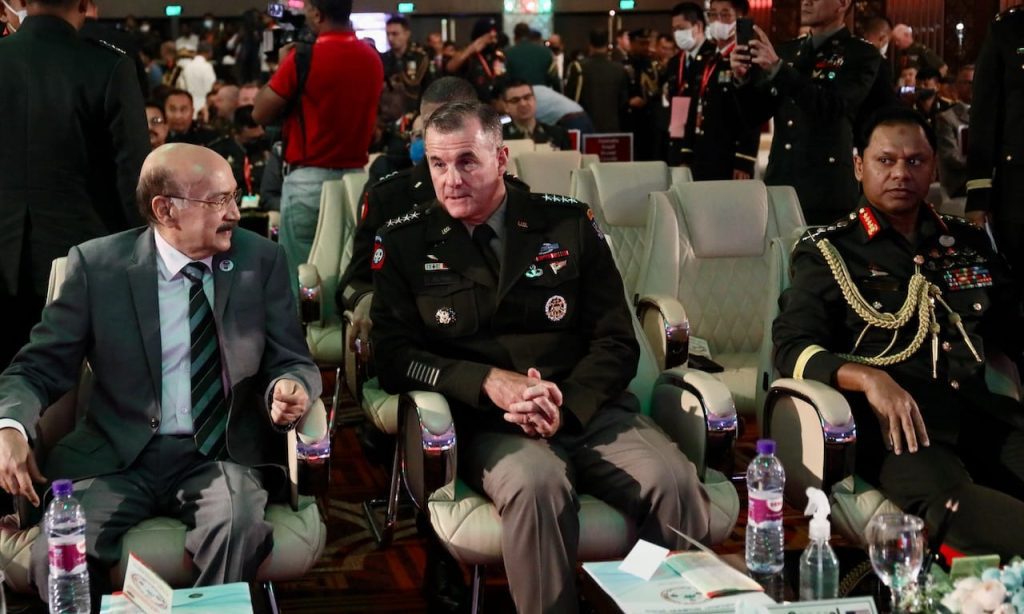
Internal Oberthur emails confirmed meetings with Siddique and recognised his decisive influence over the project. In one email, a staffer described meeting “the General” — a man introduced as “G” who had the power to influence contract expansion. World Bank investigators corroborated this with witness statements and photographs, identifying Siddique by his distinctive moustache.
Despite mounting evidence, Siddique has never been sanctioned. Netra News found that while British and French prosecutors advanced their cases against the companies, both countries’ diplomatic representatives were simultaneously courting Siddique — who was effectively functioning as Bangladesh’s defence minister — to promote arms deals, including the French Rafale and the British-backed Eurofighter Typhoon.
Meanwhile, Siddique’s family amassed significant wealth. His wife, Shaheen Siddique, applied for Maltese “golden passports” in 2024 with a $2.7 million bank statement. Land records show their daughter, Bushra Siddique, purchased a £1.9 million London house in 2018 shortly after college. In Dhaka, Siddique acquired properties in Baridhara, Gulshan, and Basundhara, along with two farmhouses and 16 acres of land, officially valued at Tk 38 crore — though Prothom Alo estimated the true market value could be 20 times higher.


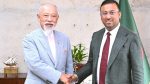
Tiger IT, the Bangladeshi subcontractor, was debarred from World Bank-funded projects for nearly a decade, while its CEO Ziaur Rahman was sanctioned for six years. Rahman, a well-connected businessman and reportedly a close associate of both Siddique and Hasina’s former son-in-law Khandakar Masrur Hossain, was found to have leaked confidential tender specifications to Oberthur and others eight months before the bid was opened.
The bid was rigged, the World Bank concluded. Rahman solicited Oberthur’s feedback on specifications to block rivals and used his ties with Siddique to gain influence within the army-run project unit at the EC. Rahman was also found to have channelled a €2.16 million payment for holograms through a British firm where he held a stake — Decatur Europe — with half of the inflated payment allegedly destined for Siddique.
By early 2016, Oberthur had released €2.4 million in multiple instalments for the hologram phase alone. One company executive warned, “G will not care anymore after he receives his advance payment. We need to keep some leverage until the end.”
Siddique was reportedly introduced in person to Oberthur staff in London by Rahman. While Tiger IT later claimed “G” was a fictional ruse, World Bank investigators matched emails, meeting records, and witness identifications to the retired general.
Oberthur received audit notice from the World Bank in August 2015 but still met Siddique and continued payments. By 2016, UK authorities raided Rahman’s London property and collected documents. Tiger IT swiftly sued Oberthur in Dhaka for $4.5 million, blocking future proceedings in more hostile foreign courts.
Eventually, French prosecutors opened a criminal case after the UK’s National Crime Agency tipped them off. Oberthur, facing legal pressure, cooperated with investigators. IDEMIA, Oberthur’s successor, paid an €8 million settlement under France’s anti-corruption laws but denied wrongdoing. Tiger IT and Rahman denied knowledge or involvement in any bribery.
In 2018, Tiger IT secured an injunction in Dhaka court to block a €15 million settlement payment to Oberthur. After Swiss courts could not halt the process, Oberthur filed suit in the UK, which was dismissed on jurisdictional grounds. Tiger IT took the case to Bangladesh’s Supreme Court, which remains unresolved.
Despite the bribery being outlined in legal findings, no criminal charges have been brought against Siddique in Bangladesh. Following Hasina’s ouster in August 2024, he is believed to have fled the country. Though he faces charges in other corruption and crimes-against-humanity cases, none involve the NID affair.
Netra News found that neither the World Bank nor French and UK authorities formally raised the issue with Bangladesh. The World Bank’s Integrity Vice-Presidency declined to comment, as did IDEMIA and British officials. The Bangladesh Election Commission and Anti-Corruption Commission also did not respond to requests.
Legal experts have noted that Siddique’s diplomatic status and political clout likely shielded him from foreign prosecution. However, anti-corruption advocates say it is deeply troubling that Western governments pursued defence contracts with an individual implicated in serious financial misconduct.
As of 2025, the dispute between Tiger IT and the World Bank remains pending in Bangladesh’s Supreme Court. The NID project, initially funded by a $195 million World Bank loan and touted as a leap forward for digital governance, now stands as a cautionary tale of unchecked power, diplomatic hypocrisy, and systemic impunity.
Meanwhile, Times of Bangladesh sources confirmed that Tarique Ahmed Siddique is now staying in Dubai.