



Intense fighting has erupted across Iran and the wider Middle East following a massive joint military operation launched by the United States and Israel.
The strikes follow a period of heightened tensions and a significant US military build-up in the region.
Alongside the kinetic conflict, a parallel wave of misinformation is spreading across social media platforms, where AI-generated and out-of-context videos are complicating the verification of events on the ground.
The Minab school strike
On 28 February, a girls’ school in the southern Iranian city of Minab was hit during US and Israeli missile strikes. Iranian officials have accused Israel and the US of carrying out the attack, though Israel reportedly denied responsibility on Sunday.
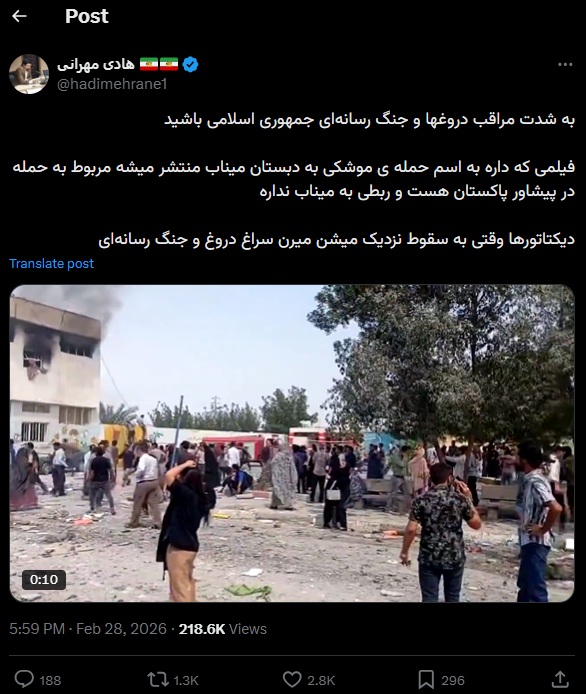

While the United Nations and various media outlets have verified the authenticity of the footage showing the destroyed building, casualty figures remain unconfirmed independently. The UN has reported approximately 150 deaths, while Iranian state media has placed the toll at 165.
Despite the confirmed nature of the event, false claims have circulated on the social media platform X, suggesting the footage actually depicts a 2014 terrorist attack in Peshawar, Pakistan.
These claims were incorrectly bolstered by Grok, the AI assistant on X, which linked the Minab footage to the older Pakistani incident.




Deceptive footage in Tel Aviv and Dubai
The information war has also targeted Israel and the United Arab Emirates. Although media reports confirm that Iranian missiles have indeed hit Tel Aviv, a viral video viewed over one million times – purporting to show a missile hitting a building in the city – has been identified as fake.
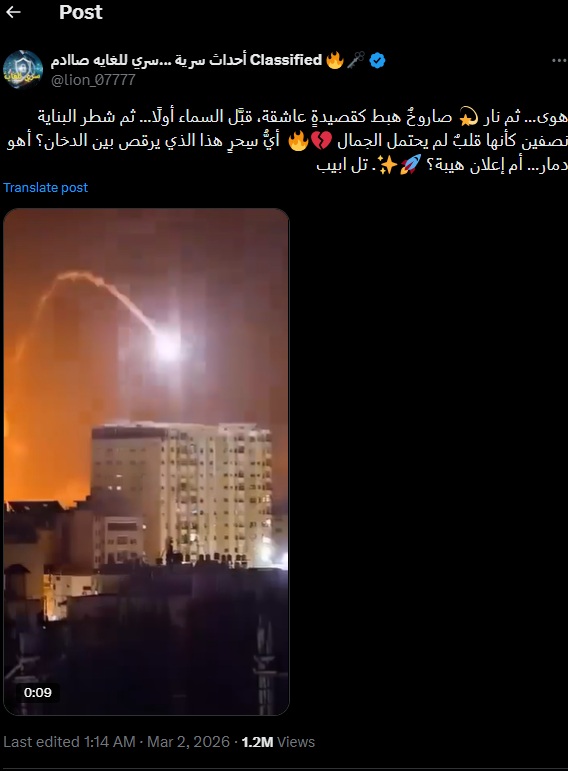
Fact-checkers noted the footage is AI-generated, pointing to physical impossibilities such as antennas collapsing before the missile made contact and structures toppling in an unrealistic manner.
Similarly, reports claiming that Iranian missiles “ripped apart” Dubai International (DXB) have been debunked.
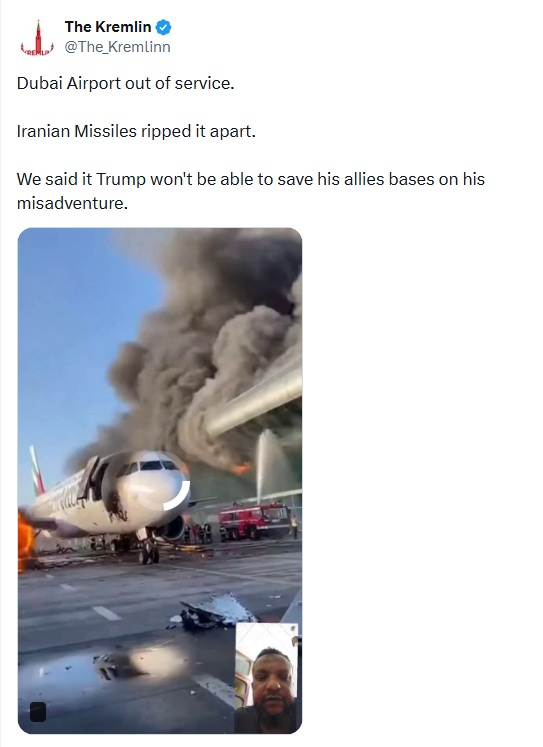
A viral 10-second clip showing a burning terminal and aircraft was found to be AI-generated, featuring unnatural smoke, an aircraft with an extra wing, and audio that does not match the visual scene.
A spokesperson for Dubai Airport confirmed that while a concourse sustained minor damage in a quickly contained incident, the airport resumed limited operations on 2 March following a temporary closure of airspace.
Identifying digital forgeries
As social media becomes inundated with shocking imagery, experts suggest several methods to distinguish fact from fiction without relying on automated summaries.
Observers should scrutinise videos multiple times, with and without sound, to spot logical or physical inconsistencies such as objects blending together or movements that defy gravity.
Using reverse image search tools like Google Lens can determine if footage has been recycled from previous conflicts.
Finally, users are encouraged to rely on multiple trustworthy news organisations to see if they are reporting the same event from different angles and providing verified visuals from the scene.