Organised crime took place in the country’s energy and power sectors for 15 years and those who benefitted cannot be brought to justice as their contracts were made with the state, limiting Bangladesh’s legal authority even at the international tribunal level.
“Citizens will carry this burden for the rest of their lives,” said Iftekharuzzaman, executive director of Transparency International Bangladesh (TIB).
Iftekharuzzaman made these comments while speaking at the inaugural session of the 3rd Bangladesh Energy Conference in Dhaka on Saturday.
The conference underscored Bangladesh’s slow progress in green energy transformation and called for urgent revision of the Integrated Energy and Power Master Plan (IEPMP) to expand the share of renewable energy in the national mix.
Environment Forest and Climate Change Adviser Syeda Rizwana Hasan inaugurated the three-day conference and urged civil society collaboration for a green transition. She said the country should aim for 100 per cent renewable energy in the coming years, as seen in Africa.
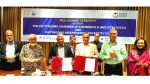
Organised by the Bangladesh Working Group on Ecology and Development (BWGED) with participation from 16 national partners, the conference aims to shape a renewable energy roadmap that can guide the next government.

The past government set renewable electricity targets of 20–30 per cent by 2030 and 30–40 per cent by 2040–41, yet less than 4 per cent of grid electricity currently comes from renewable sources.
Experts pointed to measures introduced over the past one year, including a halt on approvals for new fossil-fuel plants, 10-year tax exemptions for renewable energy, tenders for 5,238MW of solar projects and adoption of 3,000MW of rooftop solar programmes.
Rising liquefied natural gas imports have increased foreign exchange pressure, reinforcing the urgency of a sustainable energy roadmap.



When Adviser Syeda Rizwana Hasan called for balanced policymaking, TIBs’ Iftekharuzzaman warned against the influence of fossil fuel lobbies.
“What the previous government did may repeat after the election too,” he said.
Centre for Policy Dialogue (CPD) Research Director Khandakar Golam Moazzem said the country is observing one year of the interim government and awaits an elected administration.
He said legal and policy reforms were initiated but the state appears confused in implementing them and risks carrying forward the previous hidden agenda.
Echoing Iftekharuzzaman, he also called for an end to consultant dependency.
Bangladesh must strengthen domestic institutional capacity to prevent future governments from reverting to fossil-fuel-heavy power generation, he said echoing other experts.
Conference convener Kazi Maruful Islam said achieving energy justice will be difficult without ensuring justice among leadership, adding that neutrality among some interim government officials remains uncertain.
The opening session was hosted by BWGED Executive Member Monowar Mostafa and chaired by BWGED Coordinator Kazi Maruful Islam.
“Energy transition must be kept at the forefront of political commitments ahead of the coming election,” Islam said calling for broader civil society dialogue.
Centre for Renewable Energy Services Limited (CRESL) Chairman Shahriar Ahmed Chowdhury said the government spends $4 billion a year on electricity subsidies and that even half of this allocation toward renewable energy could have transformed the sector.
He said existing electricity policies are not renewable-friendly and must be corrected in the Integrated Energy and Power Master Plan.
LEAD Bangladesh Research Director Advocate Shimonuzzaman said transparency and accountability are central to a just transition and that public participation and the protection of marginalised groups must be prioritised.
Manusher Jonno Foundation (MJF) representative Banshree Mitra Niyogi said the voices of marginalised communities must be placed at the centre of the transition and that women’s participation and allocation in the energy sector must be clearly defined.
Bangladesh stands at a pivotal moment in its energy transition.