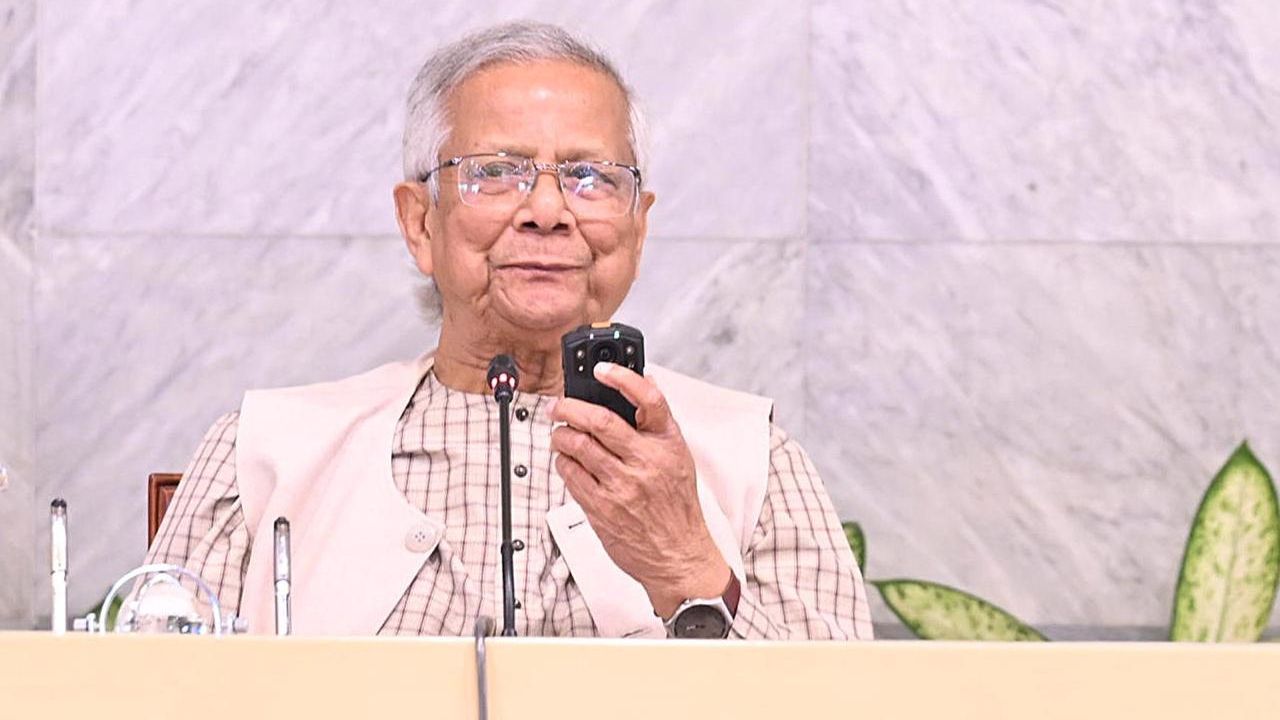



Chief Adviser Muhammad Yunus has said that the upcoming 13th national parliamentary election should be such an election that it sets a standard for future elections.
He made the remark during an Advisory Council meeting held at the Chief Adviser’s Office on Wednesday regarding the overall law and order situation ahead of the elections and referendum scheduled to take place on 12 February.
“Our job is actually to assist the Election Commission. This is a major challenge for the nation, which we must undertake, and we must complete this huge task and establish it as a historic achievement,” he said, adding, “There must be no lapses anywhere on 12 February. The 2026 election should be such an election that it sets a standard for future elections.”
He said, “With the election ahead, our step-by-step testing has begun. The EC’s directive is now the most important directive; everyone must work together following the EC’s guidance.”

He added, “There are various challenges now, along with various technological challenges combined. We will use body cameras in this election. We will use CCTV cameras, and everything will be monitored from the central control room.”
The chief adviser also said that care must be taken to ensure there is no deficiency in coordination among the forces in performing their duties. With so many journalists and observers present during the election, who are taking the matter seriously, “we also must be super serious about it,” he said.




“We must be prepared for everything. Given the current prevailing situation and the existing preparations, a fair election is possible,” said the chief adviser.
After confirming various details about the election, such as number of observers and the allocated duration for campaigning, the chief adviser said, “Information distortion in cyberspace is a major challenge this time. For this election, counting ballots for party symbols, the public vote ballot, and postal ballots will require slightly more time. The media must play a responsible role to ensure no misinformation or rumours spread regarding this.”
At the meeting, Energy Adviser Fawzul Kabir Khan and Special Assistant in charge of the Ministry of Posts, Telecommunications and Information Technology Faiz Ahmed Taiyeb said that both ministries are working to ensure uninterrupted electricity and network and internet services on election day.
Army Chief Waker-uz-Zaman said that during the mass uprising in August 2024, 3,619 weapons and 456,418 rounds of ammunition were looted from various police stations across the country. Out of the looted weapons, 2,259 have been recovered and a little over 50 per cent of ammunition.
Home Adviser Jahangir Alam Chowdhury said that members of the armed forces will be considered law enforcement personnel this time. Therefore, if necessary, they can enter the polling centre premises, with Home Secretary Nasimul Ghani adding that body cameras will reach the local level within the next five days.
He also presented a video demonstration on the use of body cameras, later saying that, from now on, meetings will be held weekly, and if necessary, at even shorter intervals.
Among others present at the meeting were Chief Adviser’s Special Assistant for Defence and National Unity Development Abdul Hafiz, National Security Adviser Khalilur Rahman, Cabinet Secretary Sheikh Abdur Rashid, Navy Chief Rear Admiral Mohammad Najmul Hasan, Air Force Chief Air Chief Marshal Hasan Mahmud Khan, Chief Adviser’s Principal Secretary M Siraj Uddin Mia, Inspector General of Police Baharul Alam, Border Guard Director General Major General Mohammad Ashraful Zaman Siddiqui, Coast Guard Director General Rear Admiral Md Ziaul Haq, Director General of Rapid Action Battalion (RAB) AKM Shahidur Rahman, and heads of various intelligence agencies.