


Following the recent publication of the SSC examination results, nationwide debate has erupted over the pass rate. While some contend that a lower pass rate reflects genuine progress in educational standards, questions remain over how real improvement should be measured.
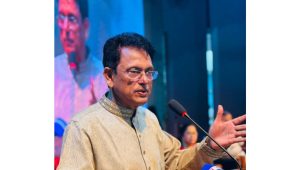
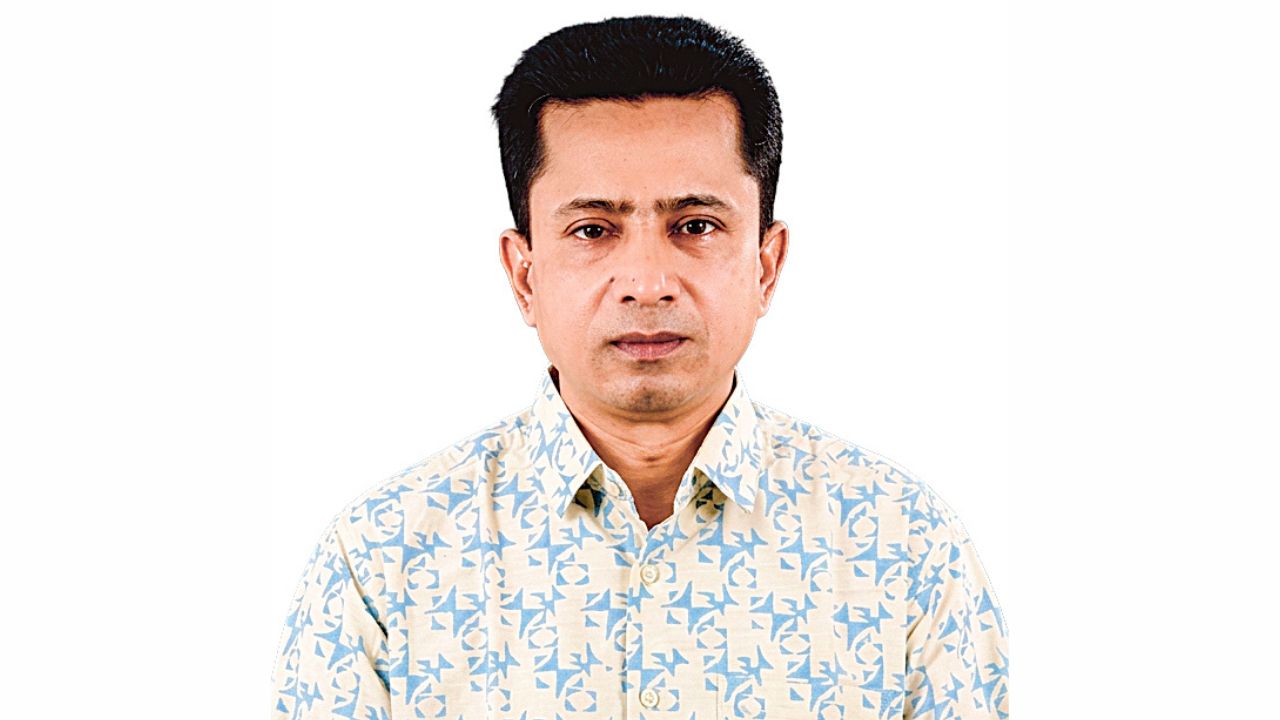
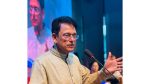
Mohammad Mojibur Rahman, a professor at the Institute of Education and Research at the University of Dhaka, discussed these issues with Aleem Haider of TIMES of Bangladesh.
The educationist believes the government can fundamentally transform the education system, but only through the right process and proper policies. Otherwise, even numerous initiatives will yield little benefit, leaving the system trapped in the same vicious cycle.
Did the SSC results expose the poor quality of our educational institutions? After all, top-performing schools have not seen a drop in standards.
I cannot deny that. Non-government institutions face shortages of teachers, good teachers and a proper learning environment. Naturally, no one can perform beyond their own capacity.
However, good institutions have their own management systems and strategies. Without depending on the government, they have developed their own educational management systems. That is why everyone is interested in studying at those institutions.

After the pass rate fell, the education minister said the results were good. It seems the government is not unhappy about the lower pass rate. How can education progress with such an attitude from the government?
The answer is absolutely not. Just as an excessively high pass rate is not right, neither is an excessively low one. What students have learnt and how much they have learnt are what matter. Why should 6 lakh students fail after studying for 10 years? That means there are major problems in the management of the education system. This should not be seen as a success. Rather, we need to think about how the situation can be improved.
At several hundred schools, not a single student passed. On top of that, chronic weaknesses in English and mathematics have been discussed for years. Are these issues truly impossible to solve?
If we want a solution, it is possible. Teachers of the required calibre must be recruited. In some places, there may not even be enough subject-specific teachers. Both quality and quantity are now important in teacher recruitment.
To recruit good teachers, proper management must be ensured, with no political influence, nepotism or corruption. Teachers must also receive good salaries. Why would good students enter teaching if they are not assured of a decent standard of living?



Thousands of schools have been established across the country, but why has it not been possible to maintain standards in district towns or rural areas?
It is a matter of outlook and inequality. We, or our policymakers, often cannot think beyond improving education for our own children. That is a problem. If we could ensure catchment area-based educational institutions, this crisis would not have arisen.
Different teaching methods suited to the hills, haor areas and char regions are also needed. Then there would not be such a difference between institutions in cities and villages. All institutions would come to roughly the same standard.
But will quality teachers actually be willing to work in rural or remote areas?
When young people enter teaching, they are full of energy. In Malaysia, teachers sent to remote areas receive incentives depending on the location – 10 per cent in some places and 20 per cent in others.
If we introduced such a system, young teachers could willingly spend the first four or five years of their careers in remote institutions. The additional income would also help them establish themselves.
Concerns over teacher competence are nothing new. Recruitment remains indiscriminate, while meaningful training is virtually non-existent. Can things continue like this?
No. We are in a fragile situation. We must break the vicious cycle in education. Alongside teacher training, regular monitoring must also be strengthened.
Partisan recruitment, nepotism and corruption in teaching appointments must stop. We first need to decide our priority – do we need smart teachers first, or smart boards in classrooms?
Why do teachers seem more focused on private tuition than on their actual classroom teaching?
This happens for two reasons. First, students seek private or alternative tuition when they cannot learn properly at their institutions.
Second, the salaries of non-government teachers make it difficult to maintain a decent standard of living. If they could be guaranteed decent salaries, either similar to those of government employees or under a separate pay structure, they would be more focused in the classroom and would not need to provide private tuition.
Teachers outside the MPO scheme even teach students without pay. Can any education system operate like this?
This is extremely inhumane. They continue teaching in the hope that the government may eventually bring them under the MPO scheme. But this practice, which has continued for years, is extremely unfair. We have to move away from it. If we want good teachers, good students and an education-friendly environment, investment in education must increase.
Has any government actually paid adequate attention to the quality of education?
We always remain hopeful. This government is still new; it has been only six months. I do not want to lose hope yet. If it can implement what it has said about improving education quality, the state of education in Bangladesh will genuinely change.
However, the decisions the government is taking now are not being made in accordance with proper policies. To put the education sector right, the philosophy of education must first be determined. There needs to be an education commission and an education policy, and the curriculum should be developed in light of them. Education cannot be transformed simply by changing textbooks.
In some cases, the government is making wrong decisions in haste. It must move away from these mistakes. Otherwise, like under previous governments, the education system will once again fall into the same vicious cycle.