


The education ministry’s move to restore teacher recruitment through school governing bodies has triggered fears of renewed corruption and a further decline in education quality – already under severe scrutiny following Monday’s disastrous SSC results.
Several ministry officials said some officials at the ministry and the Non-Government Teachers’ Registration and Certification Authority (NTRCA) were trying to form a “vicious circle”, warning that the move would harm the education system.
However, the education minister has downplayed media reports about replacing the current NTRCA recruitment system following an outcry across the country.
Mohammad Mojibur Rahman, professor at the Institute of Education and Research at the University of Dhaka, said handing governing bodies responsibility for recommending teachers would be a “disaster”.
“The existing NTRCA system needs to be improved further. If necessary, an independent and strong teacher recruitment commission could be formed along the lines of the PSC. Such a commission should not recruit teachers solely on the basis of subject-specific knowledge, but should also consider candidates’ behaviour and psychology,” he told TIMES of Bangladesh.
The controversy intensified after a recent education ministry meeting discussed reviving the old recruitment system. University students have already begun protesting, while teachers’ organisations have warned of a movement.
The ministry, however, maintains that no final decision has been taken and that the proposal remains under discussion.

At the centre of the controversy is the prospect of large-scale recruitment. Under the existing monthly payment order (MPO) policy, at least 75,762 vacant posts have been identified across non-government schools, colleges, madrasas and technical institutions.
At a 3 August meeting of the Secondary and Higher Education Division, officials discussed allowing governing bodies to recruit teachers instead of NTRCA.
According to the meeting agenda, NTRCA would retain responsibility for registration and certification but would no longer recommend candidates for appointment.
The agenda also proposed issuing a notification allowing institutional governing committees to complete the recruitment process.
Delawar Hossain Azizi, member secretary of the Alliance for Nationalisation of MPO-listed Education, strongly opposed the proposal.



“The very idea of handing teacher recruitment power to institutional governing committees is an ominous and corrupt thought. This is an attempt to open the way for corruption involving thousands of crores of taka around at least 80,000 vacant posts in nearly 30,000 institutions,” he told TIMES.
Bangladesh Teachers’ Union President Abul Bashar Howlader said recruitment powers had previously been transferred to NTRCA because of irregularities and a lack of transparency in governing committees.
“If this decision is implemented, the education system will sink back into the lack of transparency and irregularities that prevailed before 2015,” he said.
Attempt to relax qualifications for presidents
During the interim government, graduation was set as the minimum educational qualification for becoming president of a governing body as part of efforts to improve standards in non-government education.
After the BNP government came to power, it attempted to remove the requirement but later backed away amid protests from teachers and widespread public criticism.
Following the fall of Awami League in the mass uprising, its supporters were forced to step down from governing bodies. Education stakeholders allege that BNP leaders and members of their families have since taken charge of many non-government institutions.
They claim the ministry may have discussed returning recruitment powers to governing bodies under pressure from those now controlling the committees.
Presidents of several governing committees told TIMES of Bangladesh that many teachers recruited before NTRCA began recommending candidates were of poor quality. They alleged that some had secured jobs by paying bribes, while others were appointed through family connections.
“Later, as teachers began entering the profession after passing several stages of examinations through NTRCA, the learning environment at non-government institutions began to improve. If this trend is disrupted, educational institutions will once again become hubs of corruption and plunder,” said the president of a school governing committee in Jashore.
Teachers say returning recruitment powers to governing bodies could reopen the door to political influence, nepotism and cash-for-job appointments.
‘Ominous meeting’
Azizi alleged that a section of the ministry was trying to encourage corruption and opacity in the education sector.
He said the BNP government established NTRCA in 2005 to bring discipline to recruitment at non-government institutions, while recruitment through NTRCA began in 2015 after several stages of examination and scrutiny.
“We had hoped that the present government would further improve that process along the lines of the BCS or PSC and strengthen the education system. But the initiative the education ministry is attempting to take will reopen the door to corruption and damage the environment in educational institutions,” he said.
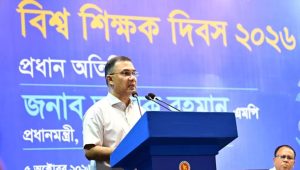
Education Minister ANM Ehsanul Hoque Milan said no final decision had been taken to recruit teachers through governing committees and that the matter had only been discussed.
However, he expressed anger over the leak of the meeting agenda, describing it as the work of someone operating “in the shadows”. Teachers rejected the remark.
Azizi warned that teachers would launch a movement unless the ongoing recruitment process for heads of educational institutions was properly completed and the proposal withdrawn by 25 August.
Shikkha Odhikar Sangsad said handing such an important responsibility to unqualified or unprepared committees would sharply increase the risks of corruption, nepotism and partisan recruitment, undermining merit-based appointments and public confidence in the education system.