
By Aisha Hoque
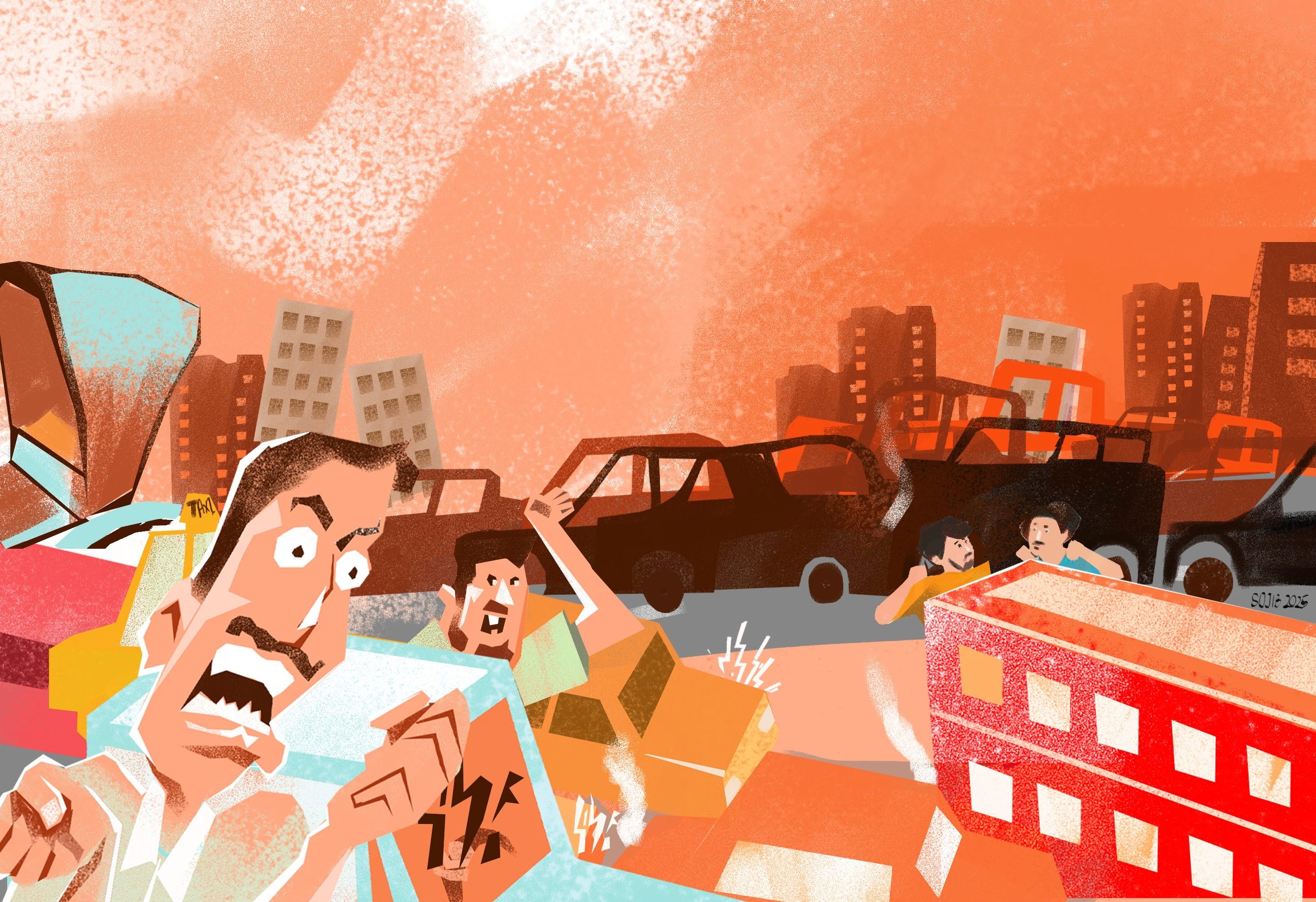
One of the first things that comes to mind when thinking of Dhaka is its traffic madness. A flight from the capital to Bangkok takes about two and a half hours; however, the journey from Dhanmondi to Uttara might take a little longer on a good day. The city’s congestion reads more than just red-lined warnings on Google Maps — it is an imposed ordeal, but rather an everyday endurance test, demanding your very last bit of energy and heightened levels of frustration followed by anxiety.
Throughout the day, commuters must devote unreasonable hours to move around the city. As a result, they fall victim to a chronic mental health crisis. While traffic jams have made their mark as an inescapable element in urban living, medical specialists remain deeply concerned about their substantial repercussions.
Faysal Ahmed Rafi, the chief psychologist at Mindwizz, provided his insights on the issue. “Primarily, the congestion causes stress, which then triggers psychological reactions, like overstimulation, mood swings, self-blaming habits, depressive disorders, and many more. Moreover, it has a collective effect on everyone around, regardless of their direct involvement.”

“Being stuck in such uncomfortable conditions for endless hours, people even tend to have a go at their personal relationships. The youth are significantly affected. They don’t get to learn, or fail to implement coping strategies, regulate their emotions in an appropriate manner, or simply struggle with extreme restlessness, which is quite worrying,” he added.
According to a World Bank Study (2017), the congestion costs the city about 3.2 million working hours every day. Moreover, during rush hours, average travel speeds slow down to 7 km/h, comparable to the pace of a walking individual. Additionally, a recent BUET study shows that the city’s deteriorating congestion restricts people’s time to spend with their families and on other activities, leaving mental wellness up for negotiation.



In a quick discussion, Mohammad Kamal, a local bus driver, said that he spends up to 14 hours a day navigating the packed roads. The constant noise and erratic driving weigh upon him, and the heat inside the vehicle makes it even worse. “It’s exhausting not just physically but mentally,” sighed Kamal. “Sometimes I feel overwhelmed and anxious, but I have to keep going as my family depends on it.”
Similarly, Imam Hossain, a truck driver on a rare tea break, voiced, “The stress of traffic and long waits wear on me, the overall environment and its uncertainty make it hard to stay calm. Considering the little to no sleep I get, dealing with the traffic situation drains me mentally, provoking my road rage.”
On another note, the impact is alarmingly intense for students, office workers and daily-work professionals. Students arrive at institutions stripped of strength and motivation, affecting their academic performances. Likewise, by the time jobholders reach work, they are already exhausted, bearing minimal productivity, which leads to a sense of helplessness and lack of control.
While sharing thoughts, Mayeda Jahan Maisha, 21, an IUB student, expressed how mentally crushing the journey from Narayanganj to her campus in Bashundhara can be, even with access to the flyover. “At times, I don’t have the energy to eat my dinner properly when I get back home, as I am completely worn out after such long hours on the roads,” Maisha complained.
“Because of a political gathering at Naya Paltan, half the city was blocked, and I ended up missing an important quiz, which I later had to reschedule. What’s worse, it took me 5 hours to get home that day,” she added.
“I step out of home with a good mood and return with the worst. Even as a biker, sometimes I am stuck in the same spot for hours. Some days, I feel like I just want to leave this insane city,” said Shamim Shopno, a journalist, who thought a bike could ease up the traffic inconvenience.
Unless citizens take individual actions at the earliest and authorities take structural reforms more seriously — infrastructure improvements, long-term planning, better traffic management, smarter deployments of private vehicles, increased public transport modes, Dhaka will continue to shine with all its glory on the list of cities with the worst traffic, while being one of the slowest cities in the world. Also, one that generates trauma!