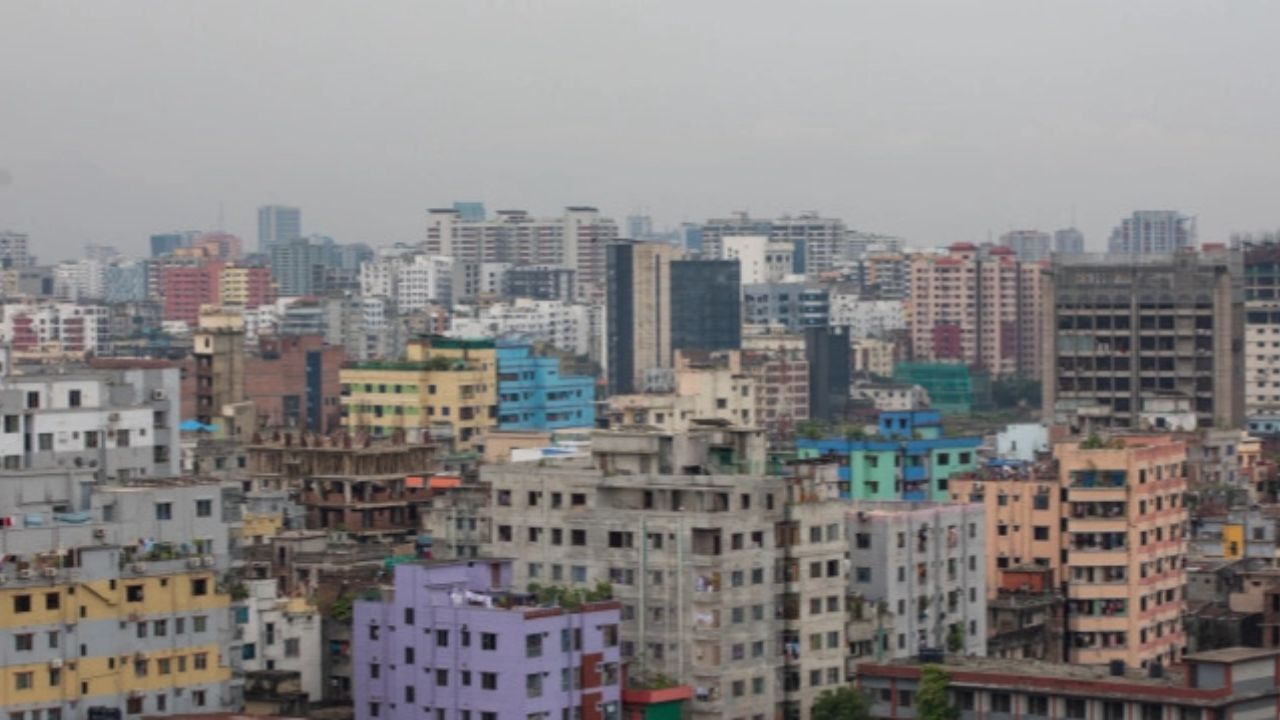

Dhaka’s population density is shifting rapidly, with the northern and eastern fringes experiencing significant growth, while the historic southern and central areas see a steady decline in residents.
The latest Community Report from the Bangladesh Bureau of Statistics (BBS) reveals striking changes in population patterns between 2011 and 2022.
During the decade, areas like Dakkhinkhan saw a 237% surge in population density per square kilometre, Turag increased by 123%, and Uttara Pashchim nearly doubled. In stark contrast, core areas such as Motijheel, Paltan, Gulshan, and Bangshal experienced population density declines of 20% to 32%.
The report, published recently, is based on the BBS’s Population and Housing Census data from 2011 and 2022.
The findings highlight a clear contrast in growth trends across different parts of Dhaka.

Experts suggest that the decline in population in Dhaka’s core areas can be attributed to the transformation of these regions from residential to commercial zones. Meanwhile, older neighbourhoods in Old Dhaka, such as Bangshal, Kotwali, and Chakbazar, continue to lose residents as families move away due to congestion, pollution, and frequent fire risks.
The Population and Housing Census 2022 reveals that the population density in Dhaka South City Corporation stands at 39,353 per square kilometre, while Dhaka North City Corporation is at 30,474. In comparison, the national population density of Bangladesh is 1,119 per square kilometre.
According to the BBS Census 2022, Bangshal is the most densely populated thana in Dhaka, with 119,746 people per square kilometre. In 2011, the population density stood at 143,809, marking a 16.73% decline over the past decade.




Other Old Dhaka neighbourhoods such as Kotwali and Chakbazar also continue to lose residents as families relocate due to congestion, pollution, and frequent fire hazards. Population numbers in these areas have dropped by 17%-21%.
Meanwhile, once-vibrant central areas like Motijheel and Paltan are gradually transforming into commercial and administrative zones, leading to a decline in residential life.
Even affluent areas such as Gulshan and Dhanmondi have seen population drops of 10%-23%, as traditional family homes are replaced by offices and apartments with fewer residents.
Bimanbandar Thana has the lowest population density in the city.
Urban planners have expressed concern over the rapid increase in population density on the city’s peripheries, warning that haphazard construction is depriving residents of a livable environment and adequate amenities.
Adil Mohammed Khan, professor of Urban and Regional Planning at Jahangirnagar University, said that Dakkhinkhan’s population density indicates that the government has not taken any initiative to control growth and create a well-planned city.
“The main reason behind the rising population density on the peripheries is that the land price is lower than in the core city area, which is encouraging low-income groups to settle on the outskirts of the city,” he said.
Adil Mohammed Khan further emphasised that the government should take steps to plan these new areas effectively, to avoid repeating the mistakes made in Old Dhaka, which has become unmanageable.
Dhaka ranked 171st out of 173 cities – just ahead of the conflict-ridden capitals of Libya’s Tripoli and Syria’s Damascus – according to the Economist Intelligence Unit’s Global Liveability Index 2025.