While the district of Chapainawabganj is widely celebrated for its high-quality mangoes, Kalai Ruti, and intricate Nakshi Kantha, the traditional “Adi Chamcham” of Shibganj Upazila has recently taken centre stage in local discourse.
Residents and stakeholders from all walks of life are now raising a collective and forceful demand to grant Geographical Indication (GI) status to this approximately 150-year-old sweetmeat to preserve its unique heritage.
According to local residents, the distinctive taste and quality of Shibganj’s Adi Chamcham cannot be replicated anywhere else in the country, making its national recognition a necessity of the time.
The history of Shibganj’s Adi Chamcham dates back to the Nawabi era of Bengal, carrying the heritage of the district for a century and a half.
During the British period, Shibganj was a police station under the Malda district of undivided India and served as the capital of ancient Bengal, Gaur. The region was home to a large community of moyras (sweet makers).
Following the partition, while many migrated to Malda, several families chose to remain in Shibganj, continuing their ancestral profession to this day.

The sweet is renowned for its distinctive appearance: a firm, burnt-brick-coloured outer coating with a soft, pinkish interior that is famously known for making one’s mouth water.
This traditional sweet is available exclusively at three adjacent shops in Shibganj municipal town: Adi Chamcham, Asal Adi Chamcham, and New Adi Chamcham.
The legacy began around 1858 when a local resident, Narendra Kumar Sarkar, first introduced the sweet to the Shibganj market.
Its fame quickly spread beyond Sonomosjid and Kansat to the then-subdivisional town of Chapainawabganj.



After Narendra’s passing, his sons, Tabal Sarkar and Indrabhushan Sarkar, took over the management.
Currently, the third generation is upholding the tradition; the business is managed by Indrabhushan Sarkar, alongside Tabal Sarkar’s son, Arun Kumar Sarkar, and another brother Bijoy Kumar Sarkar’s son, Ripon Kumar Sarkar.
Artisans emphasise that producing Adi Chamcham is impossible without pure cow milk chhana (curd). Additionally, its production is inextricably linked to the specific climate and water properties of the Shibganj region.
Previous attempts by sweet makers from Rajshahi and Chapainawabganj to replicate the recipe have reportedly failed, as the local water and weather conditions are deemed essential for its authentic taste.
The preparation involves a meticulous blend of chhana, mawa, and sugar using a special technique of heavy thickening known as kora pak.
Maintaining the specific temperature of the stove and the consistency of the sugar syrup is critical; any fluctuation in heat can ruin the unique taste, aroma, and colour.
Historically, Vadu Saha was a legendary artisan of this craft, known for his ability to prepare a single Adi Chamcham weighing nearly half a maund (approx. 20kg), which was famously displayed at an exhibition in the Chapainawabganj Stadium after independence.
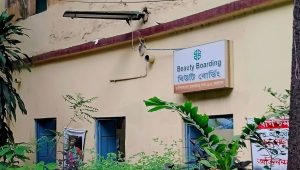
The late Tasem Mia Ukil, a veteran lawyer from Chapainawabganj, once recounted that during Bangabandhu Sheikh Mujibur Rahman’s political visit to the district in 1968, he stayed overnight at Tasem Boarding.
Following dinner, he was served the famous Adi Chamcham of Shibganj. According to the late lawyer, Bangabandhu highly praised the sweet, expressing his satisfaction with its uniqueness and individuality, which helped the sweet’s reputation spread even further.
In the local market, Adi Chamcham is sold at Tk 300 per kg, with individual pieces weighing between 75g and 150g.
For special occasions, the shops supply large-sized sweets weighing between 5kg and 8kg at a rate of Tk 600 per kg. Daily sales across the three shops range from four to five maunds, with crowds of people travelling from distant areas to purchase them for their loved ones.
Official support for GI status is growing. Engineer Mahtab Uddin, former president of the Chapainawabganj District Association in Dhaka, stated that the quality is so unique that it cannot be matched elsewhere.
Former Member of Parliament and Administrator of the Zila Parishad, Harunur Rashid, remarked that Shibganj has maintained the integrity of this sweet for over 150 years.
The Shibganj Upazila Nirbahi Officer (UNO), Md Mazharul Islam, confirmed he would present the proposal for GI recognition at district-level meetings. Additionally, Dr Mazharul Islam Toru, Principal of Adina Fazlul Haque Government College, argued that GI recognition would increase its global visibility.
Chapainawabganj Deputy Commissioner (DC), Abu Saleh Md Musa Jongi, described the sweet as a key identifier of the district’s history and assured that the district administration will take the necessary steps to forward the proposal to the relevant ministry for GI certification once the formal documentation is received from the Upazila.