Cooling demand is rising in district towns and emerging urban centres as increasingly intense and prolonged summers reshape Bangladesh’s air conditioning market, said Walton Air Conditioner Chief Business Officer Md Tanvir Rahman.
“Air conditioning is gradually transitioning from a luxury product to an essential household appliance, particularly in urban and semi-urban areas,” he told TIMES, adding that demand estimates for 2026 have been revised upward.
Consumers are becoming more proactive, purchasing air conditioners ahead of the summer season instead of waiting for peak heatwaves, prompting manufacturers to strengthen production planning, improve distribution and ensure sufficient inventory before peak demand.
“The expansion beyond major cities is emerging as one of the most encouraging trends,” he said, adding that improving living standards, better electrification and rising awareness of home comfort are driving demand.
According to the Bangladesh Bureau of Statistics, of the 4.1 crore Bangladeshi households, 2.78 crore are in rural areas. Less than 1 per cent of rural households have a cooling machine, while the figure is around 7 per cent in urban Bangladesh.
“The headroom is huge,” he said, adding that Walton, with its large manufacturing facilities, is prepared to meet rising demand with a market share estimated to exceed more than one-fourth of the total.
However, rural and semi-urban markets still face voltage fluctuations, infrastructure limitations and weaker service networks, making wider distribution, accessible after-sales support and continuous consumer education essential.
Walton is expanding dealer networks and service centres to ensure reliable nationwide support.

Efficiency, smart use and evolving preferences
Inverter technology has become the preferred choice due to its superior energy efficiency and long-term cost savings, although non-inverter air conditioners remain relevant in specific commercial or temporary use scenarios.
“Smart air conditioners with IoT and Wi-Fi connectivity are gaining traction as smart home technology becomes more familiar,” said Tanvir Rahman.
Consumers, especially younger and tech-savvy users, are using mobile applications to control cooling remotely, schedule operations and monitor energy usage.
“Why should one sacrifice comfort, even for 20 minutes, when you have an option to enter an already cooled house after a hectic day?”




At Walton, interest in smart-enabled models is rising among urban homeowners, while adoption is still evolving and such features are becoming the standard rather than a novelty.
Design is also influencing purchase decisions, as consumers increasingly consider how appliances fit their home interiors.
Premium indoor unit designs, refined finishes and modern aesthetics are gaining attention, encouraging manufacturers to combine technological innovation with improved design.
Environmental preferences are shaping choices, with the transition to modern refrigerants such as R32 is seen as a step towards reducing environmental impact and improving energy efficiency.
The shift requires upgrades in production facilities and extensive training for technicians, while reliance on imported components compatible with newer refrigerants remains a challenge amid global supply chain fluctuations.


Replacement demand is strengthening as many households still use outdated, electricity-intensive units.
Walton’s exchange offers are encouraging upgrades by allowing customers to trade in old units for discounts on new inverter models, providing immediate financial benefits and lowering electricity bills over time while accelerating the move towards energy-efficient cooling.
Cost pressure and policy imbalance
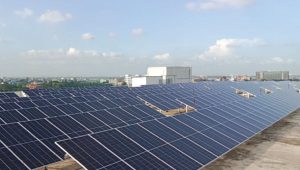
Solar-hybrid air conditioners are emerging as a potential solution to reduce pressure on the national power grid during peak summer months by integrating solar and conventional power.
However, affordability remains a constraint due to the need for additional equipment such as solar panels and specialised controllers, although wider adoption is expected as costs fall and supportive policies emerge.
The industry is also facing rising costs due to depreciation of the currency and higher global material prices, with many components still dependent on imports.
Manufacturers are responding by increasing localisation, improving efficiency and strengthening domestic production, with Walton investing in local infrastructure to reduce import dependency and improve resilience.
Policy disparities remain a major concern for local manufacturers, warned Tanvir Rahman.
Importers can bring in VRF and chiller systems at a 1 per cent customs tariff, while local manufacturers face 15 per cent customs tariff along with an additional 15 per cent VAT on raw materials.
“How can a local factory compete with importers?” he said.
The imbalance is affecting local industrialisation, employment and production costs, underscoring the need for urgent policy alignment as the market expands.
With supportive policies, Walton eyes replicating its refrigerator revolution in the country alongside significant expansion in its overseas business.
In the refrigerator segment, the largest home appliance company’s market share is over 70 per cent. To boost exports, Walton has been expanding its retail footprint abroad.