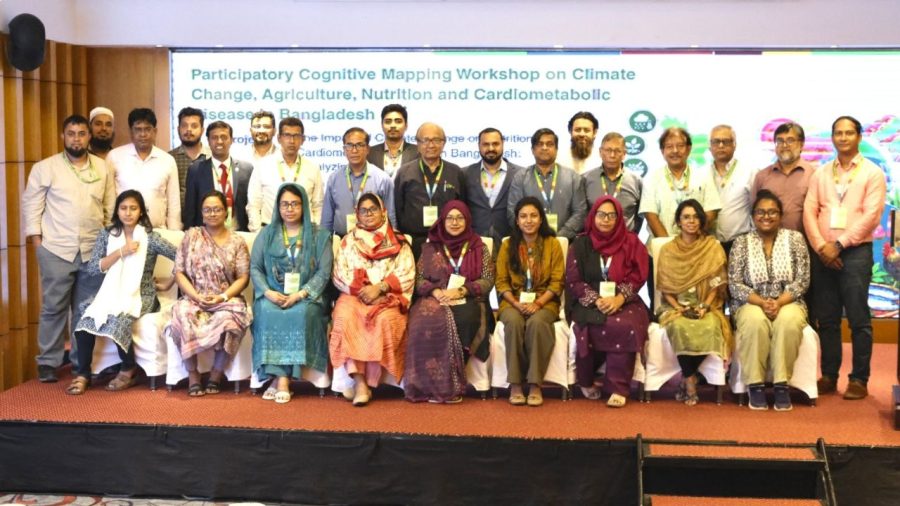



Climate pressures on agriculture could influence household diets and potentially affect nutrition and cardiometabolic health, experts said at a workshop organised by the International Maize and Wheat Improvement Center (CIMMYT) in Dhaka on Sunday, 20 September 2026.
The workshop examined the links between climate change, agriculture, food choices, nutrition and diseases such as diabetes and heart disease. It was organised under the project The Impact of Climate Change on Nutrition and Cardiometabolic Disease in Bangladesh: Catalyzing Policy Action, funded through the Wellcome Trust Climate Impacts Award.
The project, running from March 2026 to February 2029, aims to generate evidence to support healthier diets and climate-responsive policies.

The workshop used fuzzy cognitive mapping (FCM), a systems analysis approach that combines knowledge from different sectors to map how various factors may influence one another. Organisers said it was the first application of FCM in Bangladesh specifically to examine the interconnected pathways between climate, nutrition and cardiometabolic health.
Dr Sreejith Aravindakshan, CIMMYT Scientist in Adoption, Scaling and Innovation Systems, led the workshop and introduced the FCM approach. Prof Malay Kanti Mridha of BRAC James P Grant School of Public Health, BRAC University, and Dr Kaela Connors of the University of North Carolina at Chapel Hill also presented aspects of the project.




Participants discussed how climate-related agricultural losses could affect food availability and household diets, including fish-based diets, drinking water and food and beverage choices.
Prof Dr Sohel Reza Choudhury of the National Heart Foundation Hospital and Research Institute said the impact of climate change on household nutrition could vary significantly among households.
Prof Mridha highlighted the possibility of both undernutrition and overnutrition emerging from climate-related changes, while Dr Subarna Ferdous of the Department of Fisheries said climate change could affect fish diversity and aquaculture, potentially reducing access to fish as an important source of protein.
Participants also discussed adaptation measures, including access to cool drinking water, agroforestry and nutrition education.
The FCM maps developed through the workshop will be used to identify potential pathways and research priorities. Researchers said the maps represent stakeholder assessments and do not establish causation or predict future disease rates.
The wider project is jointly led by Prof Lindsey Smith Taillie of the University of North Carolina at Chapel Hill and Prof Mridha, with CIMMYT and the National Heart Foundation of Bangladesh among the implementing partners.