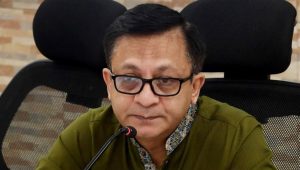
Muhammad Fouzul Kabir Khan, the Power, Energy and Mineral Resources adviser, has identified the total settlement of massive outstanding arrears to international energy providers as the interim government’s most significant feat in the energy sector.
Speaking at a press conference held at Bidyut Bhaban on his final day in office, the adviser explained that the sector was encumbered by heavy liabilities when the administration initially took charge.
He noted that debt repayment became a top priority after he was informed early in his tenure that imports of liquefied natural gas (LNG) would be impossible without clearing these payments.
Following the change in government on 5 August 2024, Petrobangla owed international gas and oil firms Tk9,106 crore. Between that date and April 2025, the state agency disbursed Tk35,700 crore in energy payments, effectively reducing its outstanding debt to zero.

Alongside these repayments, the government focused on cost-cutting measures which yielded roughly Tk 1,500 crore in savings during the first six months through reduced premiums on both long-term and spot LNG purchases.
New Master Sales and Purchase Agreements signed with 24 firms helped lower average premiums from USD 1.28 per unit to just 38 cents.




The government also worked to enhance transparency by repealing the Speedy Supply of Power and Energy (Special Provision) Act, 2010.
By applying the Public Procurement Act and Rules to drilling projects, expenditure was lowered significantly; for instance, the projected cost for five gas wells in Bhola was cut from Tk1,555 crore to Tk907 crore.
Despite these gains, Kabir Khan admitted that gas discoveries have not yet met the levels necessary to offset the national depletion rate.
Furthermore, the uncertainty regarding the interim government’s duration hindered the finalisation of major investment deals, as potential investors sought more clarity on the administration’s term.
The adviser further outlined several strategic recommendations for the incoming administration, such as initiating offshore bidding for oil and gas exploration in maritime territories and establishing land-based LNG terminals alongside a fourth Floating Storage and Regasification Unit.
To mitigate the ongoing gas shortage, the energy division proposed the drilling of 100 wells by the year 2028, a move that could provide an additional 900 million cubic feet of gas to the national grid every day. On his departure, the adviser confirmed he would provide a written roadmap for his successor to ensure continuity and a clear starting point for the sector’s management.