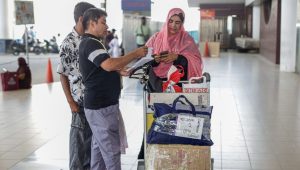



A total of 298 to 303 children are currently staying with their incarcerated mothers in various prisons across Bangladesh, according to a report submitted to the High Court by the Department of Social Services.
Highlighting that the prison environment is not conducive to a child’s physical and mental development in the long run, the department has recommended alternative family care, safe housing, and education facilities to protect their best interests.
A copy of the integrated report prepared by the department’s Child Protection Unit and Probation Branch, forwarded by its Director (Administration and Finance), has reached TIMES.
Under Section 89(1)(6) of the Children Act, 2013, children dependent on incarcerated parents or staying in prison with an incarcerated mother are legally classified as “underprivileged children”.

The report noted that this classification provides a clear legal mandate to ensure special protection, care, and developmental measures for these children. It further emphasised that arranging immediate alternative care when a child is found neglected or in an unsafe condition remains a primary responsibility of the Department of Social Services.
The report was submitted in compliance with a High Court order issued on 15 June by a bench comprising Justice Khizir Ahmed Choudhury and Justice Md Ziaul Hoque.


Following a writ petition moved by Advocate Kamrun Nahar Mahmud Deepa, the High Court issued a rule and directed the authorities to submit a list of children residing in prisons with their mothers within two months.
Field-level data reveals that while there is no separate programme directly under the Child Protection Unit for children in prisons, efforts to meet their basic needs continue through the Probation Branch.
Under the Ministry of Social Welfare’s “Probation and After Care Services”-operating across 72 units, including 64 districts and eight Chief Metropolitan Magistrate (CMM) courts-a registered voluntary organisation named the “Offender Correction and Rehabilitation Society” is actively engaged.
Under the supervision of probation officers, the society regularly supplies toys, clothing, and nutritious child food to support the early development and protection of the children. These welfare activities are funded through grants from the National Social Welfare Council as well as spontaneous donations from generous members of society.
Outlining future steps, the Department of Social Services recommended that after a specific age or timeframe, children staying with incarcerated mothers should be rehabilitated under foster care or alternative family care with close relatives, keeping their best interests in mind.
If placement with close relatives is unfeasible or if safety cannot be ensured, the report advised placing the children in government children’s homes (Government Shishu Paribar) or suitable safe shelter centres under the Department of Social Services, ensuring opportunities for upbringing and schooling.
The department said that it remains committed to taking necessary legal and humanitarian measures by giving top priority to the best interests, safety, health, education, and normal development of children in prison.