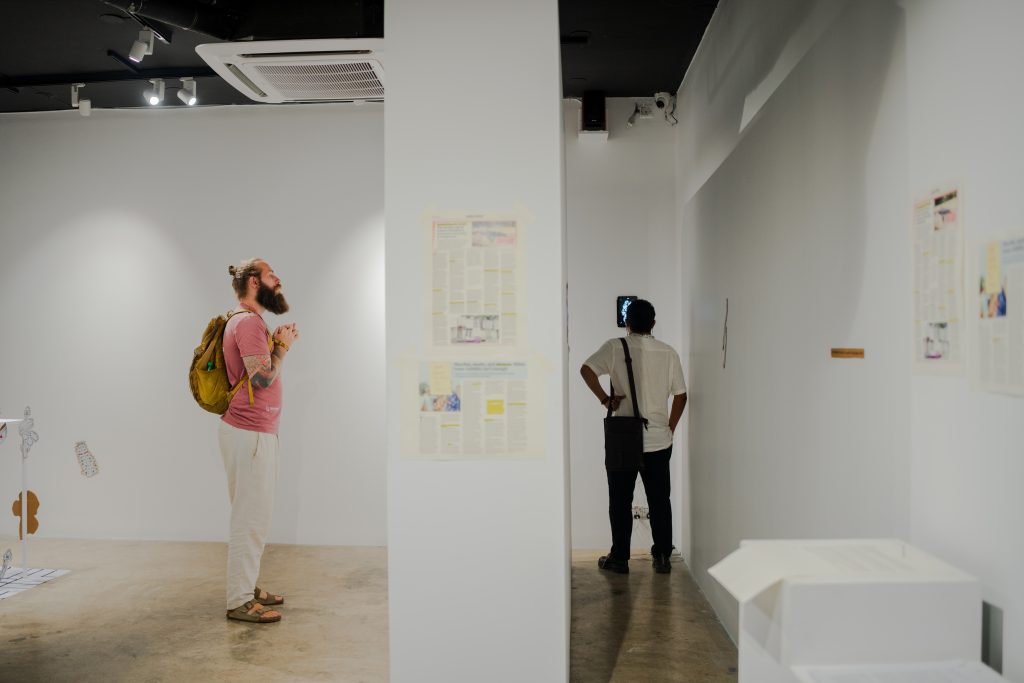
“Surveillance—what does it look, taste, smell, or sound like to you?” These haunting questions greeted visitors at Chhaya O Sanket (Shadow and Signal), a three-day exhibition exploring surveillance, censorship, and resistance.
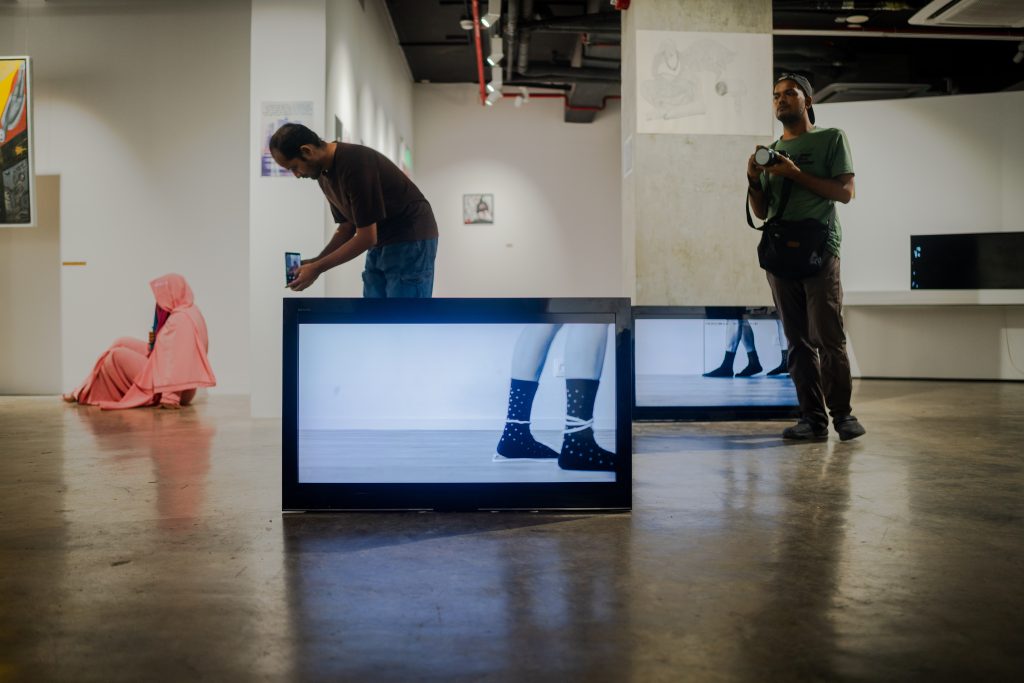
Organized by Sannoy Bangladesh, a feminist, human rights, and digital rights organization advocating for gender-diverse communities, the exhibition ran from October 31 to November 1 at DrikPath Bhaban, Dhaka. Curated by Sadia Marium Rupa, it featured 13 artists from Bangladesh and the diaspora, all questioning the invisible systems that monitor, censor, and shape daily life.
“Today, our thoughts and movements are constantly recorded and influenced by forces beyond our control—corporations, marketing agencies, intelligence systems,” Rupa said. “Surveillance is no longer fiction or Orwellian imagination; it is our present reality, shaping fears, behaviors, and even silence.”
The exhibition confronted the intertwining of surveillance and censorship in Bangladesh, from state control over digital platforms to social and familial pressures enforcing self-censorship. Women, Indigenous peoples, and gender-diverse lives are especially affected, their existence often watched and silenced.
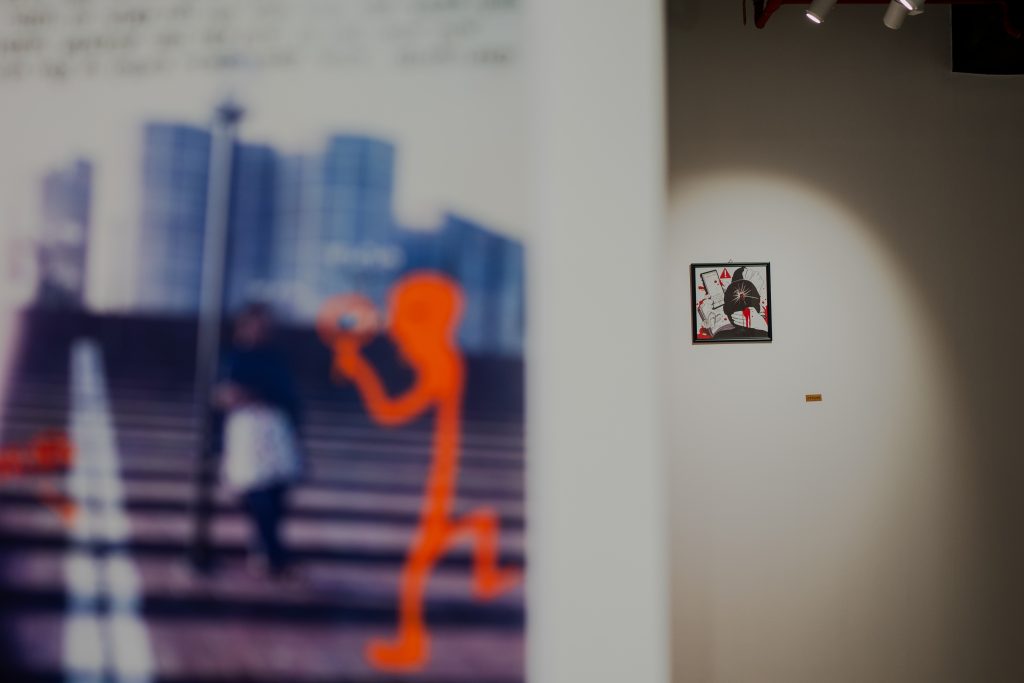
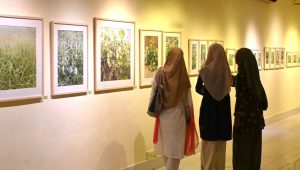
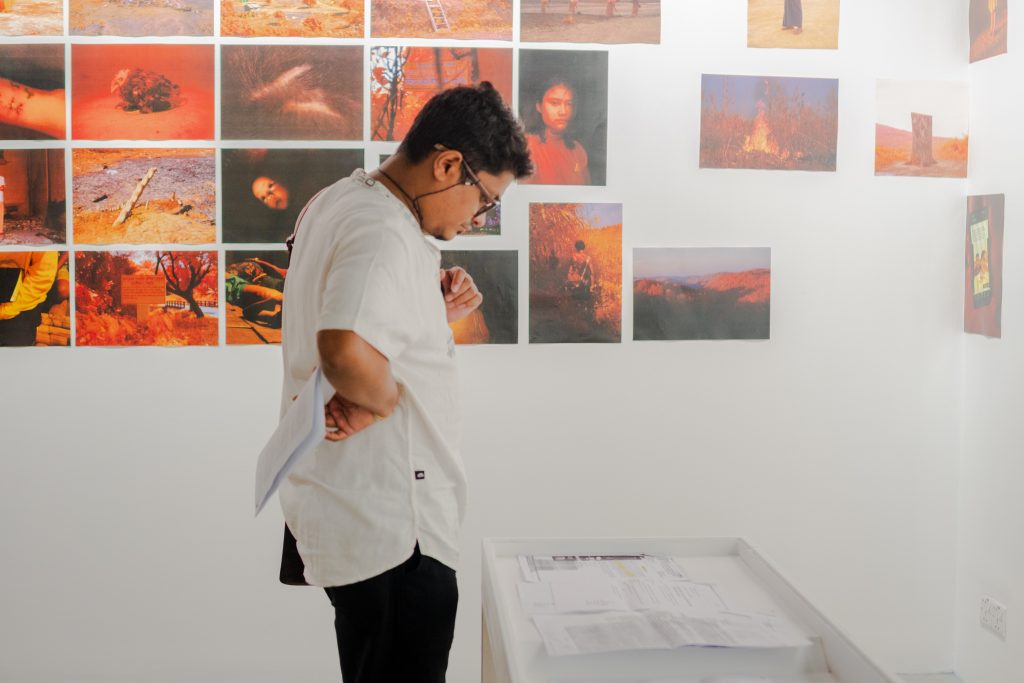
Artworks ranged from photography, short films, and documentaries to text-based pieces, installations, paintings, sketches, memes, animation, posters, performance art, and poetry, each responding uniquely to control and observation.
“Chhaya O Sanket is not just about resistance,” Rupa said. “It is about decoding the world, finding ways to speak through silence, and creating networks of solidarity and imagination.” The exhibition challenged visitors to consider: how can we live freely when every shadow carries a signal?