
In the Chowmuhani area of Agrabad, half the road has been fenced off with corrugated metal sheets, while excavators and workers continue to lay underground pipelines. Rickshaws squeeze through narrow lanes, commuters wait in long queues, residents shield themselves from dust, and shopkeepers complain of losing customers.
Just a few kilometres away in Halishahar, however, most construction has already been completed. The contrast reflects Chattogram’s first‑ever sewerage project: after decades of waiting, the city is finally moving toward modern sanitation, but only after years of delays, rising costs, and public hardship.
Sixty‑three years after the Chattogram Water Supply and Sewerage Authority (CWASA) was established, the country’s second‑largest city still lacks a centralized sewerage system. Household wastewater and toilet waste continue to flow into drains, canals, and the Karnaphuli River, worsening pollution and health risks.
Experts say several canals have effectively become open sewers, with contaminated water spreading into neighbourhoods during monsoon and tidal backflow.
Mega Project Delayed, Costs Rise
Launched in 2018 at Tk3,808 crore, the Chattogram Sewerage System Project now costs Tk5,219 crore, an increase of Tk1,400 crore due to exchange rate changes and design modifications.

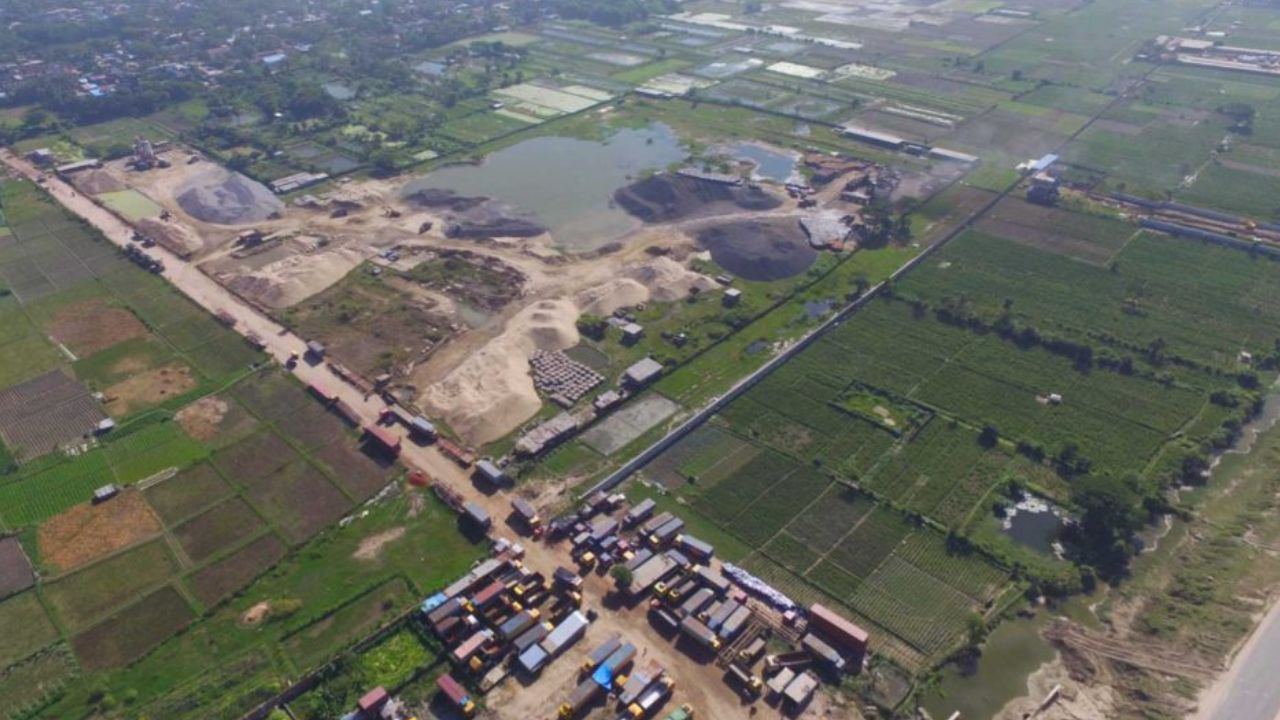
It includes a 165‑acre treatment plant in Halishahar capable of processing 100 million litres of wastewater daily, plus a facility for 300 cubic metres of septic sludge.
About 200 kilometres of pipelines are being installed across 22 wards, covering 36 square kilometres. The first phase will serve nearly 20 lakh residents through 28,000 household connections.



Originally due in five years, the deadline has been extended to 2028. Overall progress is 75 percent: civil works at the plant are 90 percent complete, mechanical installation 50 percent.
Residents Bear the Burden
In Agrabad, trenches remain open in narrow lanes, creating traffic jams and dust clouds. “Development is necessary, but our roads have been dug up for years,” said resident Ekram Hossain. “We cannot keep windows open, and traffic is unbearable.”
Housewife Fahima Begum added: “Taking children to school or going to the market is difficult. Rickshaws cannot enter, and dust is harming children and the elderly. We just want the work finished.”
Reasons for Delay
Officials cite a three‑year delay in appointing project leadership and contractors, COVID‑19 disruptions, restrictions on busy roads, and coordination challenges with gas, electricity, and telecom agencies.
CWASA Hopes for Launch Next Year
Project Director Mohammad Ariful Islam said the project is in its final phase. “Civil work is mostly done, and pipelines are progressing. We hope to partially launch services in Halishahar and Agrabad next year, the first centralized sewerage in Chattogram’s history.”
He noted two more sanitation projects have been approved by ECNEC, with two under preparation, aiming to cover the entire city by 2035. Areas outside the network will be served through fecal sludge management.
CWASA Managing Director Selim Md Jane Alam stressed that sanitation projects receive less attention than water supply despite their impact. “A modern sewerage system defines a developed city. This project is about protecting the Karnaphuli River, reducing pollution, and improving urban life.”
Experts Warn Infrastructure Alone Not Enough
Urban planner Kazi Ashikur Rahman Araf called the absence of an integrated network a governance and planning failure.
“Untreated wastewater from septic tanks flows into drains and canals, then into the Karnaphuli. Septic tanks may work in villages, but they are hazardous in a growing metropolis.”
For residents enduring dust and congestion, the hope is that today’s inconvenience will finally deliver a cleaner Chattogram. But after six decades without sewerage, many say the city can no longer afford another delay.