
Doctors are hailing “unprecedented” results from an international trial that found a triple‑action cancer injection capable of eradicating entire tumours in patients who had exhausted other treatment options.
The drug, amivantamab, was tested across 11 countries in patients whose cancers had spread or returned after failing to respond to chemotherapy and immunotherapy, reports The Guardian.
More than a third of participants saw their tumours shrink, and in 15 cases doctors reported the tumours had disappeared altogether sometimes within weeks.
Professor Kevin Harrington of the Institute of Cancer Research (ICR), London, described the findings as “unprecedentedly strong responses” in a group with extremely limited treatment options.

Harrington, also a consultant oncologist at the Royal Marsden NHS Foundation Trust, said the jab “has the potential to benefit many thousands of patients each year.”
The results are being presented at the annual meeting of the American Society of Clinical Oncology (ASCO) in Chicago, the world’s largest cancer conference.

In the trial, 102 patients with head and neck cancer, the world’s sixth most common cancer received the jab. Tumours shrank or disappeared in 43 patients. Among them, 28 saw significant shrinkage, while 15 had their tumours eradicated completely.
Researchers reported that the injection produced similar results in lung cancer patients. The drug, amivantamab, developed by Johnson & Johnson, is being tested in about 60 clinical trials. Most focus on lung cancer, but others include colorectal, brain, and gastric cancers.
The jab works in three ways. It blocks EGFR, a protein that helps tumours grow. It also blocks MET, a pathway cancer cells use to escape treatment. Finally, it activates the immune system to attack the tumour.
Unlike many cancer therapies, it is delivered as a small injection under the skin rather than an intravenous drip, making treatment faster, more convenient, and easier to administer in outpatient clinics. Side‑effects were generally mild to moderate, with fewer than one in ten patients discontinuing treatment.
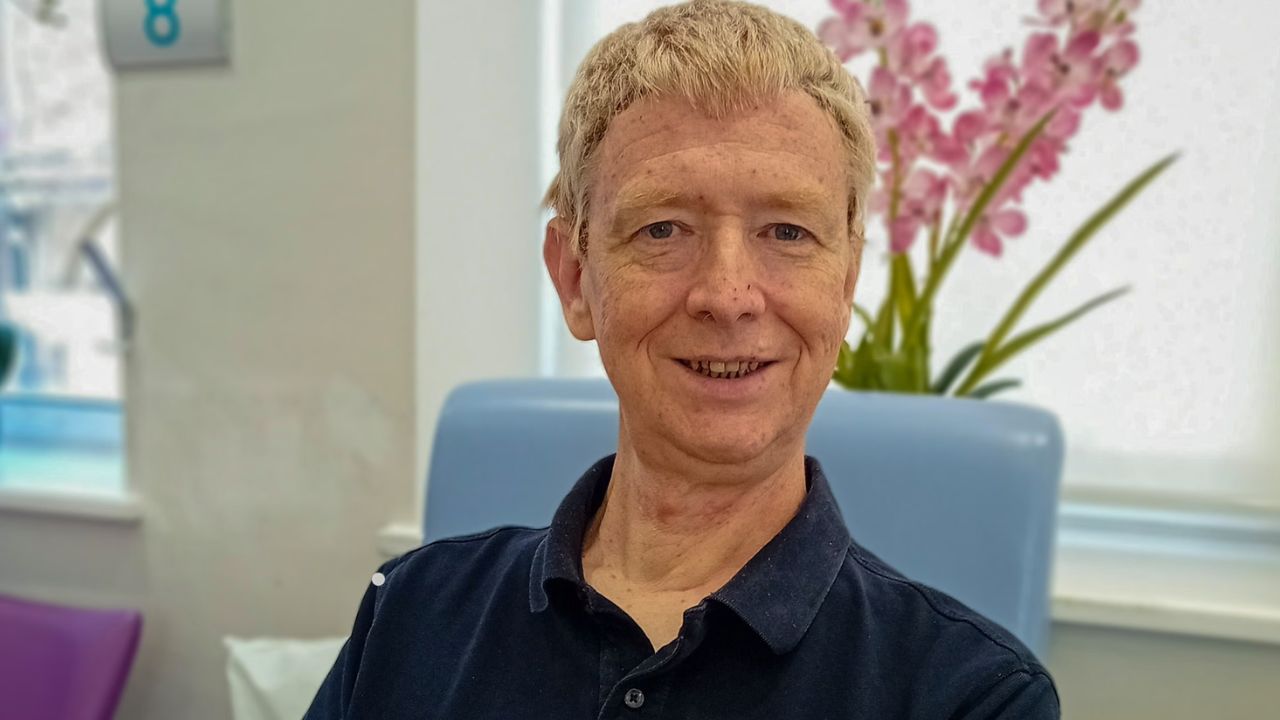
Carl Walsh, 56, from Birmingham, was among the first to benefit. Diagnosed with tongue cancer in May 2024, he joined the OrigAMI‑4 trial at the Royal Marsden in July 2025 after chemotherapy and immunotherapy failed.
Walsh said, “I now feel able to live a normal life. My speech is back to normal, my pain has reduced, and I can eat properly again. After only two cycles my diet started to return to normal, and after six months I was eating a full diet, the first big steak was the best.”
Researchers stressed the trial focused on head and neck cancers not linked to HPV, which are typically harder to treat. Progress in this group is therefore considered highly significant.
Prof Kristian Helin, chief executive of the ICR, said, “This study demonstrates how rigorous cancer research can deliver meaningful advances even for patients with very limited options. Achieving this level of tumour response and encouraging survival outcomes in such a difficult‑to‑treat group represents a major step forward.”