
Britain’s royal family is confronting what many see as its most serious crisis in nearly 90 years after the arrest of the king’s younger brother over alleged misconduct linked to the late US financier Jeffrey Epstein, reports Reuters.
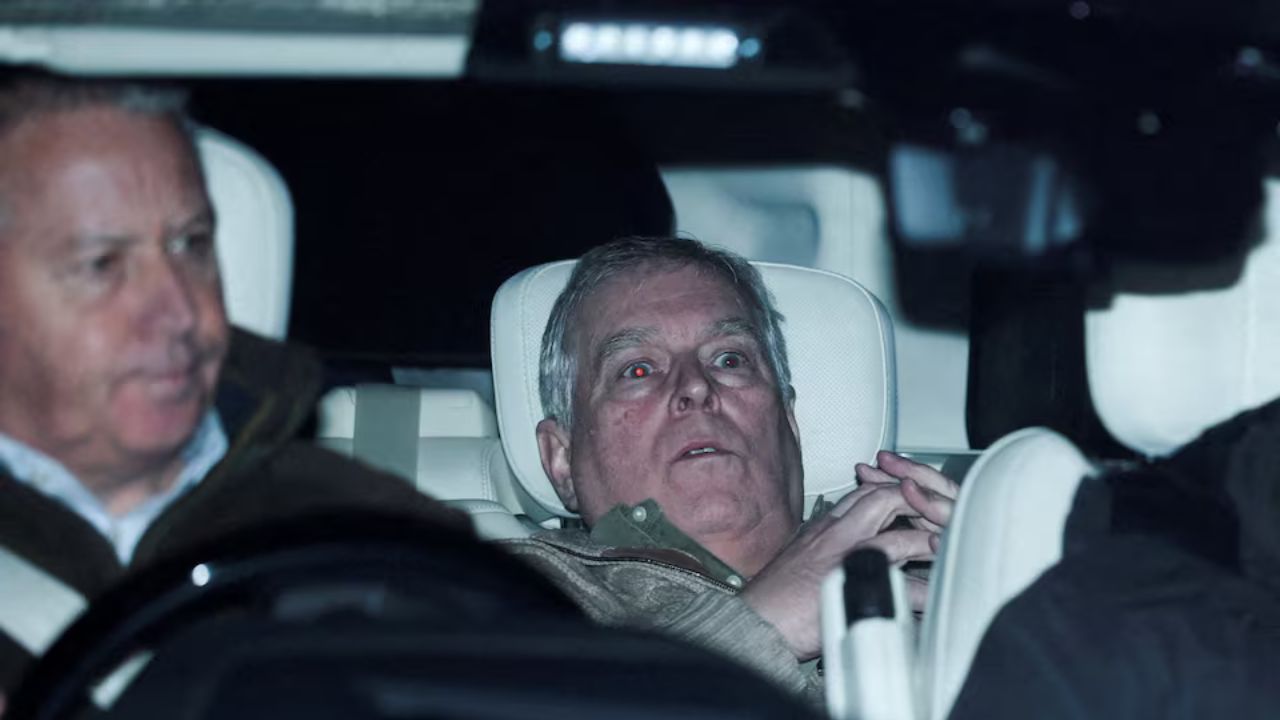
Andrew Mountbatten-Windsor was arrested on Thursday on suspicion of misconduct in public office. The investigation follows complaints concerning his relationship with Epstein, a convicted sex offender who died in custody in 2019.
Mountbatten-Windsor has denied any wrongdoing in connection with Epstein and previously said he regretted the friendship.
Images of him leaving a police station dominated newspaper front pages on Friday, creating an acute embarrassment for King Charles and raising fresh questions about the future of the monarchy.
The episode is widely regarded as the most damaging for the House of Windsor since King Edward VIII abdicated in 1936 to marry American divorcee Wallis Simpson.

Graham Smith, head of the anti-monarchy campaign group Republic, which lodged complaints that prompted the police inquiry, said the arrest underscored his longstanding call to abolish the institution. “I think it’s incredibly bad for the monarchy,” he said.
The royal family has weathered repeated scandals over the decades, from the divorce and death of Charles’s first wife, Diana, Princess of Wales, in 1997, to the departure of Prince Harry and his wife Meghan from royal duties and their subsequent criticisms of the family from the United States.
But the spectacle of a senior royal being arrested and investigated by police is without precedent in modern times.
A former senior royal aide who knows the king said the crisis was particularly difficult because it was largely beyond the family’s control. Developments have followed disclosures from newly released Epstein-related files in the United States, which in turn triggered the British investigation.




“They have been predominantly on the back foot throughout because they’ve had to react to information emerging, and they still don’t know what else is in the files,” the aide said, speaking on condition of anonymity.
The central question for King Charles and his heir, Prince William, is whether the affair will inflict lasting institutional damage or simply reinforce an already negative public perception of Mountbatten-Windsor.
The palace has already taken extensive steps to distance itself from him. He has been stripped of his titles, deprived of his residence and excluded from public duties.
Following the arrest, the king issued a brief statement: “Let me state clearly: the law must take its course.” Buckingham Palace has also said that Charles and Queen Camilla’s thoughts are with victims of abuse, while William and his wife Catherine have expressed concern over the revelations contained in the Epstein files.
Julian Payne, a former communications chief to Charles, said the monarchy had done all it could to create separation between working members of the royal family and Mountbatten-Windsor’s actions.
The allegations relate to his former role as a British trade envoy. He is suspected of sending confidential government documents to Epstein during his tenure in that position.
According to the former aide, Charles had cautioned against his brother’s appointment as trade envoy at the time. William, he added, has long kept his distance from his uncle.
Public opinion surveys suggest that Mountbatten-Windsor is deeply unpopular. A YouGov tracker conducted in January, before the latest disclosures, showed only 3 per cent of Britons viewed him favourably, while 90% held a negative opinion.
By contrast, Prince William was viewed positively by 77 per cent of respondents and King Charles by 60 per cent. While overall support for the monarchy has declined in recent years, particularly among younger people, it continues to command majority backing.
Jeremy Paul, 59, an accountant in London, said the scandal was damaging but unlikely to prove fatal. “It’s challenging and it doesn’t reflect well on the family as a whole, but I think they’ll survive,” he said.
Smith of Republic argued that the monarchy would face a far graver threat if evidence emerged showing Charles or William knew more about Mountbatten-Windsor’s ties to Epstein and failed to act. There is currently no suggestion that this is the case.
For now, the royal family appears intent on containing the fallout, relying on public trust in the king and his heir to steady an institution that has endured for more than a millennium.