A report by the British publication Financial Times claims that nearly $234 billion has been siphoned out of Bangladesh over the 15-year rule of deposed prime minister Sheikh Hasina.
The report, titled “Bangladesh’s Missing Billions, Stolen in Plain Sight,” highlights how this vast sum was funneled to the United Kingdom, according to the findings of an investigative team from Financial Times.
The documentary begins by exploring the context of Sheikh Hasina’s fall from power, with key figures such as Rafia Rehnuma Hridi and Rezwan Ahmed Rifad, student coordinators of the 24th July uprising, narrating their experiences.
They explained that Hasina’s government disproportionately favored Awami League leaders and supporters, while opposition members faced oppression and persecution.
Rafia Rehnuma Hridi shared, “Initially, there were no direct clashes with the police. But on July 14, police blocked the roads, obstructed peaceful student protests, and became aggressive. They forcibly detained students from the front lines, leading to the rise of the anti-autocracy movement.”
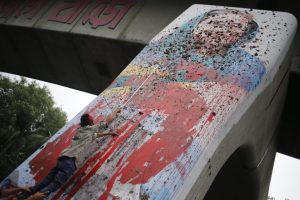
Photo: Jannatul Ferdous/TIMES
Student leader Rizwan Ahmed Rifaat elaborated, stating, “Police and government-backed militants directly fired on students and the public, using snipers and helicopter-launched shells. According to UN data, at least 1,400 lives were lost during the July protests, with many others missing or injured.”
The documentary further claims that under Sheikh Hasina’s continuous rule, power became highly centralised, with the leaders of the Awami League diverting the wealth generated by the people’s labor for personal gain.

Through corruption, they allegedly amassed billions of dollars in foreign countries, building lavish palaces abroad.
Supporting this claim, Financial Times reporters, including South Asia Bureau Chief John Reed and former Bangladesh-based journalist Suzanna Savage, provided evidence of this illicit wealth being funneled into real estate projects across the UK.
Savage, who once worked as a journalist in Bangladesh, found extensive evidence of offshore properties and investments linked to the embezzled funds.
Helen Taylor, deputy director of Spotlight on Corruption, stated, “When ‘mega corruption’ happens, it cannot be hidden. It does not need to be.




“Everyone knows corruption is happening, that money is being laundered, and unethical activities are ongoing. Yet, there’s no one to stop it. This process is what we call a ‘kleptocracy,’ and Bangladesh is the largest example of this.”
With the help of Westminster Lobby reporter Rafe Uddin, Financial Times’ Suzanna Savage tracked large sums of embezzled money, now invested in UK housing projects. She claimed to have found links to high-level sources involved in the money laundering process.
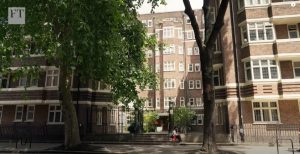
The documentary also asserts that, historically, Bangladesh maintained close ties with the UK during British colonial rule, with Bengali influence visible in landmarks like Whitechapel Station, where visitors are welcomed in both English and Bengali.
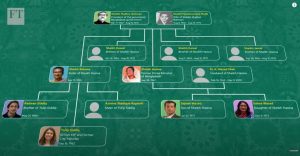
Sheikh Hasina’s family maintains deep ties with the UK; her sister, Sheikh Rehana, and her children are British citizens. Rehana’s daughter, Tulip Siddiq, is a popular Labour MP in the UK and recently served as a minister in the Labour government.
Rafe Uddin said, “During our investigation, we found evidence of offshore properties linked to Tulip Siddiq, which she had not reported to the authorities.” He further added, “We discovered that a close associate of the Awami government transferred ownership of the flat to Tulip Siddiq.”
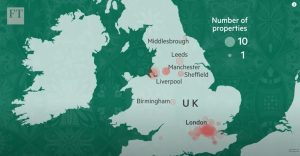
Financial Times also found that former land minister Saifuzzaman Chowdhury owns more than 300 properties in the UK.
Similarly, Mohammad Saiful Alam, head of the business tycoon group S Alam, has allegedly laundered millions through bank loans, using them to build a real estate empire in the UK. S Alam Group alone is accused of laundering nearly $10 billion.
The UK’s National Crime Agency (NCA) has already identified and seized over 350 properties owned by Bangladeshis. The NCA reports that, on average, $16 billion is laundered from Bangladesh to the UK each year.
John Reed, South Asia Bureau Chief for Financial Times, noted that during Sheikh Hasina’s tenure, unprecedented cases of bank looting also took place.
Influential businessmen took large loans, never to repay them, and even took control of several banks’ boards to continue their schemes without interruption.
Mohammad Abdul Mannan, chairman of Islami Bank Bangladesh, claimed that influential individuals took over banks with the help of the DGFI (Bangladesh’s national security and intelligence agency) to serve their interests.
He stated that directors were forcibly replaced and accused Sheikh Hasina of being behind the manipulation.
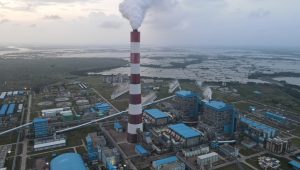
The Financial Times also claims that vast amounts of money were laundered through mega projects such as the Padma Bridge and the Rooppur Nuclear Power Plant.
Following the interim government’s takeover, former IMF official Ahsan H Mansur was appointed as the governor of Bangladesh’s central bank to address the banking sector crisis. He confirmed that liquidity of Tk 290 billion was injected into struggling banks to revive them by returning customers’ money.
Financial Times’ experts suggest that recovering the $234 billion laundered abroad will be Bangladesh’s greatest challenge.
They also mentioned that the culprits have hired highly skilled financial and legal experts to legitimise the illicit wealth, but the government may try to recover some of the money through settlements.