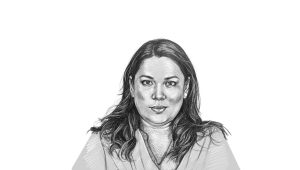
Begum Khaleda Zia died on December 30, 2025, at age 80. Her passing is more than just the loss of a major political figure; it ends a long era of female leadership in Bangladesh. For decades, the rivalry between Khaleda Zia and Sheikh Hasina shaped the country’s politics. Now, with Khaleda Zia gone, Bangladesh is moving toward male-dominated leadership. This shift brings up important questions about gender, power, and democracy as the country heads toward the general elections on February 12, 2026.
Between 1991 and 2024, Bangladesh was led by either Khaleda Zia of the Bangladesh Nationalist Party (BNP) or Sheikh Hasina of the Awami League. Both women rose to power through family ties and times of crisis: Khaleda Zia after her husband, former president Ziaur Rahman, was killed, and Hasina as the daughter of Sheikh Mujibur Rahman.
Their rise to power was not due to a broad feminist movement for gender equality. Instead, political parties used female leaders as symbols to keep control. Women in top roles often gave the appearance of change, but real opportunities for women outside elite circles stayed limited. Even though this period of female leadership was rare both worldwide and in Muslim-majority countries, it did not remove deeper gender barriers in politics.
The “July Revolution” of 2024 started as a student protest against job quota reforms but soon became a wider movement against authoritarian rule. As a result, Prime Minister Sheikh Hasina resigned and went into exile.
Young people and civil society led this revolt, challenging the established political system and threatening matriarchal leadership for the first time. Afterward, the interim government under Nobel laureate Muhammad Yunus suspended the Awami League’s activities, changing the political scene before the 2026 elections.

However, instead of creating a more inclusive or gender-balanced political system, the period after the uprising has moved toward stronger male leadership.
After Khaleda Zia died, her son Tarique Rahman officially took over leadership of the BNP. He returned to Bangladesh after years in exile and is now the main political figure for his party in the 2026 elections. His public statements and approach focus on technocratic, results-driven politics, which is a clear change from the personality-driven, grievance-based leadership of earlier leaders.




This generational change shows a bigger trend: now, men are continuing the dynastic legacy instead of women. This not only changes who leads but also shifts the focus away from the symbolic female leadership of the past thirty years.
The student-led movement that brought down the previous government led to the creation of the National Citizen Party (NCP), which grew out of the July 2024 protests. Even though the party started with youthful activism and a push against old power structures, its new leaders are mostly men. Recent internal conflicts over alliances with established Islamist parties also show how fragile hopes for a more inclusive politics are.
This move toward male leadership did not happen by chance. After the uprising, networks of male leaders and street-level politics proved stronger than any new groups led by women. This highlights both the power of these male networks and the cultural barriers that women still face in politics.
The political vacuum has also allowed previously marginalised religious conservative groups, such as Jamaat-e-Islami, to become more active in elections. They are now well-placed to shape political changes after 2026.
While these groups are not always against women’s participation, they usually support social ideas that favour traditional gender roles. This further moves politics away from the time when women held top positions.
Surveys and public opinion show that concerns about safety and participation still keep many women from joining politics or taking leadership roles. When women see public and political spaces as unsafe or unwelcoming, it is much harder for them to organise and lead. This problem remains, no matter how prominent leaders like Hasina or Zia have been.
A key question for Bangladesh’s democracy is whether the next election will help remove these barriers, or if male-dominated leadership will make them even harder to break down.
Khaleda Zia’s death ends the “Battle of the Begums,” a period when women held top power in Bangladesh. However, real gender equality was limited during this time. Now that both major female leaders are gone, politics is shifting toward stronger male leadership, as seen in Tarique Rahman’s return, the rise of student-led parties, and the comeback of conservative groups.
With national elections coming in 2026, the move toward male leadership raises urgent questions about democracy, fair representation, and the role of gender in politics. The real challenge is not just putting women in top positions again, but making changes so women from all backgrounds can lead, organise, and compete equally in Bangladesh’s political future.
Filmmaker: Abu Shahed Emon