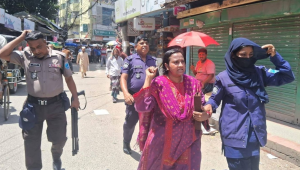


The recent custodial deaths of two young men on consecutive days in Faridpur and Chattogram have once again brought to the forefront a disturbing and persistent question: Is Bangladesh fully complying with its obligations under the United Nations Convention Against Torture (UNCAT) and its Optional Protocol (OPCAT)? Every death in police custody, prison, or any other detention facility is a matter of grave concern. Such incidents not only raise questions about the conduct of law enforcement and prison authorities but also challenge Bangladesh’s commitment to the rule of law, human rights, and international legal obligations. Regardless of the circumstances surrounding an arrest or detention, every individual deprived of liberty remains entitled to dignity, humane treatment, and protection under the law.
But Bangladesh is not just a sideline observer of the norms of international human rights. Bangladesh is a State Party to the UNCAT; it became a party in 1998. Later in December 2015, Bangladesh acceded to the OPCAT, voluntarily accepting further commitments to monitor, prevent and combat torture and ill-treatment in places of deprivation of liberty. They are legally, as well as morally, binding commitments.
Adopted by the United Nations General Assembly in 1984, UNCAT is one of the most important international human rights treaties. It categorically prohibits torture and all forms of cruel, inhuman, or degrading treatment or punishment. Importantly, the Convention does not allow any exception. Neither war, political instability, public emergency, nor national security concerns can be invoked to justify torture or abuse in custody. The OPCAT recognises that preventing torture requires more than laws on paper. It requires robust oversight, transparency, and independent monitoring. OPCAT establishes a preventive system of regular and unannounced inspections of places where people are deprived of their liberty. This includes police lock-ups, prisons, detention centres, immigration facilities, juvenile institutions, psychiatric hospitals, rehabilitation centres, and any other location where individuals are held under state authority. The objective is to prevent abuse before it occurs rather than merely investigate violations after lives have already been lost. Unfortunately, recent developments in Bangladesh suggest that there remains a significant gap between commitment and implementation.
Following the political transition of August 2024 and the fall of the Awami League government, the unelected interim administration led by Dr. Muhammad Yunus pledged to address long-standing concerns relating to human rights and custodial abuse. Many citizens and international observers hoped that a new chapter would begin, characterised by greater accountability, transparency, and respect for human rights. Yet the available data from human rights organisations paint a troubling picture.

According to reports published by organisations such as ASOK and Human Rights Support Society (HRSS), Bangladesh witnessed approximately 92 custodial deaths during 2025. More than 80 additional custodial deaths reportedly occurred during the first four months of 2026, a period that spans both the latter part of the interim administration and the beginning of the current BNP-led elected government. Whether these figures are ultimately revised upward or downward, the trend itself is deeply alarming. A country that has recently joined OPCAT should be witnessing a reduction in custodial deaths, not a continuation or increase of such incidents.
This goes beyond political affiliations. The situation has been prevalent under successive governments, as also under the interim government. This systemic issue appears to be becoming more political in its scope, with arrests on unsubstantial grounds and no proven charges. It implies shortcomings in institutional governance, accountability in detention, probe standards, training, as well as a prevalent culture of impunity which allows mistreatment in custody to go largely unpunished.




One of the most significant obligations arising from OPCAT is the establishment of an effective and independent National Preventive Mechanism (NPM). This mechanism is the cornerstone of the OPCAT framework. It is designed to conduct regular visits to all places of detention, engage confidentially with detainees, identify risks, make recommendations, and work with authorities to prevent abuse. The effectiveness of an NPM depends on its independence, expertise, resources, and access. It must be free from political influence and institutional interference. It must have unrestricted access to all detention facilities and the ability to meet detainees privately. Its findings and recommendations should be made public to the greatest extent possible. The establishment of such a mechanism should now be treated as a national priority.
At the same time, Bangladesh needs to make robust accountability mechanisms available. Every incident of custodial death should result in an automatic independent judicial investigation involving an institution separate from the institution where the incident occurred. Dependence on an institution’s self-enquiry rarely leads to the trust of society, nor does it generally comply with global standards of neutrality. Society has the right to feel confident that nobody is outside the ambit of law.
The government should also introduce mandatory forensic standards for all custodial deaths, including prompt autopsies conducted by independent medical professionals, preservation of evidence, and public reporting of findings. Modern surveillance systems, including continuous CCTV monitoring in police lock-ups and detention facilities, should be expanded, with safeguards to ensure that footage cannot be tampered with or destroyed. Equally important is the need for training and professional development. Police officers, prison officials, investigators, and security personnel should receive comprehensive training on human rights standards, detainee rights, and the requirements of UNCAT and OPCAT. Preventing torture and abuse should be viewed as an essential component of professional law enforcement.
Parliament also has a role to play. Relevant parliamentary committees should regularly review custodial death statistics, detention conditions, and progress toward OPCAT implementation. Annual public reporting would strengthen transparency and public confidence. Civil society organisations, human rights defenders, medical professionals, lawyers, and academic institutions should likewise be encouraged to contribute to monitoring, research, and policy development. Human rights protection is most effective when it becomes a shared national responsibility rather than the exclusive concern of government institutions.
Such leadership of Bangladesh has previously been evident on many international issues, be it the peacekeeping operations, climate change, public health or sustainable development. Having joined OPCAT gives the country a unique chance to take on similar leadership in safeguarding the rights of human beings, preventing torture in the country and abroad.
The true test of Bangladesh’s commitment to UNCAT and OPCAT is not whether the country has signed international treaties. The true test is whether people who enter police custody, prisons, or detention facilities emerge alive, safe, and with their dignity intact. Every custodial death represents not only a personal tragedy for a family but also a failure of the state’s duty of care. The deaths of two young men in Faridpur and Chattogram should therefore serve as a wake-up call for policymakers, law enforcement agencies, and political leaders alike.
Bangladesh either allows these acts to remain discrete incidents, business as usual, or embraces the spirit of OPCAT, with genuine transparency and accountability in its detention system. The decision should be evident. It’s time to end deaths in custody. It’s time for independent investigations to be the norm. It’s time to implement the NPM. It’s time for human dignity to define every place of detention. Only then will Bangladesh’s commitment to upholding both the spirit and letter of UNCAT and OPCAT be a genuine one.
The writer is a Former Ambassador and Secretary to the Government of Bangladesh; Former Senior Public Health Policy Adviser and WHO Representative to UN ESCAP