Bangladesh’s healthcare system suffers from severe underfunding and inefficiency, with per capita government health expenditure standing at Tk1,070, the lowest in South Asia, experts said at a seminar on Saturday, calling for urgent reforms.
With the healthcare budget at 1 percent of GDP, nearly half of the population lacks access to quality healthcare and citizens bear 74 percent of healthcare costs out-of-pocket, placing a heavy financial burden on low-and-middle-income groups, they said at the seminar.
The seminar, titled “Strengthening Confidence in the Healthcare System in Bangladesh: A Strategy for Quality Assurance,” was organized by the Dhaka Chamber of Commerce and Industry (DCCI) in the capital. National Prof A K Azad Khan, President of the Diabetic Association of Bangladesh, was the chief guest at the event.
DCCI President Taskeen Ahmed pointed out major gaps in the healthcare system, including disparities in service quality between public and private hospitals, a shortage of skilled professionals, and the proliferation of unauthorized clinics.
He also stressed the limited use of modern technologies and the failure to enforce existing laws.
“The healthcare model is unsustainable and undermines the entire system,” said Ahmed.

Malik Talha Ismail Bari, Managing Director & CEO of United Hospital Limited, highlighted the rapid growth of the healthcare market, which is valued at $14 billion and is projected to grow to $23 billion by 2033.
However, Bari warned that without addressing key issues like insufficient funding, inefficient management, and urban-rural disparities, the sector cannot reach its full potential.
“We need local and foreign investment, better financing access, and policy reforms to address the challenges facing the sector,” he said.
Bari also addressed the annual outflow of nearly $5 billion for medical treatment abroad.


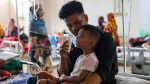

Many Bangladeshis seek treatment in India, where better perceived quality and lower costs attract them.
Bari explained that medical tourism is driven by a lack of trust in local healthcare services, where patients face concerns about diagnostic accuracy, hidden charges, and substandard treatment.
“India, Thailand, and Singapore are the top destinations for Bangladeshis seeking medical care, costing the country billions in lost revenue,” he said, calling for urgent reform to build trust by ensuring affordable, quality healthcare within the country for all.
Professor Syed Atiqul Haq, Chief Consultant at Green Life Center for Rheumatic Care and Research, emphasized the need for quality assurance in public healthcare.
“Most citizens rely on government hospitals, and these must meet the highest standards to restore public trust,” said Haq.
Priti Chakraborty, Chairman of Universal Medical College & Hospital, called for stronger collaboration between the government and private sector.
She suggested that the Public-Private Partnership (PPP) model could help improve healthcare infrastructure, particularly outside Dhaka.
Dr Shafiun Nahin Shimul, Professor and Director at the Institute of Health Economics, University of Dhaka, discussed the critical shortage of skilled healthcare professionals, particularly in rural areas.
He stressed the importance of behavioral change to rebuild confidence in the healthcare system and reduce the number of patients seeking treatment abroad.
Dr Md Zakir Hossain, Secretary General of the Bangladesh Association of Pharmaceutical Industries, pointed out that although 97 per cent of medicines are produced locally and exported to 160 countries, a lack of comprehensive policy and outdated health laws are stalling progress.
Dr Md Mustafizur Rahman, Senior Scientist at icddr,b, shared the success of the institution’s work, providing care to over 300,000 patients annually.
He expressed optimism about the development of a dengue vaccine within two years.
Dr Fida Mehran, Health Systems Specialist at UNICEF Bangladesh, and Dr Murad Sultan, National Professional Officer at WHO Bangladesh, emphasized the need for public-private collaboration to reform healthcare service delivery.
The seminar concluded with calls for comprehensive healthcare reforms.
Recommendations included increasing the healthcare budget to 5 per cent of GDP, adopting modern technologies, strengthening primary healthcare services, and enhancing human resources.
DCCI Vice President Md Salem Sulaiman, members of the Board of Directors, government officials, and private sector stakeholders were present at the seminar, which underscored the urgent need for reforms to improve Bangladesh’s healthcare system.