A group of university students in Bangladesh envisions a future where a robot, built by local researchers, will one day explore the rugged red surface of Mars.
The young innovators say they are steadily overcoming limitations through technological advancement.
From deep underwater exploration to mountain-top data collection, from search-and-rescue operations to the possibility of exploring other planets in search of life, they are developing advanced robotic systems capable of handling complex missions.
Researchers from United International University (UIU) have maintained a leading position among Asian teams for four consecutive years in an international robotics competition. This month, they are set to represent Bangladesh once again on the global stage in the United States.
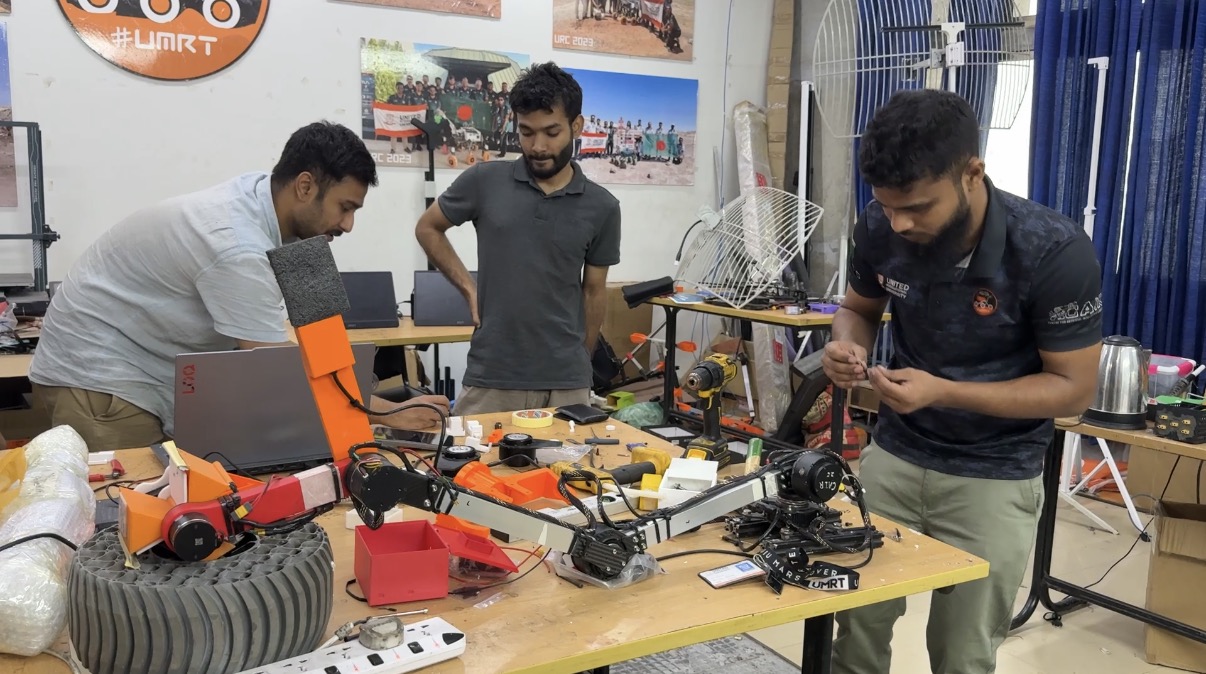
The competition, known as the University Rover Challenge (URC), is organised by the Mars Society, a US-based organisation closely associated with NASA. It brings together university teams from around the world to design next-generation Mars rovers.

UIU students have ranked among the top teams in Asia from 2021 to 2025. Last year, they achieved sixth place globally.
This year, the team is aiming for an even better result with their latest rover, named “Orion.”
Team member Md Abid Hossain said the rover is the result of four years of continuous development.



“This is the upgraded version of our rover developed over the past year by 68 researchers,” he said. “We have named it Orion.”
He explained that the rover uses artificial intelligence to navigate autonomously and collect and analyse environmental data.
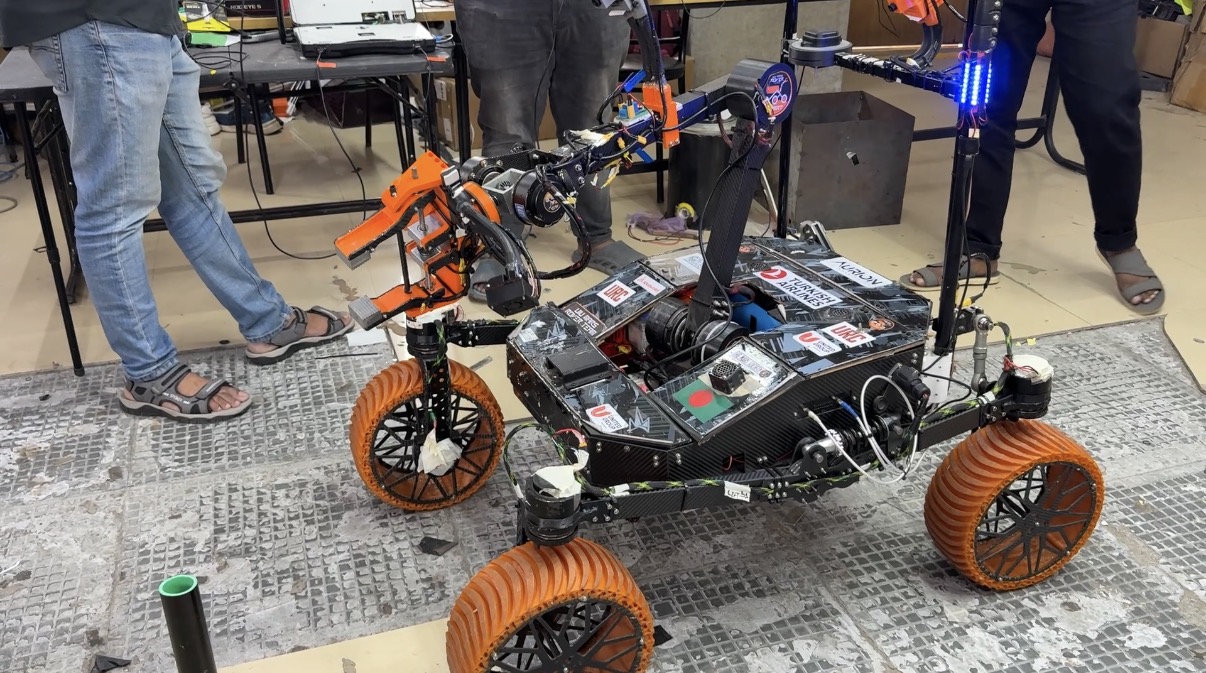
“It is designed to assist in the search for signs of life on Mars,” he added. “It can independently explore the harsh red terrain and carry out scientific observations.”
During a visit to the UIU laboratory on Monday, students were seen working intensively on the project. One of them, Mushfiqur Rahman, demonstrated how the rover operates and showed live camera feeds used to monitor its movement remotely.
He said the visible structure of the rover alone cost around $30,000, while the total project expenditure is expected to exceed Tk1.5 crore.
The students hope to achieve a top global ranking in future competitions and believe their innovations could one day contribute to actual space missions.
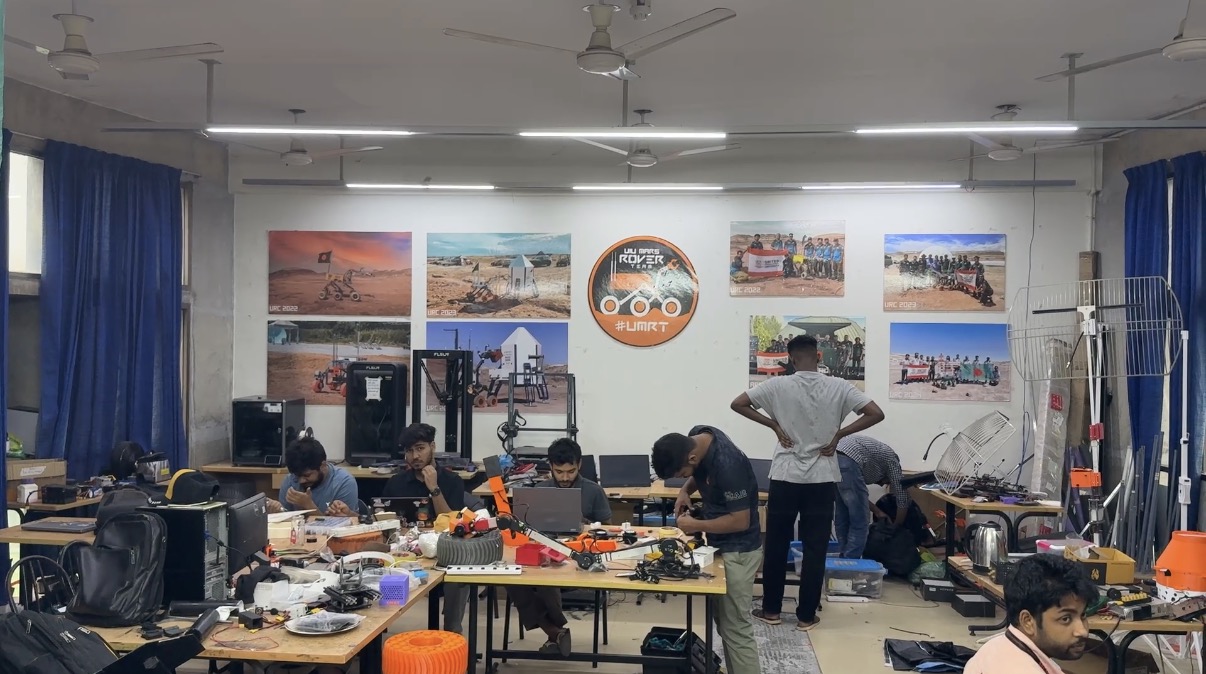
University Vice-Chancellor Prof Md Abul Kashem Mia said students are given opportunities to engage in research from their early semesters, along with training, guidance, and financial support.
He added that alongside the Mars rover project, UIU researchers are also developing underwater exploration rovers, AI-powered rescue systems for disaster response, and advanced drones equipped with autonomous driving and control systems for large-scale surveying.
The university is also conducting science workshops for school and college students to encourage early interest in innovation.
According to the vice-chancellor, the potential of the new generation is immense, and with proper guidance and support, they can contribute significantly to the country’s future technological advancement.