
Bangladesh’s exposure to a major earthquake is being dangerously intensified by weak building compliance, chaotic urbanisation and a culture of overlooking safety rules – a stark contrast to Japan’s strict, science-driven approach that has allowed one of the world’s most quake-prone nations to drastically reduce casualties.
That comparison dominated a seminar in Dhaka on Saturday, where Japanese and Bangladeshi experts warned that Bangladesh could cut earthquake losses by nearly half if it adopted Japan’s discipline and enforcement culture.
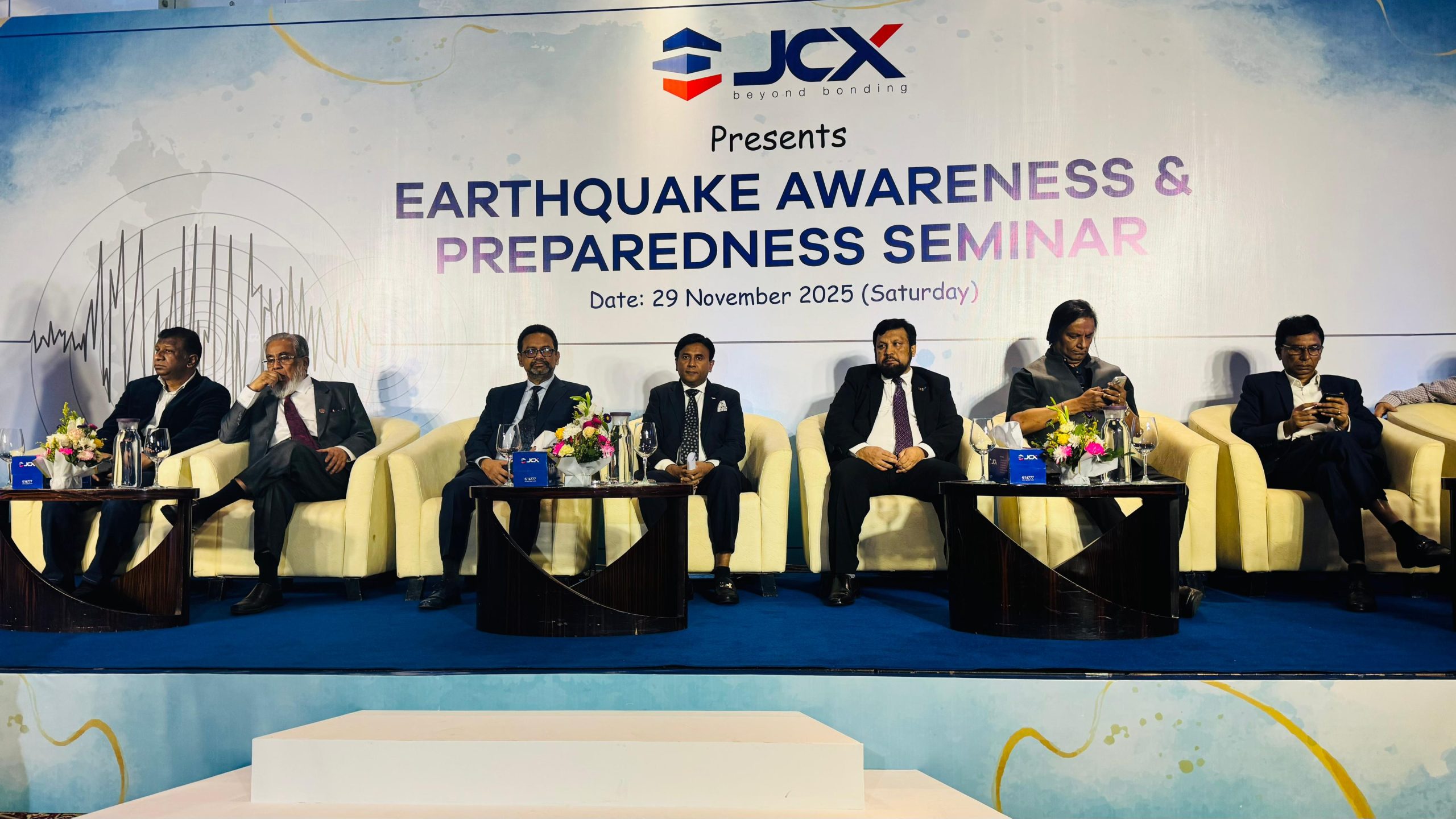
The seminar, “Earthquake Awareness, Safety Protocols & Emergency Preparedness,” organised by JCX Developments Ltd at The Westin Dhaka, brought together senior engineers, architects and policymakers along with two leading Japanese seismic-design specialists — Founder of SAKO Architects Keiichiro Sako and Principal at VERITAS Japan LLC Hisaya Sugiyama.
The Japanese experts explained how their cities survive repeated high-magnitude quakes through mandatory building-code enforcement, periodic structural audits, dense seismic monitoring networks, nationwide earthquake drills and strict legal compliance. These are not optional measures, they stressed, but obligations backed by penalties and rigorous inspections.

Their message for Bangladesh was blunt: The country is not doing what is necessary to save lives.
JCX Managing Director Md Iqbal Hossain Chowdhury said the recent tremors felt in Dhaka are reminders of the region’s growing instability, but the true danger lies in the city’s buildings.




“Japan shows what disciplined implementation can achieve. Our codes exist, but the culture of following them does not,” he said.
BUET professors M Shamim Z Bosunia, Dr Syed Fakhirul Amin and Dr Rakib Ahsan warned that building rules in Bangladesh are often treated as flexible guidelines rather than binding safety standards. Many structures still lack proper soil tests, load-bearing calculations or structural audits — vulnerabilities Japan eliminated decades ago through multi-stage inspections.
RAJUK Chief Urban Planner Ashraful Islam said Dhaka’s physical layout will amplify the devastation: High-rises built too close together, informally added floors and narrow lanes where rescue teams cannot easily enter. “If a major quake hits, our neighbourhood design — not just the tremor — will magnify casualties,” he said.
The seminar highlighted technology gaps as well: Japan’s advanced seismic-station network, digital permitting system and AI-based risk modelling stand in sharp contrast to Bangladesh’s limited monitoring and slow regulatory processes. Experts said even partial adoption of these systems could significantly strengthen resilience.
Bangladesh sits at the junction of the Indian, Myanmar and Eurasian plates, near dangerous faults such as Dawki, Chittagong–Arakan and Sagaing. More than 200 earthquakes have been recorded in the past century, with tremors increasing since 2024. A Columbia University study warns that the region’s megathrust fault could generate a magnitude-9 quake, while the Sylhet–Teknaf subduction zone has not released energy for nearly a thousand years.
Participants agreed that Bangladesh must urgently import Japan’s discipline: Strictly enforce building codes, retrofit vulnerable structures, expand seismic stations, digitise approvals and mandate earthquake drills.
They warned that, without these steps, Dhaka remains exposed to a preventable disaster.