
Bangladesh is prepared to take every necessary measure to help meet Japan’s shortfall of 11 million workers by 2040, Senior Secretary Dr Neyamat Ullah Bhuiyan of Ministry of Expatriates’ Welfare and Overseas Employment said on Friday.
He said both nations stand to gain from coordinated efforts between Bangladeshi and Japanese recruitment bodies aimed at addressing Japan’s growing labour requirements while promoting quality employment for competent Bangladeshi workers.
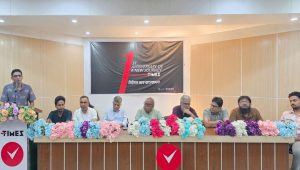
Bhuiyan delivered the remarks at a seminar titled “Bangladesh: A Highly Potential Source Country of Skilled Human Resources for Japan,” hosted at a conference venue in Nagoya, Japan.
The programme was arranged by the Bangladesh Embassy in Tokyo, according to a message received in Dhaka.

The seminar- held with support from the Japan International Trainee and Skilled Worker Cooperation Organisation (JITCO)- also featured a business matching session linking organisations from both countries.
Nearly 250 manpower agencies and recruiting companies from Bangladesh and Japan joined the event.




Bangladesh’s Ambassador to Japan, Md Daud Ali, pledged that the Embassy would extend all cooperation necessary to ensure the smooth recruitment and deployment of skilled Bangladeshi workers in Japan.
Drawing on comparative labour-force data, Bhuiyan said Japan may need to bring in around 11 million foreign workers by 2040, whereas Bangladesh currently has an excess labour pool of about 25 million people of working age- a trend that is expected to continue.
He said 33 Technical Training Centres (TTCs) have already been selected to train workers for the Japanese market, adding that more centres could be introduced if needed.
He further highlighted that the ministry has set up a dedicated “Japan Cell” to streamline coordination and communication on Japan-related labour issues.
Shigeo Matsutomi, senior vice president of JITCO, presented an assessment of global labour patterns and Japan’s future workforce needs.
At the end of the programme, four agreements were signed between Bangladeshi manpower-exporting agencies and Japanese recruiting firms to strengthen bilateral cooperation in the labour sector.