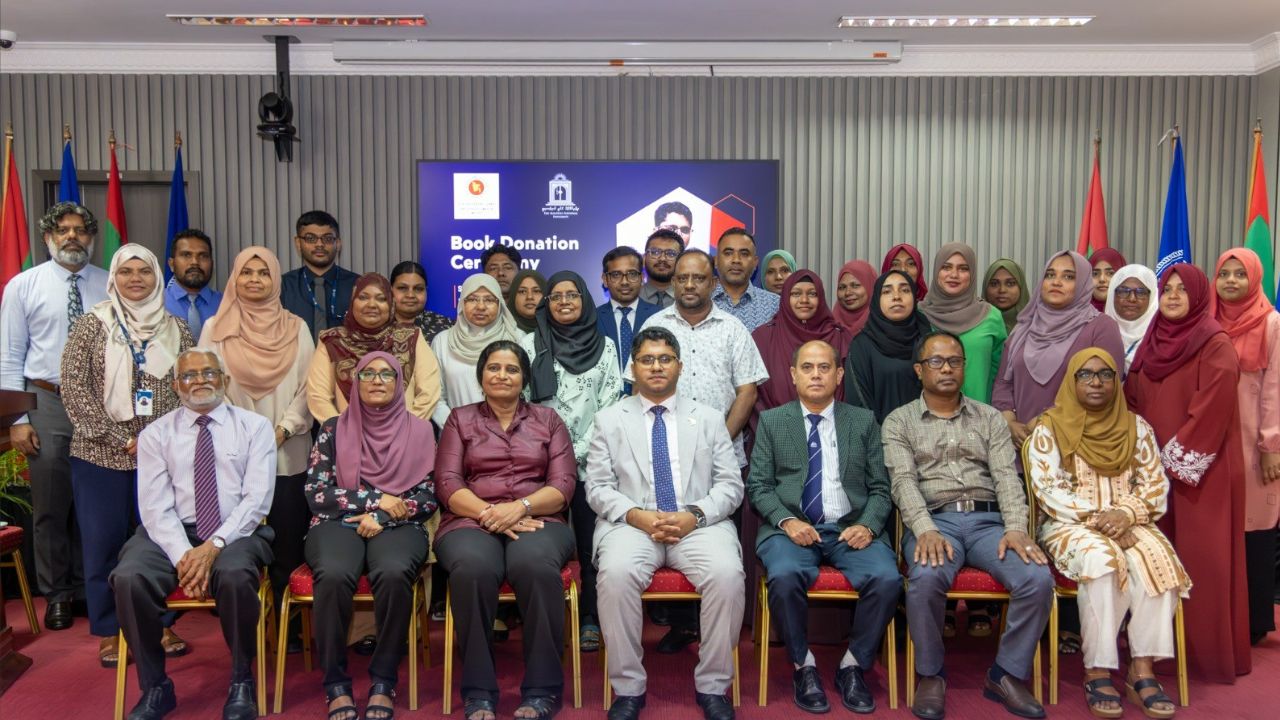

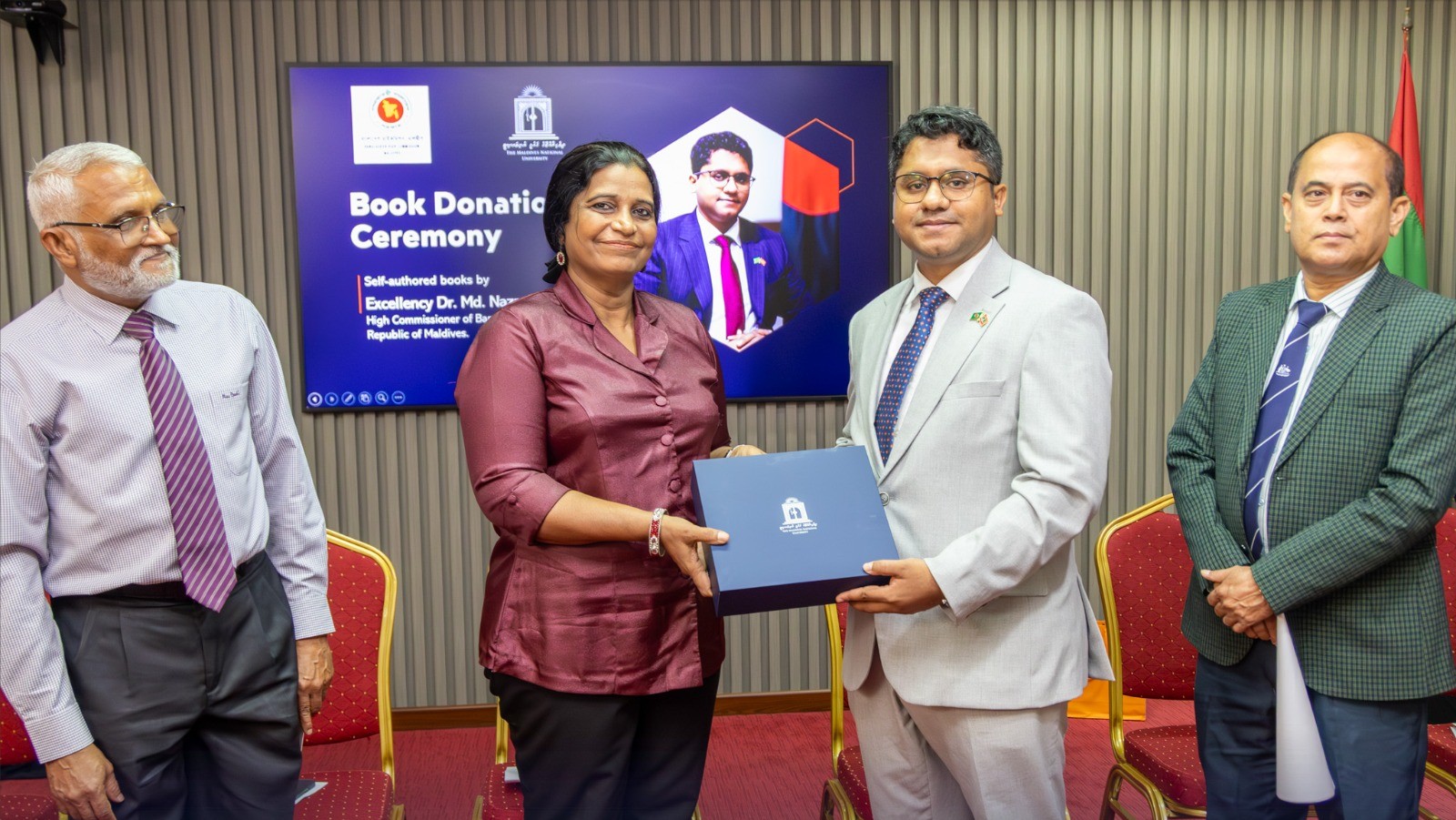
Maldives National University (MNU) hosted a special ceremony to receive copies of the book titled “Power of Bonding and Non-Western Soft Power Strategy,” authored by His Excellency Ambassador Dr Md Nazmul Islam, High Commissioner of the People’s Republic of Bangladesh to the Republic of Maldives.
The initiative aims to promote academic cooperation, knowledge exchange, educational diplomacy, and research collaboration between the two friendly nations. The books were formally received by Vice Chancellor of Maldives National University, HE Dr Aishath Shehenaz Adam, during a ceremony held at university’s seminar room.
The event was attended by pro-vice chancellor, chief librarian, senior university officials, faculty members, researchers, representatives of the Bangladesh High Commission, and the members of Bangladeshi community in Maldives.
The programme commenced with a recitation of Holy Quran, followed by welcome remarks from Chief Librarian of MNU, Mr Hussain Haleem.

In his address, he expressed sincere appreciation to the high commissioner for the donation, adding that such initiatives contribute significantly to academic enrichment and the strengthening of educational cooperation between Bangladesh and Maldives.
Speaking on the occasion, High Commissioner Dr Md Nazmul Islam said university libraries serve as centres of learning, innovation, and intellectual development rather than merely repositories of books.
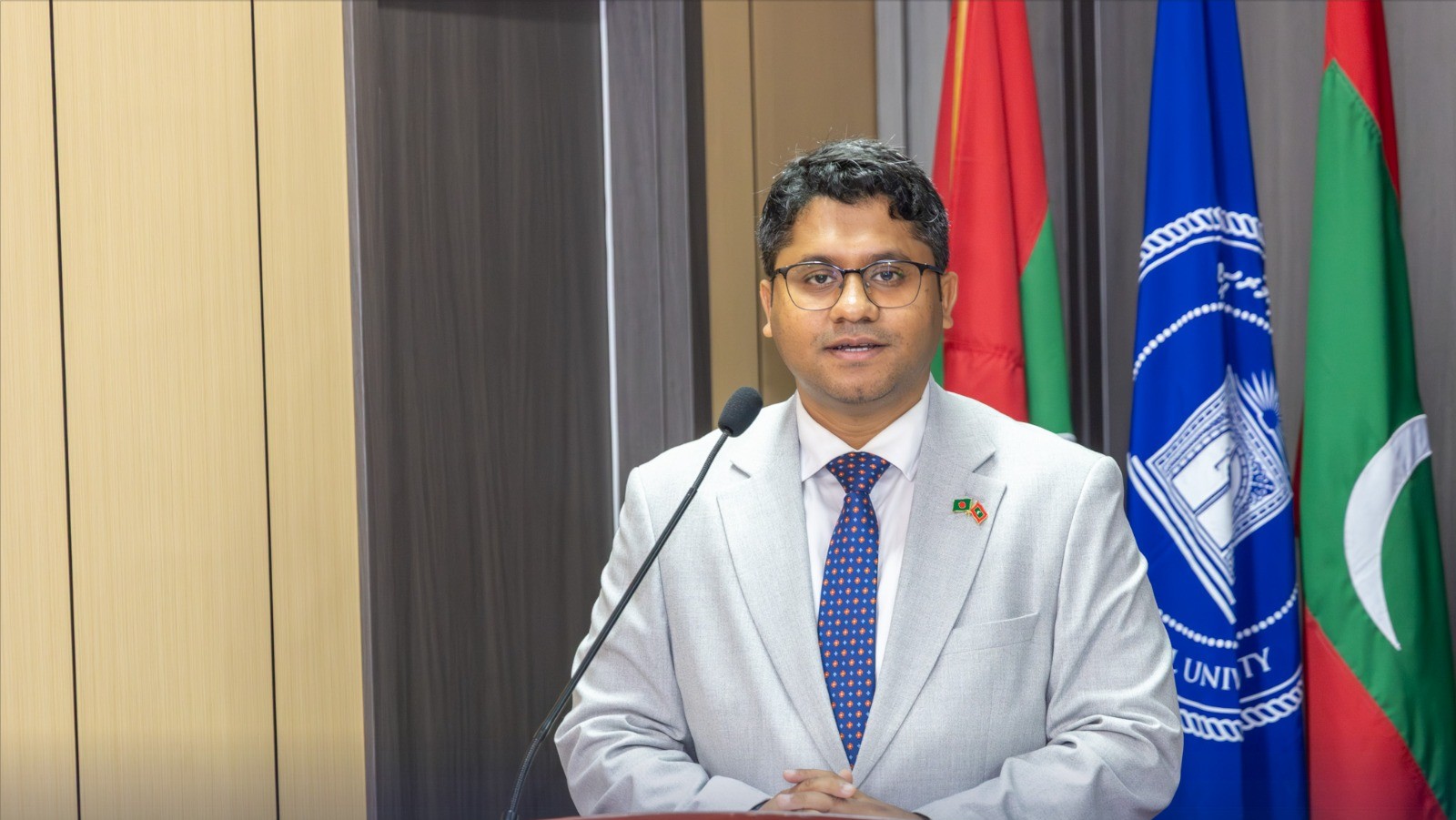
He expressed hope that his work would contribute meaningfully to academic discourse on diplomacy, international relations, and the role of small and medium-sized states in global affairs.



The high commissioner elaborated on the central concept of the “Power of Bonding,” describing it as a form of soft power rooted in trust, friendship, mutual respect, and enduring human connections.
He said while traditional diplomacy often focuses on strategic and economic interests, lasting partnerships are ultimately built upon strong relationships between people and institutions.
Drawing parallels to bilateral relations, Dr Islam observed that the longstanding friendship between Bangladesh and the Maldives represents a practical example of the “Power of Bonding” in action.
He added that the presence of a large Bangladeshi community and expanding cooperation in sectors such as healthcare, tourism, climate action, and human resource development demonstrate how human connections serve as the foundation for deeper engagement.
The High Commissioner underscored the immense potential for future collaboration through joint research initiatives, faculty and student exchange programmes, and institutional partnerships.
He identified the blue economy, marine sciences, public health, and sustainable development as promising areas for future cooperation. He further reaffirmed the Bangladesh High Commission’s readiness to work closely with MNU to promote cultural exchanges and knowledge-sharing initiatives.
In her concluding remarks, Vice Chancellor Dr Aishath Shehenaz Adam highlighted the excellent bilateral relations between the two countries and expressed appreciation for the high commissioner’s scholarly contribution.
She described the donated book as a valuable addition to the university’s library that would benefit students and academics interested in soft power studies.
The vice chancellor reaffirmed MNU’s interest in expanding cooperation with Bangladeshi research institutions, expressing optimism that such engagement would further strengthen the partnership. The ceremony concluded in a warm atmosphere, marking another milestone in the growing Bangladesh–Maldives partnership.