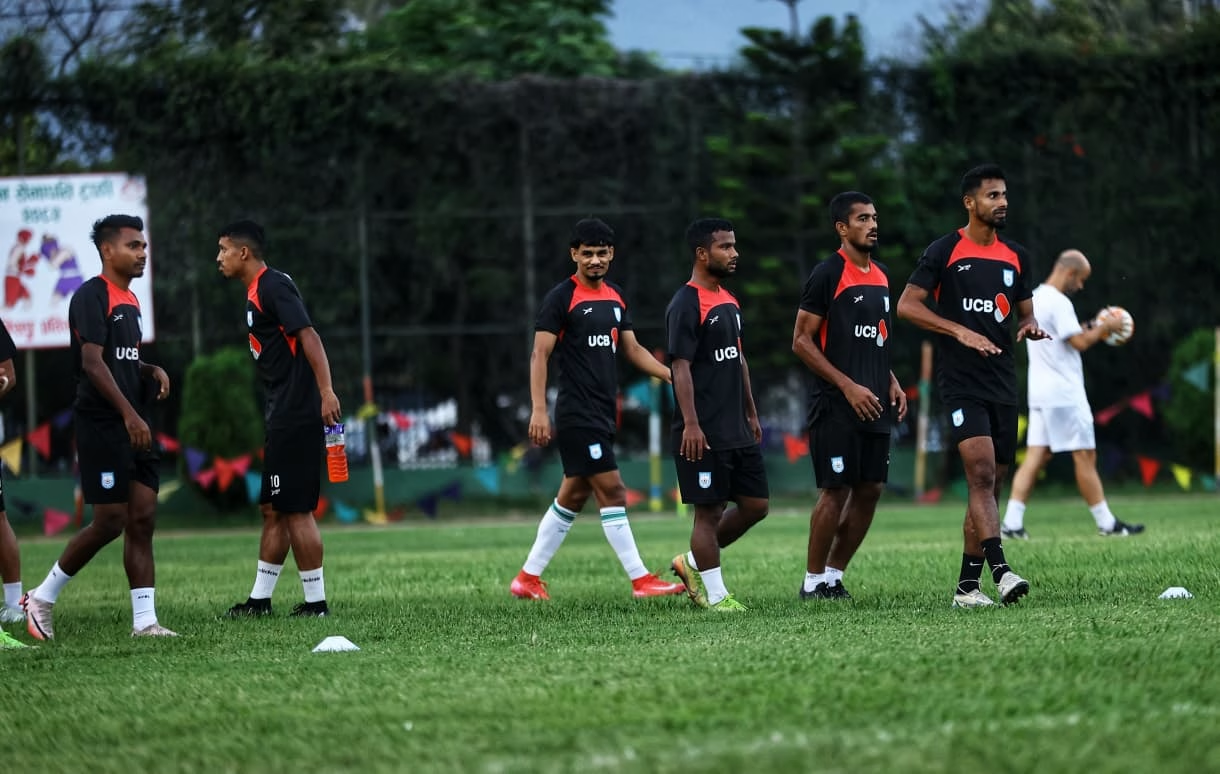

Bangladesh are set to take on Nepal in a friendly match on 6 September at Kathmandu’s Dasharath Stadium, a contest that arrives at a crucial stage in their preparations for October’s AFC Asian Cup qualifier against Hong Kong.
The game comes with challenges for Javier Cabrera’s side. Several of Bangladesh’s star names, including Hamza Choudhury, Shamit Shome and Fahamedul Islam, will not feature. A portion of the squad is also away in Vietnam competing in the AFC U-23 Asian Cup qualifiers, leaving Cabrera to craft his plans with a reduced pool of players.
Despite these absences, the Spanish coach has been encouraged by the work done in camp. “With half of the squad we trained in Dhaka for around 20 days, and the rest joined a few days ago,” Cabrera said. “Both Nepal and Bangladesh are of similar level and style, and these matches will be important for both teams to measure where they stand.”

Bangladesh captain Jamal Bhuyan echoed the importance of the friendlies, stressing that the experience will provide a valuable indicator before the high-stakes clash with Hong Kong. “These two matches in Nepal are very important for us,” Jamal said. “They will help us understand our position before October.”
Bangladesh’s preparation has included several tune-up games at the Bangabandhu National Stadium in Dhaka. Cabrera believes the squad, even without some of its headline names, has grown in maturity and resilience since their last visit to Nepal in September 2022. That campaign ended in disappointment, but the coach feels the lessons from that and from the recent defeat to Singapore have left the team better equipped. “Playing in Nepal has always been difficult for Bangladesh, but now I believe we are more mature,” Cabrera explained. “We learnt from the Singapore match and want to avoid the same mistakes. This match against Nepal is part of that preparation.”


Bangladesh’s record in Kathmandu remains a concern. The team has not beaten Nepal on their own soil since 2013, and conditions at Dasharath Stadium have often proven testing. Concerns about the state of the pitch have been voiced on social media in recent weeks, yet the ground will once again host this fixture. That makes mental toughness as vital as tactical sharpness for Cabrera’s men.
For the players involved, the absence of established stars also brings opportunity. Several young footballers have the chance to prove their worth, earn the coach’s trust and make a case for inclusion in the Asian Cup squad. Cabrera was keen to stress that the side in Nepal is no second-string outfit. “Many have said we have not brought our strongest squad because some are with the under-23s and Hamza cannot join,” he said. “But we are not here with a B team. We will field a strong side against Nepal and plan around the players who are with us.”
Nepal approach the game with their own Asian Cup qualifier against Vietnam in mind. They too are eager to sharpen their form, and with eight Nepalese players currently contracted in Bangladesh’s domestic league, the two nations share a growing footballing connection. Yet that bond will be set aside when the whistle blows in Kathmandu.
Both sides share the same ambition: to test themselves fully before stepping into the intense battles of October. Just as Hong Kong looms as a formidable obstacle for Bangladesh, Vietnam represents a daunting challenge for Nepal. These two friendlies therefore carry added significance, with each team seeking not just a morale boost but the rhythm and sharpness required for continental competition.
Bangladesh have travelled with determination, knowing that the Dasharath Stadium has not been kind to them in recent years. Still, with a blend of experienced campaigners and hungry youngsters, Cabrera believes the squad has the capacity to rise above past struggles. A result in Nepal would not only break a 12-year drought in Kathmandu but also send a clear message that Bangladesh are ready to fight for their Asian Cup dream.