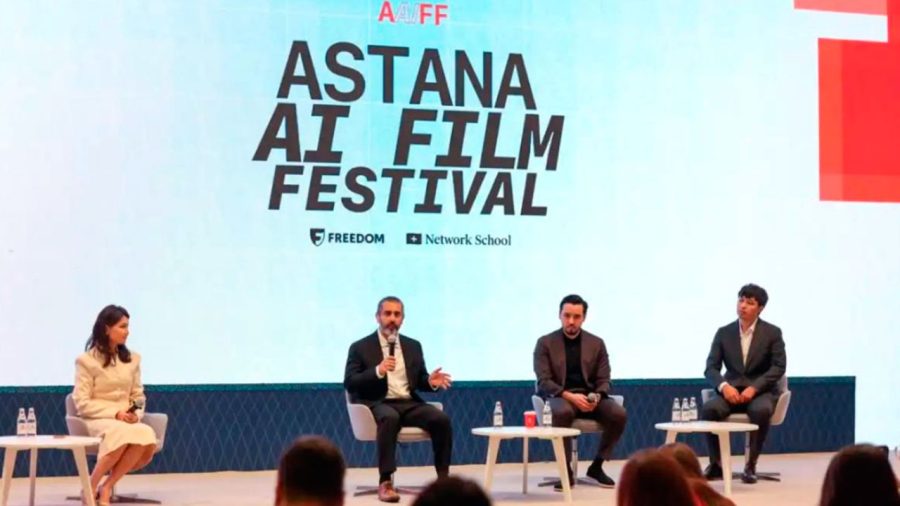

Kazakhstan is hosting the Astana AI Film Festival 2026, a film festival dedicated to works created using artificial intelligence. Organisers have described it as the world’s largest AI film competition.
According to Kazinform News Agency, the festival received 8,067 film submissions from 125 countries.
The United States submitted the highest number of films, with 1,395 entries. Kazakhstan followed with 829, while India submitted 702, China 550 and South Korea 349 films.
Festival co-founder and chairman of the board Almaz Zhali said the scale of the response had exceeded expectations.

“Just a few months ago, we announced an international competition. Today, we have received more than 8,000 films from 125 countries,” he said.
Co-founder and creative director Aizatullla Khussain said the festival was conceived in Astana in December 2025, at a time when AI-based video technology was advancing rapidly.




He said the festival could now be considered the world’s largest AI film festival in terms of both funding and the number of submissions. The organisers have allocated $2 million to the festival.
The festival’s central theme is “A Liveable Future”. Around 40% of the submitted films, or 3,138 entries, were made around this theme. Another 4,929 films were submitted to open competitions across 19 categories.
According to the organisers, the combined running time of all submitted films exceeds 100,000 minutes. The films were made by 4,756 directors using more than 80 AI-based models.
The festival has a total prize fund of $1 million. Of this, $750,000 has been allocated to programmes based on the central theme, while $250,000 will be distributed across five categories in the open competition.
Entrepreneur and investor Balaji Srinivasan has separately established a $1 million investment fund to support promising AI-based teams.
Srinivasan said falling production costs could create opportunities for smaller language communities to make films reflecting their own cultures.
“You can now create content in the Kazakh language as well. Smaller language communities can make their own films. It will not be Hollywood everywhere,” he said.