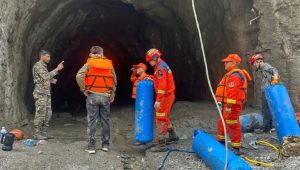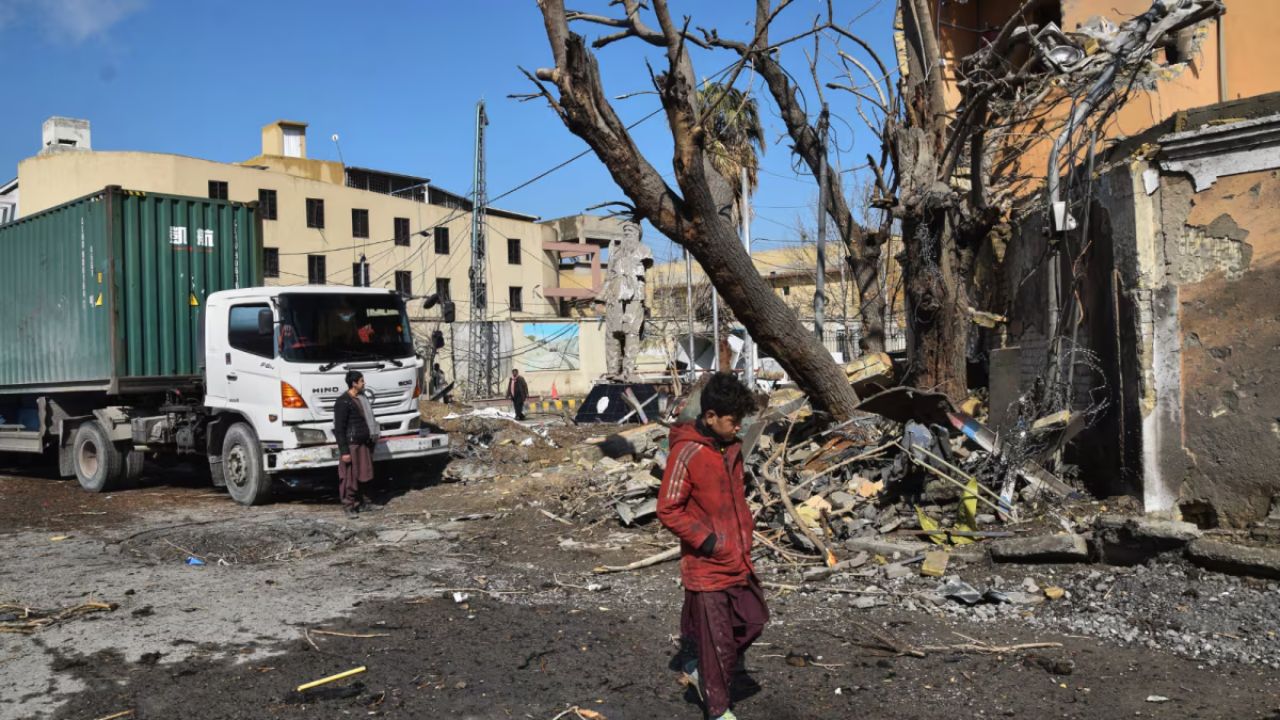

Violence in Pakistan’s Balochistan province has intensified in recent weeks, highlighting the region’s growing importance as both a domestic security challenge and a geopolitical flashpoint.
A series of attacks by militant groups and subsequent counter-insurgency operations by Pakistani security forces have renewed attention on the mineral-rich province, which occupies a strategic position bordering Iran and Afghanistan and overlooking the Arabian Sea.
The unrest has also fuelled unverified claims by some separatist groups regarding Balochistan’s independence. However, no such declaration has been independently verified, and Pakistan continues to maintain full administrative control over the province.
Analysts say the worsening security situation is driven by a combination of long-standing domestic grievances and intensifying regional competition involving China, India, Iran, Afghanistan and Gulf countries.
Rising violence
Balochistan has witnessed a sharp increase in militant activity this year.
Insurgent groups, particularly the Balochistan Liberation Army (BLA) and Tehreek-e-Taliban Pakistan (TTP), have repeatedly targeted security forces, infrastructure projects and non-local workers.

A coordinated wave of attacks in July prompted a major military response. Among the deadliest incidents were an attack on July 6 that killed several police officers and an ambush on a military convoy in the Bela region the following day.
The violence triggered protests and sit-ins by local residents demanding stronger security measures and greater protection from militant attacks.
Security analysts note that while Balochistan has experienced insurgency for decades, the frequency and sophistication of attacks have increased significantly in recent months.
Strategic province
Balochistan is Pakistan’s largest province by area, accounting for about 44 per cent of the country’s territory, yet it remains its least populated and among its least developed regions.




Bordering Iran, Afghanistan and the Arabian Sea, the province occupies a strategic location linking South Asia, Central Asia and the Middle East.
It is also rich in natural resources, including natural gas, copper, gold, coal and rare earth minerals.
The province hosts Gwadar Port, the centrepiece of the China-Pakistan Economic Corridor (CPEC), which forms a key component of China’s Belt and Road Initiative.
Despite its abundant resources, Balochistan continues to lag behind other provinces in economic development, a disparity that many analysts cite as one of the factors contributing to persistent unrest.
Geopolitical competition
Experts say Balochistan has increasingly become an arena where domestic conflict intersects with regional and global strategic competition.
China views Gwadar Port as a vital gateway that could reduce its dependence on the vulnerable Strait of Malacca for energy imports.
At the same time, the province’s vast reserves of critical minerals have attracted growing international attention amid global competition over supply chains for strategic resources.
Pakistan has repeatedly accused India of supporting Baloch insurgent groups, including the BLA, allegations that New Delhi has consistently denied.
Regional dynamics have also become more complex following heightened tensions around the Strait of Hormuz. Some analysts argue that Gulf countries are paying closer attention to Balochistan because of its proximity to alternative maritime and overland trade routes, although the extent of such strategic calculations remains uncertain.
Domestic factors
Human rights organisations have repeatedly raised concerns over enforced disappearances, arbitrary detentions and counter-terrorism operations in the province. Last year, the Office of the UN High Commissioner for Human Rights expressed concern about the impact of Pakistan’s counter-terrorism measures in Balochistan and urged Islamabad to ensure compliance with international human rights standards.
A difficult challenge
Analysts believe Pakistan is unlikely to tolerate any challenge to its authority in Balochistan, given the province’s strategic, economic and security importance.
At the same time, they argue that a purely military response may not be sufficient to resolve the conflict.
They say lasting stability will require addressing long-standing political, economic and governance issues alongside security concerns.
With insurgent violence showing little sign of easing and geopolitical competition intensifying, Balochistan is likely to remain one of South Asia’s most closely watched regions. How Pakistan balances security operations with political engagement and economic development may determine whether the province moves towards greater stability or deeper conflict.