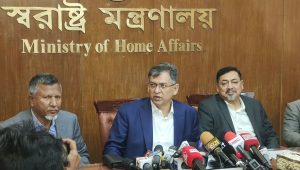
Parliament has passed a series of significant laws, including one that formally prohibits the political activities of Awami League and another that grants legal protection and immunity to those involved in the July uprising.
The bills were approved by voice vote on Wednesday during a session of the parliament, presided over by Speaker Hafiz Uddin Ahmed.
One of the key measures, the Anti-Terrorism (Amendment) Bill, 2026, ensures that the activities of Awami League remain banned. While the original Anti-Terrorism Act of 2009 allowed for the banning of organisations, it did not explicitly include provisions to prohibit their activities. This gap was addressed through an ordinance issued by the interim government on 11 May 2025, which introduced provisions enabling the suspension of organisational activities.
Following that amendment, an executive order on 12 May 2025 declared the activities of Awami League banned until the completion of trials related to crimes against humanity. With parliament’s approval of the ordinance, the provision has now been formally incorporated into law under the current BNP-led government.

Earlier, on 23 October 2024, the interim government had also banned Bangladesh Chhatra League, the student wing of Awami League, under the same law.
According to Section 3 of the amended law, all forms of activity in support of a banned entity — including propaganda, rallies, meetings, press conferences, and engagement through traditional or social media — are strictly prohibited.


The statement of objectives accompanying the bill said the amendment was introduced to modernise the law and strengthen provisions to prevent and punish terrorist activities.
The bill was tabled in parliament by Home Minister Salahuddin Ahmed. During the session, opposition leader Shafiqur Rahman sought to speak but was not permitted by the speaker on procedural grounds. He said he had not been given sufficient time to review the bill and requested a delay in its passage.
In response, the speaker ruled that there was no scope for objections at that stage, as no formal motions or amendments had been submitted within the stipulated time.
Defending the legislation, the home minister said it reflected public demand and had made it possible to suspend the activities of a political party through legal means.
Parliament also passed the July Mass Uprising (Protection and Liability Determination) Bill 2026, which paves the way for the withdrawal of all civil and criminal cases filed against individuals who participated in the uprising. Under the law, these cases will be dismissed following due process, and no new cases can be filed in the future over actions linked to the incidents.
In addition, lawmakers repealed the Father of the Nation’s Family Members Security Act, 2009. The repeal removes special state security and privileges previously granted to members of the Sheikh Mujibur Rahman’s family. The explanatory statement said the decision was taken on the grounds that providing special benefits to a specific family was discriminatory.
During the session, parliament also approved five ordinances issued during the interim government by converting them into law. These include the Government Accounts Audit Bill, 2026; the Protection and Conservation of Fish (Amendment) Bill, 2026; the Sheikh Hasina Rural Development Academy, Jamalpur (Amendment) Bill, 2026; and the Water Supply and Sewerage Authority (Amendment) Bill, 2026.
As part of the amendment to the rural development academy law, the name “Sheikh Hasina” has been removed from the institution.