European leaders are descending on the Armenian capital for two unprecedented summits this week, signalling a profound strategic shift for a nation long regarded as Russia’s staunchest ally in the South Caucasus.
The leaders will begin arriving on Monday with a European Political Community (EPC) summit, drawing more than 30 European leaders and Canada’s prime minister.
This will be followed on Tuesday by the inaugural bilateral EU-Armenia summit, attended by European Commission President Ursula von der Leyen and European Council President António Costa.
For Armenia, a nation of fewer than three million people, the symbolism of these meetings is significant. The country remains a member of President Vladimir Putin’s Eurasian Economic Union (EAEU) and continues to host a Russian military base.
However, the 2023 war with Azerbaijan over Nagorno-Karabakh served as a decisive turning point.
When Azerbaijan launched a lightning operation to seize the region-resulting in the displacement of over 100,000 ethnic Armenians-Russian peacekeepers on the ground did not intervene.

Earlier incursions into Armenian territory also went unanswered by the Russia-led Collective Security Treaty Organisation (CSTO).
“We realised that the security architecture that we are in was not working,” said Sargis Khandanyan, chairman of the Armenian National Assembly’s foreign relations committee.
He added that the physical presence of an EU monitoring mission, deployed in 2022, has shifted public perception in favour of closer ties with Brussels.



Consequently, the Armenian parliament passed legislation in March 2025 to begin the EU accession process.
Moscow’s Irritation and Hybrid Threats The Kremlin has viewed Armenia’s pivot with open hostility. During a meeting in Moscow on 1 April, President Putin pointedly reminded Prime Minister Nikol Pashinyan of Armenia’s energy dependence.
Russia currently sells gas to Armenia at a preferential rate of $177.50 per 1,000 cubic metres, contrasted against the European price of $600. Putin further warned that EU membership is “impossible by definition” while Armenia remains in a customs union with the EAEU.
Pressure from Moscow has also manifested in “hybrid threats”. Just days before the EPC summit, Russia banned imports of Armenian mineral water.
Artur Papyan of CyberHUB-AM noted that pro-EU moves by Yerevan are frequently met with trade disruptions at the Georgian-Russian border and cyber interference.
Recent operations attributed to Russian sources include a mass compromise of WhatsApp accounts and a sophisticated phishing campaign impersonating the EU Ambassador to Armenia, Vassilis Maragos.
To counter these threats ahead of Armenia’s parliamentary elections in June, the EU has approved a new civilian mission designed to tackle disinformation and illicit financial flows.
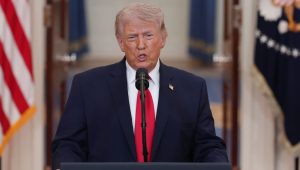
Fragile Peace and Future Outlook While regional peace efforts have accelerated – highlighted by an August 2025 agreement signed at the White House between Pashinyan and Azerbaijan’s President Ilham Aliyev – the situation remains volatile.
The agreement introduced the “Trump Route,” a connectivity corridor along the Armenian-Iranian border intended to link the region to European markets.
However, Azerbaijan recently suspended ties with the European Parliament following a resolution calling for the right of return for Nagorno-Karabakh Armenians.
Despite the high-level summits in Yerevan, Council of Europe Secretary General Alain Berset warned that Armenia’s democratic institutions remain under significant pressure from foreign interference and political polarisation.
While European leaders offer promises of visa liberalisation and civilian support, there remains no concrete timeline for EU membership, no defence commitments, and no immediate plan to replace Russian gas supplies.
Without these firm guarantees, analysts suggest Armenia’s precarious balancing act between the West and Russia is far from over.