
As foreign-exchange pressures intensify across the Maldives, Bangladesh has launched a proactive diplomatic initiative to protect its migrant workforce, safeguard formal remittance inflows, and deepen bilateral financial cooperation.
The ongoing foreign-currency scarcity in the archipelago has created a difficult operating environment, increasingly affecting local businesses, commercial banks, and foreign workers.
For Bangladesh, however, this economic strain has presented an opportunity to demonstrate a modern diplomatic model that combines worker protection, economic diplomacy, and strategic bilateral engagement.
According to figures from the Maldives Monetary Authority (MMA), Bangladesh stands as the single largest destination for outward remittances originating from the Maldives. The MMA recorded that Bangladesh received 72 per cent of the total value of outward remittances, amounting to more than US$112 million.
The central bank credited joint efforts by the Governments of Bangladesh and the Maldives, alongside targeted awareness campaigns by the Bangladesh High Commission and NBL Money Transfer (Maldives) Pvt Ltd, with encouraging the use of formal remittance channels.
Nevertheless, the persistence of the foreign-exchange shortage carries implications that extend far beyond the banking sector. The scarcity directly affects the earnings of thousands of Bangladeshi workers and threatens the overall flow of remittances to Bangladesh.
Financial observers note that the Maldivian foreign-exchange shortage is not an issue specific to Bangladesh, but rather forms part of wider macroeconomic pressures facing the island nation.
In its 2026 assessment, the International Monetary Fund (IMF) repeatedly identified foreign-exchange shortages, external vulnerabilities, and mounting pressures on reserves as key challenges for the Maldivian economy.

While the IMF noted that the economy demonstrated resilience—driven primarily by tourism—it cautioned that the country remains exposed to external shocks, higher import costs, and geopolitical uncertainty.
The practical difficulty of this foreign-exchange strain is most visible in the widening gap between official exchange rates and the parallel market. The official exchange rate has remained around MVR 15 to MVR 16 per US dollar, whereas the parallel market has reportedly offered substantially higher rates.
For migrant workers earning in Maldivian Rufiyaa, this rate differential translates directly into lost income when attempting to convert their salaries for remittance.
Consequently, workers face situations where income earned over months of hard work becomes worth significantly less when converted into a remittable foreign currency.
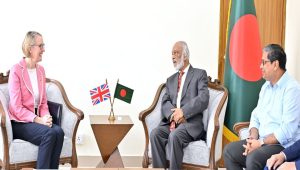
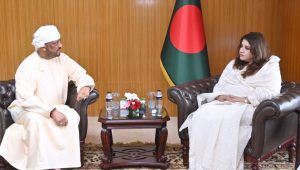
In response to these challenges, the Bangladesh High Commission in Malé has adopted an active approach that moves beyond traditional consular duties. Viewing the issue as a broad economic and worker protection challenge, the Mission has sought to address the problem at its source.




The Bangladesh high commissioner has personally engaged senior management of commercial banks operating in the Maldives to examine the foreign-exchange situation from within the banking system. In addition, the Mission has conducted discussions with the MMA and senior members of the Maldivian Government.
Following these consultations, the Mission assessed that the immediate constraint is not the absence of a formal remittance channel. Bangladesh already maintains an established financial institution in the country through NBL Money Transfer (Maldives) Pvt Ltd.
Instead, the core issue is the availability of foreign-exchange liquidity in the market. Diplomatic officials pointed out that while establishing a new bank could improve service channels, it cannot generate US dollars that are unavailable in the market.
This assessment has led the High Commission to advocate for practical solutions that address both the financial system and worker welfare. This approach reflects a broader strategic shift in the Bangladesh Government’s labour diplomacy, which places migrant workers at the centre of its foreign policy.
Rather than viewing expatriates merely as a source of remittance, the Government considers them an essential part of the country’s international economic footprint.
Consequently, state policy emphasizes worker protection, the expansion of skilled employment opportunities, the regularisation of undocumented workers, and the strengthening of formal remittance channels.
On the ground, the High Commission in Malé has translated this policy into active intervention. The Mission maintains continuous contact with Bangladeshi workers and employers, encouraging employers, wherever legally and practically possible, to facilitate dollar-linked salary arrangements or assist employees in accessing foreign currency through authorised channels. Officials maintain that protecting a worker’s salary against currency depreciation is just as vital as protecting their passport or employment contract.
Bangladesh holds a strong financial foundation in the Maldives, as it is not starting from zero. The Maldives already possesses a functioning formal remittance ecosystem, with NBL Money Transfer (Maldives) Pvt Ltd serving as an active participant.
MMA data shows rapid growth in formal outward transfers. In 2024, non-bank payment service providers processed over US$155 million in outward remittances, with foreign nationals accounting for 92 per cent of the total value. Bangladesh alone represented 72 per cent of this amount, demonstrating that structured bilateral cooperation can yield measurable results.
To build long-term system resilience during foreign-exchange constraints, five key measures have been outlined.
First, a technical dialogue between Bangladesh Bank and the MMA could examine mechanisms for predictable settlement of legitimate Bangladeshi worker remittances. This includes assessing the technical feasibility of an MVR-to-BDT or local-currency settlement mechanism to reduce dependence on multi-currency conversion steps.
Second, Maldivian authorities could examine whether legitimate migrant-worker remittances can receive predictable access to available foreign-exchange liquidity in a manner consistent with broader monetary policies.
Third, employers can assist by facilitating dollar-linked salaries or purchasing foreign exchange for workers through authorised channels, relieving pressure on the parallel market.
Fourth, the Bangladesh Government and High Commission continue to recognise the importance of strengthening banking connectivity, though policy analysts stress that banking presence and foreign-exchange liquidity must be treated as related but distinct issues.
Fifth, both governments could explore broader financial cooperation, including trade settlement, financial technology, and structured financing. Subject to detailed assessment by Bangladesh Bank and the Ministry of Finance, a possible Line of Credit could also be examined where economically and strategically justified.
These financial measures coincide with ongoing High Commission engagement regarding foreign worker status, undocumented labour regularisation, and employment concerns.
By combining quiet diplomacy with practical intervention, the High Commission has positioned itself as an institutional bridge between the Bangladeshi workforce, the Maldivian Government, and the banking sector.
Ultimately, officials see the present challenge as an opportunity to transform bilateral relations into a broader economic partnership covering financial connectivity, worker protection, trade settlement, and investment.
Bangladesh’s constructive approach—focused on understanding local constraints rather than demanding preferential treatment—provides a practical model for modern diplomacy.
The immediate objective remains ensuring Bangladeshi workers can send their earnings home safely and transparently without disproportionate losses, while the broader goal seeks to establish an enduring Bangladesh-Maldives financial partnership.