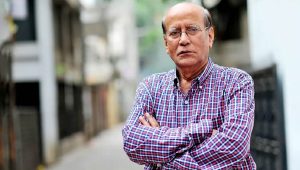
Bangladeshi musician and cultural entrepreneur Anusheh Anadil has recently reflected on why she never became involved with Coke Studio Bangla, despite years of public curiosity and recurring interest from audiences who saw her as a natural fit for the platform.
Known as the former vocalist of the influential band Bangla, Anusheh has long been regarded as a significant figure in Bangladesh’s alternative and fusion music movement. She is also a co-founder of Jatra and Jatra Biroti, both of which have played important roles in supporting independent music, live performances and experimental cultural programming.
For years, many listeners imagined her participation in Coke Studio Bangla, particularly given her occasional collaborations with Shayan Chowdhury Arnob and her continued presence within the country’s contemporary music scene.
In a recent Facebook post shared through Jatra, Anusheh explained that her decision was rooted not in visibility or exposure but in a broader personal philosophy developed through decades of independent cultural work.

She wrote that she has consistently moved away from large-scale, high-production systems of cultural presentation, even when they offer mainstream recognition. According to Anusheh, the question has always been whether a platform’s structure aligns with her own way of working.
A central part of that outlook comes from her long association with Jatra and Jatra Biroti, which she says she has managed for 26 years.
“I have been running Jatra for 26 years,” she wrote, describing a journey that involved repaying loans, scaling back expansion plans and consciously moving away from debt-driven growth.




According to Anusheh, what was once a larger operation with multiple outlets gradually evolved into a smaller, values-driven cultural space. She linked that transformation to a rejection of overproduction and what she described as its hidden costs.
She also noted that she avoids bottled water and does not sell Coca-Cola or similar soft drinks at her establishments, presenting the decision as part of a broader commitment to environmental responsibility and mindful consumption.
Within that context, Anusheh said her distance from Coke Studio Bangla was consistent with her wider philosophy.
She described the platform as operating through a production model built around centralised curation, large-scale execution and tightly structured artistic presentation. While acknowledging the platform’s visibility and the artists involved, she said she never felt philosophically or structurally aligned with that approach.
Instead, she contrasted it with her own creative practice, which she described as slower, relationship-based and process-oriented, where artistic work emerges through interaction rather than large-scale production frameworks.
Anusheh recently returned to Facebook after an 11-year absence. Reflecting on that return, she said a subtle internal shift had created space for renewed expression and reflection.
Her comments also touched on a broader issue within Bangladesh’s cultural landscape. She argued that many artists and cultural workers remain outside dominant systems of visibility despite contributing significantly to the country’s creative identity.
According to Anusheh, this reflects a form of structural invisibility, where meaningful contributions exist but recognition is not always distributed evenly.