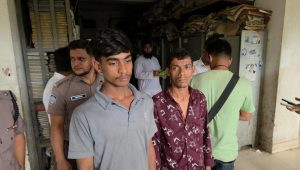
A man was forced to stand before a crowd at a marketplace in Nabinagar, Brahmanbaria, before being thrown to the ground, tied up and brutally beaten with sticks. The entire ordeal was filmed and shared on social media as a “social trial”, quickly going viral.
The footage triggered intense debate online. While some users supported the vigilante action, others condemned the brutality of people taking the law into their own hands and punishing someone without legal authority.
The latest incident has renewed concerns over the growing prevalence of mob justice and the government’s apparent failure to curb it. The issue is particularly striking given that Home Minister Salahuddin Ahmed, upon assuming office on 18 February, declared that “mob culture” was over and could not be practised in the name of pursuing demands.
However, no effective measures have followed that pledge. According to the latest data from the Human Rights Support Society (HRSS), at least 31 people were killed in incidents of mob violence in May alone.
Human rights activist Alamgir Sujan said the sharp rise in mob justice, ranging from attacks on shrines to public torture during village arbitrations, is fostering a dangerous culture of impunity.
“These acts directly violate the constitution and state laws while normalising the tendency to take the law into one’s own hands,” he said.
Following the Nabinagar incident, Sub-Inspector Md Noor Nabi, in-charge of the Shibpur police outpost under Nabinagar Police Station, said a police team rushed to the scene after learning about the situation.

By the time officers arrived, however, the crowd had dispersed after assaulting the victim, leaving police unable to immediately locate him.
What the footage shows
The graphic footage circulating online consists of two videos, one lasting 32 minutes and another approximately 90 minutes, showing villagers gathering in a market to publicly judge and lecture the victim, later identified as Habi Mia.
In one video, the person recording can be heard announcing that villagers had collectively decided to punish the man and urging viewers to share footage of the public trial.
The recordings show a bystander blindfolding Habi Mia with a towel, tying his hands with rope and inserting a pipe between his limbs to pin him to the ground, leaving him unable to move.
After being turned upside down with his feet tied, two men held him down while a third repeatedly struck him with a stick. Between blows, interrogators demanded to know who he had given money to.


Mia can be heard crying out: “Oh, uncle… I didn’t give money to anyone. May Allah forgive me.”
One individual who uploaded the videos claimed the torture was intended to prevent drug abuse. Police later confirmed that Mia has a pending narcotics case against him for allegedly selling Yaba.
Police identify perpetrators but no action
Despite identifying the main perpetrators, SI Noor Nabi said no arrests could be made because no formal complaint had been filed.
He said those involved in the assault included Mukarram, Mohsin, Taju and local representative Hanif Member, all residents of Narui village.
Police also said Habi Mia’s mother and wife were forced to witness the torture.
Nabinagar not an isolated case
The incident is part of a broader pattern of mob violence across the country, with suspected thieves, alleged criminals and people accused of sexual offences increasingly being targeted by crowds.
Last week, a man named Billal Hossain was lynched in Jhenaidah over allegations that he attempted to rape a seven-year-old child. He later died from his injuries in hospital.
On 10 May, villagers in the Baghchala area of Kaliakoir, Gazipur, tied three men to a tree and beat them to death on suspicion of cattle theft.
The growing culture of public intimidation has also begun affecting cultural activities. In Brahmanbaria, a screening of the government-funded film Banolata Express was recently halted following pressure from local religious groups.
Alamgir Sujan said public pressure is no longer limited to imposing decisions through physical violence but is increasingly being used to shut down cultural events as well.
The danger of extra-legal measures
Human Rights and Peace for Bangladesh (HRPB) President Manzil Morshed, also a Supreme Court lawyer, said there is no justification for taking the law into one’s own hands under any circumstances.
Determining whether someone is guilty of a crime, he said, is solely the responsibility of the courts.
According to Morshed, the tendency to bypass the judicial process has increased as public trust in legal institutions has eroded, a trend he links to the rise in mob violence during the tenure of the interim government.
“When people lose faith in state institutions, including the judiciary, they feel compelled to take action themselves,” he said, warning that the trend poses a serious threat to society.
He stressed that the public must be assured that law enforcement agencies and the judiciary are fully capable of delivering justice. Otherwise, he warned, the culture of mob lynching, village arbitration and “instant punishment” promoted on social media will continue to spread.
Despite the illegality of such actions, many users in the comment sections of the videos openly supported the punishment.
Addressing the phenomenon, Morshed said people often begin to condone extra-legal measures when state institutions fail to control crime and social disorder.
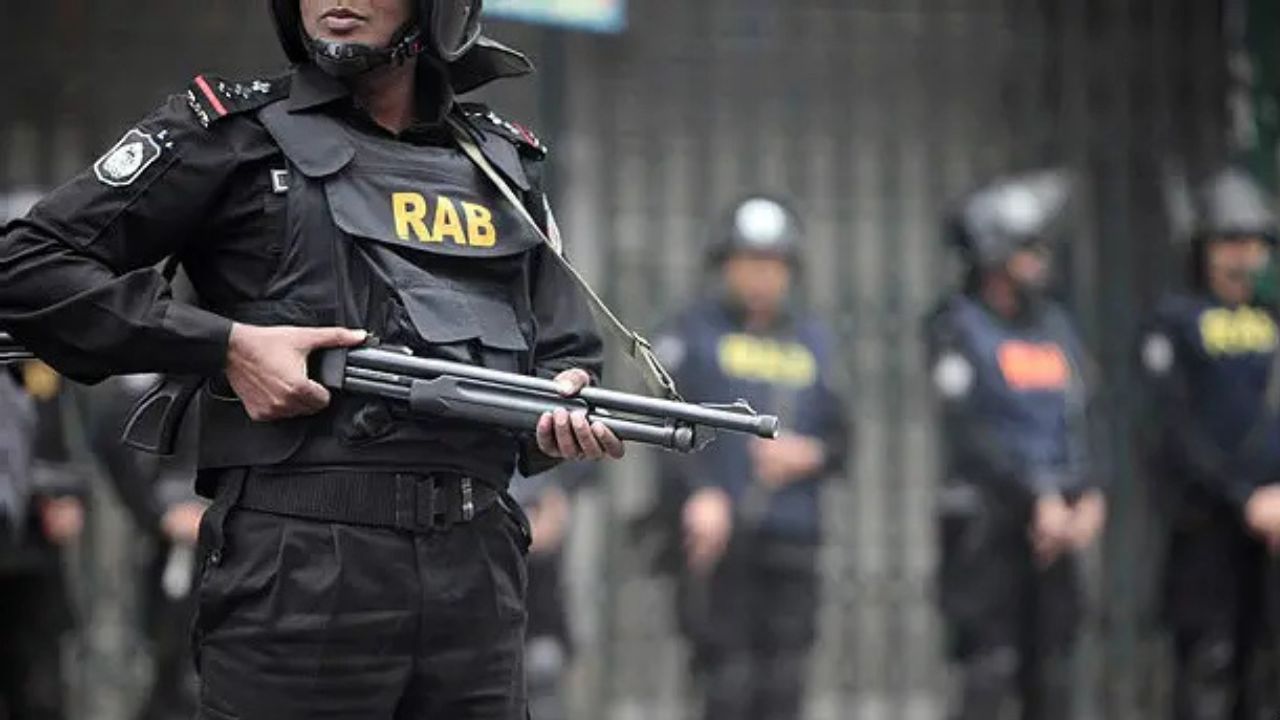
As an example, he cited the controversial practice of law enforcement carrying out alleged “crossfire” killings, which drew widespread criticism both at home and abroad.
He noted that while many initially supported such actions out of frustration with crime, public opinion shifted once the scale of misuse and abuse became apparent.