
Dr. Sujit Kumar Datta
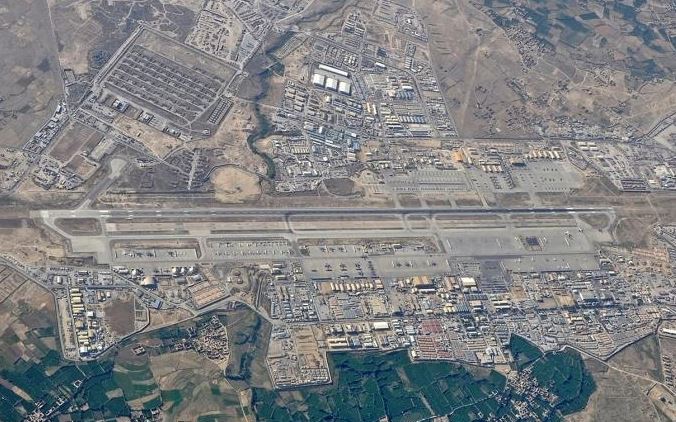
The sudden and chaotic retreat of the United States military in August 2021 from Bagram Air Base will be a chilling symbol of self-inflicted geopolitical damage. A base where three American presidents had visited and whose runway, strategically important due to its length of 3.6 kilometers, was abandoned during the final hours of the longest war in American history. Equipment was destroyed as well, infrastructure was to be entrusted to local looting, and the key to Central Asian power projection was to be given away without charge. The rhetoric of President Donald Trump, who became the much-promised leader, opening the doors to withdrawal with his peace settlement, may be the most potent symbol of this colossal strategic mistake today. His insistence on having the Taliban hand in the base, because he says we gave it to the Taliban free, and it will cause hideous things when they fail to give it back, is, in short, a confession of the fatal miscalculation of Washington. It has now been confirmed that the base is an asset whose value has not been diluted but has been multiplied exponentially with the geopolitical shift now favouring China over the U.S.
The vacuum created by the precipitous withdrawal of America has not brought a restful sleep, but rather an unadulterated, unhindered venue to its strategic rivals to reinvent the Eurasian core. Bagram Air Base was not an ordinary logistical facility, but rather the unrivaled hub of U.S. military power in a vast area of strategic significance that extends along the Persian Gulf to the Tibetan Plateau. The size alone, and the capability epitomized by the runway, which accommodates the largest military cargo aircraft made available to the U.S., enable the ability to project force, conduct high-level surveillance, and sustain operations in different theatres. Presidents George W. Bush, Barack Obama, and Donald Trump made visits to it, and its symbolic and operational value was recognised. Whatever the tactical ineptitude of the decision to withdraw from Bagram without any proper coordination or decommissioning, it was of a very high strategic order. The scenes of the troops abandoning precious military equipment, and then the looting as usual, and then the Taliban moving in, were informative in the failure to look ahead. What Trump today is lamenting for having traded away a multi-billion dollar, high-value strategic asset is an appeal to the irreversible nature of having sacrificed the uncertain political appearance of an immediate withdrawal, in the name of a dubious political optic, which is the paradox of that withdrawal.

The only advantage of the base was that it was located in a region of transient conflict. It was a permanent, hard American sovereignty in the heart of Eurasia, which would act as a vital buffer and a launching point for any future great power action in Asia. The U.S. has cast a darkness over its own region by extinguishing its own light, and this darkness is now being filled with the power of its enemies. What is most tragic about the Bagram abandonment is not the fight against terrorism that they lost, but rather the newly uncovered anti-China critical strategy. The United States has spent the last 20 years under a policy known as the War on Terror, and now Washington has made China its number-one strategic threat. Here, the position of Bagram as the centre of Chinese influence is so near as to make its loss inexcusable.
The geographical realities speak for themselves: Bagram is located some 800 kilometers from the Chinese border. It is placed close to the delicate western flank of China, including the Xinjiang province, where military installations, important logistics networks, and, as Trump put it violently, the location of the sites of nuclear weapons production of China (distorting the distance to only an hour). The base being retained by the U.S, Bagram would have been the extension of the Indo-Pacific strategy into the heartland of Eurasia. It would have significantly enhanced the U.S. capability for military surveillance and electronic intelligence collection of China’s inner dynamics and strategic assets. Moreover, a continuing military presence would have offered a badly needed military counterbalance to the Chinese Belt and Road Initiative (BRI) spreading across Central Asia. To the Central Asian states, which were growing nervous about their economic reliance on Beijing, Bagram would have served as a priceless point of parity, providing an option for security partners.




The Southern border was the perfect launching point on the Chinese strategic underbelly of the U.S. military. The fact that it has voluntarily surrendered itself translates to the U.S. effectively blinding itself in the most sensitive and strategically important area as far as its arch-rival is concerned. It is into this vacuum created by the U.S. departure that the error of America reaping the most significant profit for its competitors is poured. First, to China, the short-term advantage is immense security and reprieve. It eliminated the Bagram threat, which ensured the security of the western side of Beijing, enabling it to redirect its resources and concentrate on other military areas. The withdrawal of direct surveillance by the U.S. along the Xinjiang borders is a historic geostrategic win that was achieved at no cost, improving internal stability within China and enhancing the ability to push the BRI to the west without fear of military retaliation. Second, the gap has solidified the anti-U.S. regional cooperation.
The presence of the U.S. was the driving force that rallied the opposing forces, including China, Russia, Iran, and Pakistan, around a single agenda. However, today, this coalition remains united, but its agenda has shifted not only to drive the U.S. out but also to guard against its re-entry. The collective action of regional powers and the categorical rejection of Trump’s demand by the Taliban reinforce this new reality. Re-establishing a base that would be a cause of tension and conflict would not be popular, as the Chinese Foreign Ministry spokesperson, Lin Jian, cautioned. This agreement provides Beijing with the ideal diplomatic cover, enabling it to act as the advocate of non-interference and stability without using its economic influence to entrap the region within its sphere of influence. It is not military strength that is filling the power vacuum in Eurasia, but rather geo-economic integration. The U.S. is being marginalised and is confronted with an integrated bloc of the regional powers able to determine the conditions of engagement, and China is expanding its influence unfettered.
The intimidating social media postures of Donald Trump, where he brags about awful things that might occur, are a clever, even cynical acknowledgment of the scale of the strategic mistake that he contributed to making. The fury can be explained by the realisation that the U.S. voluntarily surrendered, on that single, serious, non-naval hard power projection platform, into the very core of the Eurasian continent, at the very time when the latter became the center of the world’s struggle. The evacuation of Bagram at this high cost was a wound to the self, which practically destroyed the very ability of America to counter the effect of China in Central Asia. This resulting power vacuum has benefited Beijing’s capital more in terms of security and the expansion of soft power than any military victory could have offered. The foundation on which three presidents of the United States have rested is now turned into a shadow of a lost chance. The United States is left to repent its caprice, retiring, and its enemies are feasting on the spoils of its robbery, without fear and without restraint. The price of that mistake will be paid in the loss of influence on the Eurasian continent in decades to come.
The writer is a Professor of International Relations at University of Chittagong and Deputy Director at Hong Kong Research Centre for Asian Studies (RCAS)