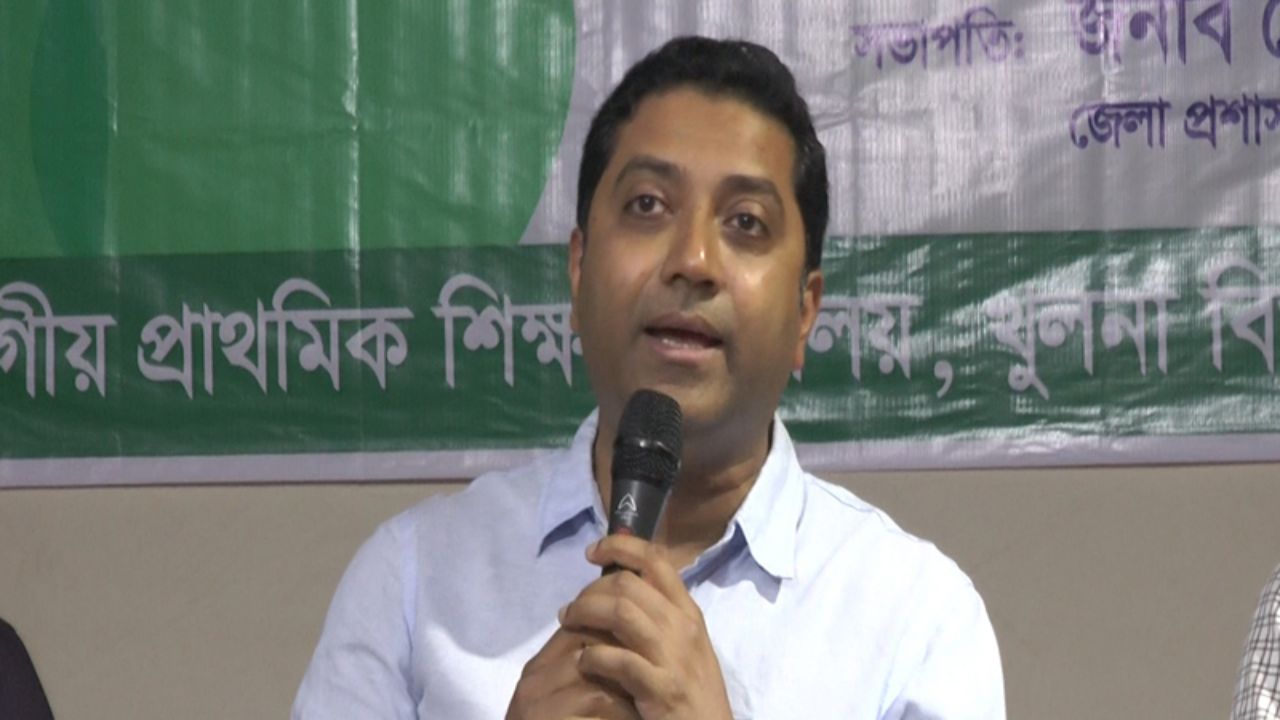
Jamaat-e-Islami Ameer and opposition leader Shafiqur Rahman on Thursday claimed only Allah knows what everyone’s role was during the 1971 Liberation War, describing the creator as the “perfect, complete, and sole witness” to those events.
Speaking on Thursday, during the 12th day of Parliament’s first session, Shafiqur addressed the House after the Liberation War Affairs Minister Ahmed Azam Khan, moved a bill to amend the National Muktijoddha Council Act 2022.
The session was presided over by Speaker Hafiz Uddin Ahmad, who noted that National Citizen Party (NCP) had not raised objections to the bill and had submitted their opinions in writing.
During his speech, Shafiqur raised objections to the bill’s inclusion of three political organisations – the Muslim League, Jamaat-e-Islami, and Nizam-e-Islam Party – in the definitions alongside the auxiliary forces of the Pakistan Army.
He claimed that this specific inclusion was not initiated by post-independence rulers, nor by ex-president Ziaur Rahman or the “thrice highly respected prime minister.”

Instead, Shafiqur alleged it was introduced by the “distorted representative of the fascists,” Sheikh Hasina, and subsequently maintained by the interim government with minor changes.
The opposition leader said while humans are only “partial witnesses,” Allah is the “perfect witness” to the roles played during the conflict.


He expressed his desire for every political organisation in Bangladesh to conduct their activities through a “healthy trend of politics,” driven by love for the country and accountability to the people.
Reflecting on history, Shafiqur paid tribute to those who played heroic roles for the nation during the struggles of 1947 and the Great Liberation War 23 years later. He prayed for the departed souls of the leaders of the bloody war, asking Allah to grant them the status of martyrs.
He argued that while people hoped for a “humane country” and justice following independence, the reality was the opposite.
Shafiqur stated that the failure to respect the people’s mandate made war inevitable, but the post-independence rulers soon “forgot” this and eventually established the one-party BAKSHAL system, killing multi-party democracy.
He noted that the parliament formed in 1973 reportedly discussed the matter for only seven minutes before abolishing multi-party democracy and banning all existing political parties, including the Awami League itself.
Shafiqur credited ex-president Ziaur Rahman for restoring multi-party democracy after the change of power in 1975, stating that Ziaur Rahman was a “beloved president of the people” who understood the language of the citizens.
The Jamaat Ameer recalled being a medical student at the time of Ziaur Rahman’s death, noting how people across party lines wept and prayed for him.
Shafiqur mentioned that under the subsequent Political Parties (Revival) Act, various parties – including the Awami League and his own – were able to resume activities.
He expressed gratitude to Ziaur Rahman who took that initiative, stating that Jamaat has been striving to conduct its organisational activities since 1979. Concluding his speech two minutes ahead of his allotted time, Shafiqur called for national unity instead of division.
“We no longer want any division in this nation. Let it be the commitment of all parties that we can stand tall as a respected and united nation,” Shafiqur said, before entrusting the matter of the bill to the wisdom of the Parliament.