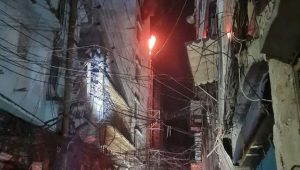
Investigations into the deaths of six newborns at Ad-Din Hospital have pointed to structural flaws, possible negligence, and safety concerns, with authorities likely to move towards legal action.
Two members of the probe committee, speaking on condition of anonymity, said the investigation found multiple structural shortcomings in the hospital’s post-operative ward. Several construction defects and safety-related weaknesses were also identified. Evidence of negligence by doctors and healthcare workers was also found.
The investigation focused particularly on the hospital’s oxygen supply system, ventilation, temperature control, and overall ward management in connection with the deaths.
The committee also questioned physicians, nurses, and other relevant officials during the inquiry.
The hospital reportedly has infrastructural shortcomings in several areas, including narrow corridors and inadequate ventilation, creating a stifling environment and increasing the risk of fire and other emergencies.
The committee, headed by a joint secretary of the Ministry of Health, has been expanded with the inclusion of Deputy Attorney General Al Faisal Siddiqui.

The government is expected to initiate legal action against Ad-Din Hospital following the deaths of six newborns in a postnatal ward at the facility in the capital, based on the findings of the probe report.
Alongside a committee formed by the Ministry of Health and Family Welfare, the Directorate General of Health Services (DGHS) is also forming a separate investigation body. A decision on legal measures will be taken based on the findings of both investigations.
Health Minister Sardar Md Sakhawat Husain said legal guidance had been sought from the attorney general, with a deputy attorney general present at the meeting.

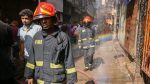


Attorney General Ruhul Quddus Kajal said the discussions focused on determining responsibility and ensuring legal action against those found liable.
“No guilty party should escape through legal loopholes,” he said, adding that those responsible are expected to face justice.
Committee members said they had almost completed the investigation but decided to interview the victims’ families to verify the findings, as no post-mortem examinations or inquest reports had been conducted.
Md Mohsin, head of the probe committee and joint secretary of the private health management sub-section of the Ministry of Health, told TIMES on Monday afternoon that the report would be submitted on 3 June.
“We are now interviewing the affected families. I am currently at the home of one of the affected families,” he said.
On 27 May, DGHS Additional Director General (Administration) Prof Zahid Raihan said, “We do not think the sudden deaths of six children occurred due to treatment complications. We suspect that a technical issue or fault may have been responsible.”
The same day, Supreme Court lawyer Ishrat Hasan served a legal notice on the health secretary, DGHS, and the director of Ad-Din Hospital, demanding departmental and criminal proceedings over the deaths and illnesses of the newborns.
The notice also sought compensation for the affected families and called for stronger patient safety measures in maternity and neonatal wards. It demanded disclosure of actions taken within 72 hours, failing which legal action would follow.
Meanwhile, a Dhaka Metropolitan Police probe committee is expected to submit its report by the end of the week after taking expert opinions from the Criminal Investigation Department (CID).
A case has already been filed in connection with the incident, Ramna Police Station OC Ashique Iqbal confirmed to TIMES. The case was lodged by Habibur Rahman, father of one of the deceased infants.
On the night of 27 May, six newborns died in the post-delivery ward of Ad-Din Medical College Hospital.
At the time, 11 mothers were present in the ward. Six were staying with their newborns, aged between one and three days, while five other babies were already receiving treatment in the fifth-floor neonatal intensive care unit (NICU) due to birth complications.
The six newborns who remained with their mothers in the ward died one after another.