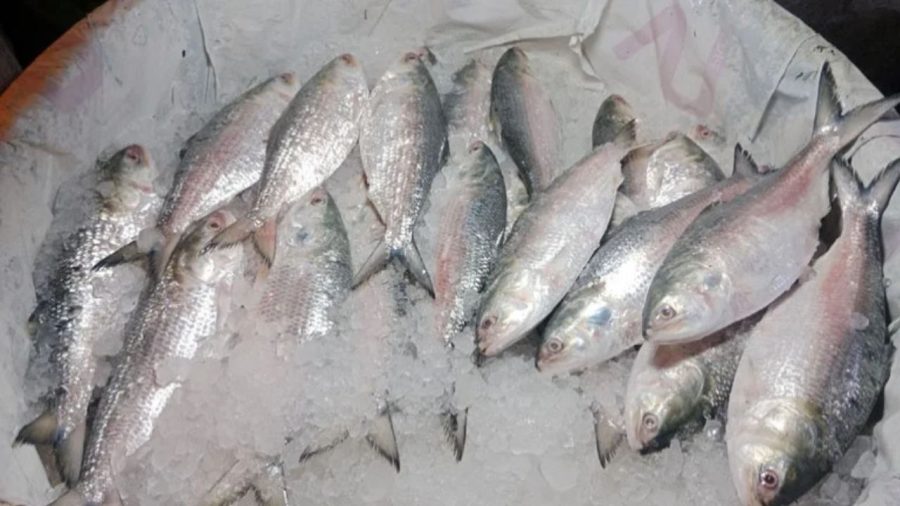



The government has taken several initiatives to boost hilsa production, including stricter law enforcement, measures to prevent jatka fishing, mobile court operations, river restoration to improve navigability, increased research and higher allocations under the Vulnerable Group Feeding (VGF) programme for fishermen.
Experts say production will recover only if fishermen’s participation is ensured and livelihoods are balanced with conservation.
Fisheries Department officials said hilsa production can fluctuate, and there is no cause for alarm.
However, many researchers say further research and comparative studies of riverine and estuarine environments in Bangladesh and Gujarat are needed to explain the increase in hilsa production in Gujarat.
Md Abul Kalam Azad, deputy director of the Department of Fisheries’ Hilsa Resource Management Section, told BSS that the “Hilsa Resource Development and Management Project” has ended, but a new one has been drawn up and will begin soon after approval.
Titled “Sustainable Development of Hilsa through Conservation of Mother Hilsa and Jatka”, the project emphasises law enforcement, mobile courts and employment. VGF coverage has been raised from 6.20 lakh to 6.46 lakh.
Noting the catch is declining this year too, he said production is low because of climate change, ecosystem changes and natural succession, but hoped it would rise in coming years because of government initiatives.

State Minister for Fisheries and Livestock Sultan Salauddin Tuku told BSS that protecting hilsa is everyone’s responsibility, not only the government’s. Collective enforcement of the ban would raise production and benefit fishermen long term.
“Hilsa is our national asset and a GI product,” he said, adding that the 22-day ban from 8 to 29 October must be strictly enforced. “Hilsa fishing must be stopped during the ban period at any cost.”
Masud Rana, chairman of the Department of Fishing and Post Harvest Technology at Sher-e-Bangla Agricultural University, told BSS that no single factor is behind the fall, citing jatka catching, mother hilsa catching in the breeding season, small-mesh nets, falling navigability, pollution, unplanned infrastructure and overfishing at sea.
Citing the Department of Fisheries, he said hilsa accounts for around 12 per cent of total fish production. Output was 5.29 lakh tonnes in 2023-24, valued at about Tk 20,680 crore, but fell to around 5 lakh tonnes in 2024-25, about 5.5 per cent lower after years of steady growth.




He said government documents allow industrial trawlers beyond 40 metres depth, but there are allegations of trawling inside restricted zones.
Effective protection of mother hilsa is essential, he said, with patrols and regular drives beyond the ban, control of pollution, and management plans based on data on hilsa spawning grounds.
He said satellite and GIS technology can identify hilsa movement and breeding grounds, AI and machine learning can forecast movement, IoT sensors can monitor water quality, DNA and hydroacoustic technology can determine stock, and drone and AI surveillance can curb illegal fishing.
GPS vessel monitoring, smart gear, a digital catch database and climate-based forecasting would also help, forming a Smart Hilsa Management System to preserve stocks and ensure sustainable production.
Rana said production has increased in Gujarat’s Narmada estuary and Bharuch area, possibly due to heavy rainfall, changed salinity, favourable conditions for hilsa movement and seasonal fish availability.
He said natural water flow and the estuarine environment of the Padma, Meghna, Tetulia and other major river basins must be preserved.
Md Abdul Wahab of Bangladesh Maritime University’s Department of Marine Fisheries and Aquaculture told BSS that production has fallen for two years. It rose from 3.96 lakh tonnes in 2016 by 10,000 to 20,000 tonnes yearly. Sustainable annual catch would be 5.5 to 6 lakh tonnes, he said.
He said the two biggest causes are catching mother hilsa in the breeding season and indiscriminate jatka killing.
The 22-day October ban remains, but research should examine whether it needs to be pushed back because of climate change.
Production rose earlier due to combined measures: the 22-day ban, an eight-month jatka ban, sanctuary closures in March and April, a ban on nets with mesh below 6.5 centimetres and rice and other support for fishermen during bans. The five sanctuaries designated in 2005 need urgent reassessment and fresh demarcation.
Wahab said after spawning in the Padma-Meghna basin, jatka move seaward in swarms in March and April, but those are killed with banned nets in rivers and by artisanal trawlers fishing at depths under 40 metres. He urged the government to show “zero tolerance” on such catching.
Fishermen Md Liton Hossain, Md Kaiyum and Niru Khan of the Bishkhali river said fry are caught with sieve-like nets right after hatching: first the tiniest fish, sold as “chapila”, then larger ones with current nets, and finally in swarms with banned “behundi” nets on trawlers.
A Bangladesh Fisheries Research Institute study found plankton eaten by hilsa has fallen 68 per cent in the Meghna, largely due to pollution.
Chief scientific officer Mohammad Ashraful Alam found plankton declining alarmingly in the Padma and Meghna estuaries, affecting hilsa size.
Hilsa is vital to the economy and coastal livelihoods, with about six lakh people directly engaged in catching it and another 20 to 25 lakh directly or indirectly involved in transport, marketing and processing.
According to the Food and Agriculture Organization’s 2024 State of World Fisheries and Aquaculture report, Bangladesh ranks second in inland capture fisheries, fifth in aquaculture and first in hilsa catch. Hilsa gained Geographical Indication (GI) status on 17 August 2017.