


At half-past nine on a soft morning in Azimpur on Thursday (12 February), an elderly man stepped out of Agrani School and College polling centre, paused as TIMES of Bangladesh spoke to him, and began to cry.
Md Mirza Shah Alam, 80, has witnessed governments rise and fall, promises bloom and wither. But on this particular morning, it was not his age that made his voice tremble – it was relief.
“Son, there have been three elections in 17 years,” he said, wiping his eyes. “I could not vote even once. Others cast my vote for me. This time, people have regained democracy. I voted peacefully. No one pressured me from any side.”
For Shah Alam, casting a ballot was more than a civic duty; it was a restoration. “I have seen many elections,” he added. “But I have never seen one as peaceful as this in my life.”

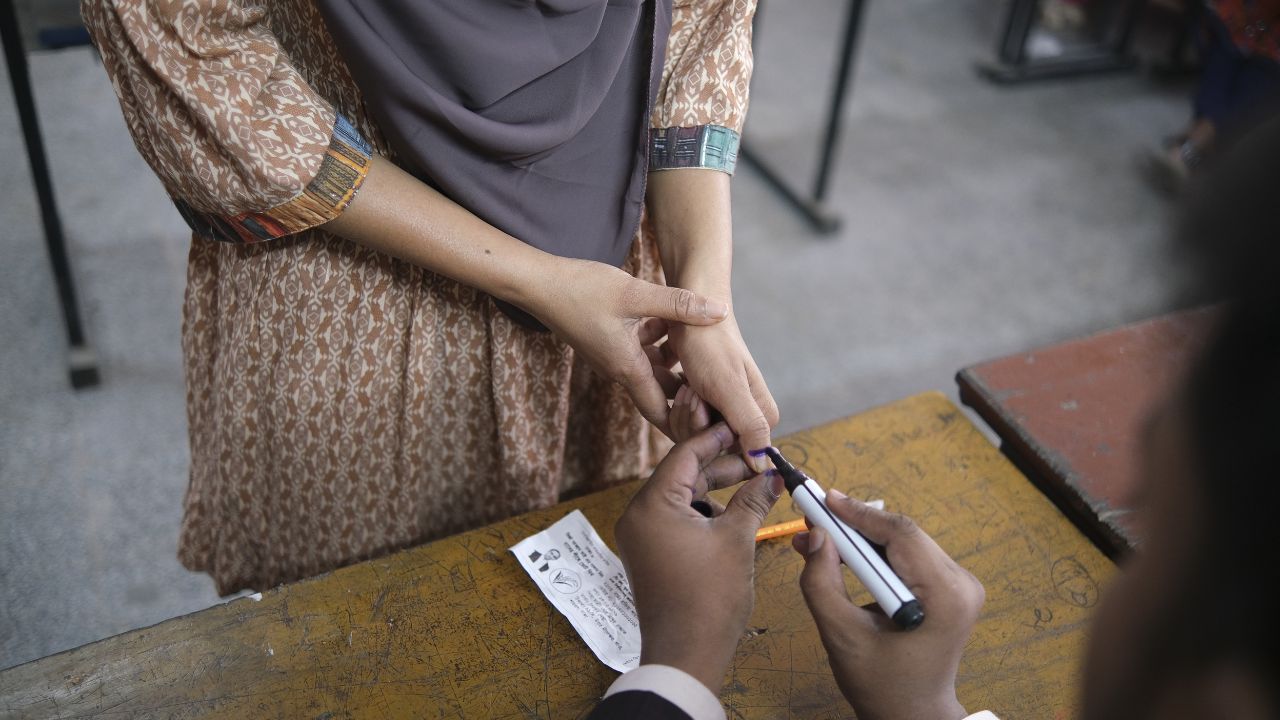
Across Azimpur, the sentiment echoed from one polling station to another – in the steady queues, the absence of visible tension, and the quiet satisfaction of voters emerging with inked fingers.
At Agrani School and College, Presiding Officer Md Mamunur Rashid Bhuiya reported that voting proceeded smoothly. Of the centre’s 2,779 registered voters, nearly 48 per cent cast their ballots. “Voters, law enforcement agencies, and the school authorities gave us full cooperation,” he said.
For first-time voter Md Siam Hossain, 23, the day carried its own weight. “In 2024, someone else cast my vote,” he said. “This is the first time in my life I have voted myself. I’m very happy.”


At Azimpur Farid Uddin Siddiqui High School, Md Anisur Rahman, 45, shared a similar experience. “In 2014, 2018, and 2024, I couldn’t vote,” he said. “Others cast my vote. Today, I voted myself. There’s no crowd, no fear. It feels different.”
Presiding Officer Md Al Amin confirmed that the all-male centre, with 2,306 registered voters, recorded a turnout of about 45 per cent, with no untoward incidents reported.
At Viqarunnisa Noon School and College’s Azimpur branch, the atmosphere remained equally calm. The centre, designated exclusively for female voters, did not permit male polling agents. Of its 3,597 registered voters, 1,457 cast ballots, marking a 41 per cent turnout.
Among them was Mahmuda Begum, 45. “My husband and I couldn’t vote in the last three elections,” she said. “After 17 years, I have voted again.”
At Azimpur Government Girls’ School, Md Omar Faruk, 47, described the day in sweeping terms: “I have seen many elections. This one is the best in history. I voted without fear.”
Throughout the neighbourhood, there were no reports of clashes, no whispers of intimidation — just the low murmur of citizens arriving, casting ballots, and leaving with a sense of something quietly reclaimed.
For Shah Alam, the meaning of the day extended beyond his lifetime. Before leaving the polling centre, he lifted his hands in prayer. “I thank the Almighty for this festive environment,” he said. “And Dr Muhammad Yunus. Even when we are gone, may people continue to have the right to vote.”
Seventeen years is a long silence in a democracy. In Azimpur, it was broken not by slogans or spectacle, but by a paper ballot — and the tears of an old man who had finally cast it himself.