There is a persistent illusion that nations are built upon geography. We speak of rivers as lifelines, of fertile plains as blessings, of mineral wealth as destiny. Yet history has been quietly dismantling this illusion for centuries. Soil does not innovate. Rivers do not legislate. Minerals do not imagine futures. It is human beings, with all their contradictions and capacities, who transform inert geography into living civilisation. The real wealth of a country, therefore, is neither buried beneath its ground nor flowing across its terrain. It resides in the minds, bodies and moral frameworks of its people.
From the lens of economic history, the divergence between nations rarely corresponds to their natural endowments alone. If geography were destiny, vast stretches of resource-rich regions would dominate global power hierarchies. Yet the opposite is often true. Countries with limited land and scarce resources have repeatedly outperformed those blessed with abundance. This paradox has long intrigued economists and philosophers alike, from Adam Smith’s reflections on productive labour to Amartya Sen’s emphasis on human capabilities.
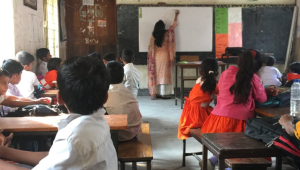
The answer lies in what might be called the architecture of human development. A child is not born as a ‘resource.’ He or she becomes one through a long, deliberate process shaped by family, education, healthcare, culture and governance. The developed world understood this early. It treated human development not as a by-product of growth, but as its precondition. The idea that a nation must invest in its people from birth is not merely policy; it is a philosophy rooted in Enlightenment thought, where thinkers like Rousseau emphasised the formative power of early education and social environment.
Pierre Bourdieu’s concept of cultural capital shows how societies reproduce excellence or mediocrity across generations. When a child grows up in an environment rich in intellectual stimulation, discipline and ethical grounding, the probability of that child becoming a productive citizen increases significantly. Conversely, neglect at any stage creates structural deficits that are difficult to overcome later. In this sense, inequality is not just economic; it is developmental.
The metaphor of land cultivation captures this reality with striking clarity. A piece of uncultivated land, however fertile, produces nothing. It requires preparation, timing and continuous care. Seeds must be selected, soil must be nourished, and weeds must be controlled. The same logic applies to human development. Early childhood is the seedbed. Primary education is the first irrigation. Adolescence is the phase of pruning and shaping. Adulthood is the harvest. If any stage is neglected, the outcome is compromised.

Yet many developing countries continue to treat this process casually, as if human potential will somehow flourish on its own. Education systems are often reduced to rote learning factories, healthcare remains inaccessible or inadequate, and moral or civic education is either ignored or politicised. The result is a fragmented human landscape where isolated excellence exists but systemic strength is absent. Talented individuals emerge, but they do so despite the system, not because of it.
This brings us to a more uncomfortable question. Why do some societies succeed in cultivating their human resources while others fail? A convenient explanation often invoked is culture or even genetics. Some argue that certain societies are inherently more disciplined, more innovative or more industrious. This line of thinking is not only simplistic but also dangerous. It overlooks the role of institutions, policies and historical trajectories.




A comparative glance at Southeast Asia illustrates this vividly. Countries with shared ethnic and cultural backgrounds have followed dramatically different developmental paths. The divergence cannot be explained by genetics. It must be understood through governance, policy consistency and long-term vision. Institutions matter. Political stability matters. Strategic investment in education and health matters. Above all, the seriousness with which a society treats its people matters.
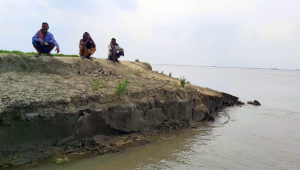
Geography, of course, is not irrelevant. It shapes constraints and opportunities. A landlocked country faces different challenges than a coastal one. Climate influences agriculture, and natural disasters can disrupt progress. But geography sets the stage; it does not write the script. Human agency determines how that stage is used. The Netherlands turned its vulnerability to flooding into a global expertise in water management. Japan, despite limited natural resources and frequent earthquakes, built a resilient, innovation-driven economy. These examples remind us that adversity can be transformed into advantage when human capacity is sufficiently developed.
There is also a moral dimension to this discussion that is often overlooked. Development is not just about productivity; it is about dignity. A society that invests in its people affirms their worth. It recognises that every child, regardless of background, carries the potential to contribute meaningfully to the collective future. This is where ethics intersects with economics. Neglecting human development is not merely inefficient; it is unjust.
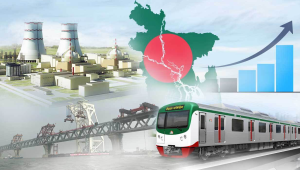
In many parts of the developing world, however, this moral imperative is overshadowed by short-term political calculations. Policies are designed for immediate visibility rather than long-term impact. Infrastructure projects are prioritised over educational reform because they yield quicker political dividends. Yet infrastructure, important as they are, cannot compensate for a poorly educated and unhealthy population. Without capable human agents, physical infrastructure becomes underutilised or mismanaged.
The consequences of this neglect are visible across multiple domains. Unemployment rises not because there are no jobs but because there are no skills. Social tensions increase as frustrated youth struggle to find purpose. Governance deteriorates when citizens lack the critical thinking skills necessary for informed participation. In extreme cases, this can lead to cycles of instability that further hinder development.
History offers a sobering lesson here. Nations that failed to invest in their people often found themselves trapped in what economists call the middle-income trap or, worse, in persistent underdevelopment. Independence alone did not guarantee progress. Political sovereignty without human capacity proved insufficient. Decades passed, resources were spent, but the desired transformation remained elusive.
Against this backdrop, the metaphor of fallow land becomes more than poetic imagery. It becomes a diagnostic tool. A nation that neglects its human development is essentially leaving its most valuable asset uncultivated. The tragedy is not that the land is barren, but that it is left unused.
Human development must be approached as a continuum. Nutrition, healthcare, education and moral development are not separate sectors; they are interconnected dimensions of a single process. Policies must reflect this interconnection. Investments in early childhood development yield returns across a lifetime. Quality education fosters innovation and adaptability. Strong healthcare systems ensure that human potential is not lost to preventable diseases. Civic education builds responsible citizens who can sustain democratic institutions.
Equally important is the role of culture. Societies must cultivate values that support learning, discipline and ethical behaviour. This does not mean abandoning tradition but reinterpreting it in ways that align with contemporary challenges. Cultural narratives that glorify effort, integrity and resilience can reinforce institutional efforts.
The writer is an academic, journalist, and political analyst. E-mail: [email protected]