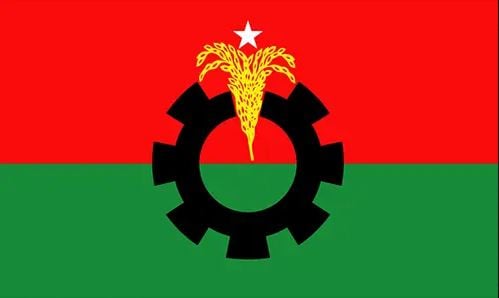
The prolonged uncertainty surrounding the return of Bangladesh Nationalist Party (BNP) acting chairman Tarique Rahman has created a significant political conundrum. Despite assurances from the interim government that there are no legal barriers to his return, the reasons for his continued absence remain unclear, sparking debate within the political arena.
Considered as BNP’s supreme command, Rahman’s virtual leadership has kept the party afloat from abroad, but his absence is increasingly being seen as a pivotal issue that could have far-reaching consequences for both the party and Bangladesh’s broader political landscape.
Rahman, who left the country in 2008 for medical treatment and later sought political asylum in the UK, has led BNP’s activities remotely since his mother, Khaleda Zia, was imprisoned in 2018.
While his influence within the party remains substantial, the leadership vacuum created by his physical absence has led to confusion and frustration among party workers. This internal discord has deepened with each passing month of his non-return, as BNP leaders are unable to provide clear answers to when or why he is not coming back.

The statements from various BNP leaders regarding his return—some predicting it before the upcoming elections, others stating that it could happen at any time—have failed to provide clarity, and many within the party are beginning to question whether they are being kept in the dark.
Some analysts suggest that these statements are mere attempts to galvanise the party rank-and-file, masking the deep uncertainty that pervades the leadership. In the absence of a clear plan, the party risks losing coherence and its ability to mobilise effectively in the lead-up to national elections.
Political analysts are speculating that the delay in Rahman’s return could be influenced by several factors. When Rahman left Bangladesh in 2008, he gave undertaking to the military-backed caretaker, better known as 1/11 regime, not to engage in politics again in his lifetime.




Rahman is now living in the UK on humanitarian ground. Once he gets back, he will lose the status and won’t be able to go back if in troubles in Bangladesh.
Although the government is assuring him of providing full security, it was not enough to convince him.
The absence of a clear and visible leader has left BNP vulnerable to political rivalries, particularly the Jamaat-e-Islami, which has already strengthened its position within the political sphere.
The increasing reliance on virtual leadership for years has weakened its political standing.
While the government’s influence is still prominent, Jamaat’s growing presence in administration and on the streets has complicated BNP’s position, with many within the party seeing this as an uncomfortable reality. The party, once a dominant force, now finds itself in an increasingly fragmented state, struggling to present a united front against their opponent.
Rahman’s return was anticipated by his party leaders, activists, and followers after the fall of Sheikh Hasina in mass uprising in August 2024, which was seen as an opportunity for the BNP to reclaim political momentum.
However, the delay has exacerbated tensions within BNP, particularly as no fixed date for his return has been confirmed. Even the repeated assurances from BNP leaders like Mirza Fakhrul Islam Alamgir, Amir Khosru Mahmud Chowdhury and AZM Zahid Hossain that Rahman will return and resume leadership have failed to dispel the growing concerns over his absence.
The uncertainty surrounding Tarique Rahman’s return is more than a party issue; it’s a political crisis that could alter the course of Bangladesh’s future. If he does return before the elections, it could offer BNP a much-needed political boost, but the question remains: will the delay have already irreparably harmed the party’s unity and its prospects in the upcoming polls?
As political observers continue to watch this unfolding saga, one thing is clear—Tarique Rahman’s return is a matter of utmost importance, not just for BNP, but for the political landscape of Bangladesh as a whole.