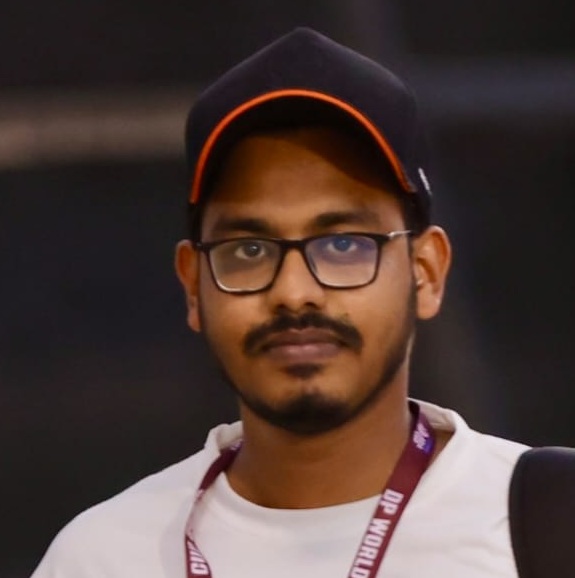




If you had a chance to look at the Hong Kong cricket team in the Asia Cup, it’s unlikely to recognise many cricketers barring Nizakat Khan or Babar Hayat. But there was a known face who was with Hong Kong. Mario Villavarayan, the ex strength and conditioning coach of Bangladesh cricket team.
Before the tournament opener against Afghanistan, he was seen joking around with a senior Bangladeshi journalist at the Sheikh Zayed Stadium’s oval one in Abu Dhabi. That was mostly a friendly gesture out of the time he had in Bangladesh. Similarly like this, Bangladesh still holds a place in his heart.
‘The Daily Times of Bangladesh’ had a chance to talk with him during the Asia Cup. Where he reflects on his journey with Hong Kong, talked about the Bangladesh stint of his carrer and emphasize on how fitness should evolve as an education.
During his six-year stint with Bangladesh cricket, Mario Villavarayan played a pivotal role in reshaping the team’s approach to fitness, mindset, and preparation. Known for his dual expertise as a strength and conditioning coach as well as a tactical mentor, he has left a lasting impact on players like Litton Das, Taskin Ahmed, and Mustafizur Rahman.
We caught up with Mario during the ongoing Asia Cup to discuss his journey with Bangladesh, his philosophy on fitness and education, and his experiences working with associate nations like Hong Kong. From managing workloads in T20 cricket to nurturing sustainable performance habits, Mario offers a unique insight into what it takes to build modern cricketers in the subcontinent.
You spent around six years with Bangladesh cricket. Looking back at that stint, how do you reflect on that period now?
Mario: Looking back at my six years with Bangladesh, a good six years which I think I managed to sort of change the attitude towards fitness of the Bangladesh sort of cricketers. That was one of the biggest challenges as well.

Bangladesh cricket was often criticized for lacking consistency, from a fitness trainer’s POV, what was the biggest challenge?
Mario: For me it was changing the attitude towards fitness. Without that it was difficult to achieve sustainable results. Maybe they would have done it. To have sustainable results I have to change the attitude of the players towards fitness. It took a bit of a time, maybe a year or year and a half. But in the end I managed to do it and boys were bought into work, I have to say, that worked well going forward from there.
What motivated you to take up the Hong Kong assignment?
Mario: In terms of the Hong Kong team, it was actually the head coach Kaushal Silva who approached me and asked me if I could help him with doing the dual roles, the fast bowling coach and strength and conditioning coach. Because he was joining as a new coach and I had not seen any players and he said. “Look its only gonna be three week to start off with”
So I said, Yes. anywhere in the world this is what I want to do, this what I have been doing since I left Bangladesh other than the IPL, LPL I’ve been playing dual roles. So it was an opportunity for me to work with an associate nation and I quite liked the challenge.


Hong Kong doesn’t have the same resources as full Member nations, how different is the approach to fitness here?
Mario: To be honest, The stint was just to do the Asia Cup. I haven’t been to Hong Kong yet. It depends all on what Hong Kong wants to do in the future and how they want to use me. As we go along, nothing confirmed yet, So I dont know what my future gonna be with Hong Kong.
Does your work differ when training an Associate team compared to a Test-playing nation?
Mario: My work between an associate nation and a test playing nation, look with these guys, because I started straight into a big tournament like Asia Cup, I just had to stick with the strength, whatever the strength they brought in. for three weeks I was there with them. Yes, in the longer term maybe I could make some changes. For the three weeks I was there, it was mainly the strength they brought in and some tactical stuff which I had to do during the Asia Cup.
You had your time in the IPL too. Cricketers have to keep playing continuously. Do they compromise on fitness compared to international cricket?
Mario: I have been working for Sunrisers Hyderabad for six years. That’s been really great. I have just signed with them for another three years, so I’m looking forward to that as well.
When it comes to T20 cricket and playing continuously, it’s a lot about managing the workload because you can’t play cricket 365 days a year, you have to understand that. We are not machines. So we players and coaches all need to come to an understanding what you need to do at one point, what you need to prioritise at one point. So in the middle of the IPL and if you are playing so many matches, I can’t run and go and saying, “oh you have to improve your fitness!”
So then I have to manage them in a different way. Yes, if they are not playing I can work with them. So it’s a lot to do with individual workload and a lot of stuff like that.
In T20 cricket, power and agility are crucial. What are the top fitness trends shaping up modern cricket?
Mario: The thing is now with this whole new word of power and agility, these are important in whatever we are doing in the field, that’s a given. With this whole power thing we need to understand, players from the sub-continent are not gonna be like the players from the West Indies or Australians or the English players. We from the sub-continent rely on hand speed, bat swing.
If you see. A lot of our guys, they are not gonna be the so called ‘power hitter’ like the carribeans. We rely a lot on our hand speed. So my thinking on power aspect you got to be measured how you handle it. Remember we are built differently. You know people from Bangladesh, India, Sri Lanka, Nepal…maybe Pakistanis and Afghanists are different because of their genes, but when it comes to the power hitting and players from south asians countries, you have to handle them a bit differently. That’s my point of view.
If you compare Bangladesh cricketers and Hong Kong cricketers, where do you see the biggest difference in attitude and preparation?
Mario: If I try to compare, I mean I can’t compare these two countries cricketers at this point of time. Hong Kong Cricketers are semi-pros, So you know its a different set up altogether.
Do you still follow Bangladesh cricket closely? Any players you feel have developed his fitness massively since you left?
Mario: Of course I do follow Bangladesh Cricket. You know six years is a fairly long time to spend with a nation, fond of memories. Litton, Taskin, Mustafiz who came up during my tenure and still playing, doing well for themselves. It’s really good to see them doing well consistently. Im happy to see Taskin play regularly. Because back in the day when I joined he was struggling with a lot of injuries. It was a slow progress, we couldn’t push him. It was very very slow. But to see him playing consistently and training hard is very heartening. Litton being captain and the Fizz continuing, I’m glad, I’m happy for all of them.
Do cricketers in Asia take fitness as seriously as those in Australia or England?
Mario: If you compare cricketers from Asia with northern or southern hemisphere, it’s a lot lot do with the education these guys get. Aussies, English, Protea cricketers fitness, I think it’s part of the education process from a young age. Whereas, as you know in Sri Lanka and Bangladesh it’s different. It’s a lot to do within , comes down to the cricket boards, gets the players young and works on their fitness.
My philosophy is not to work on fitness alone, it’s educating them. That is the only way you can have sustainable results. Where they keep doing for a while. It’s not doing it for six months or whatever and forgetting about it. So it’s a lot to do with the education process on fitness.